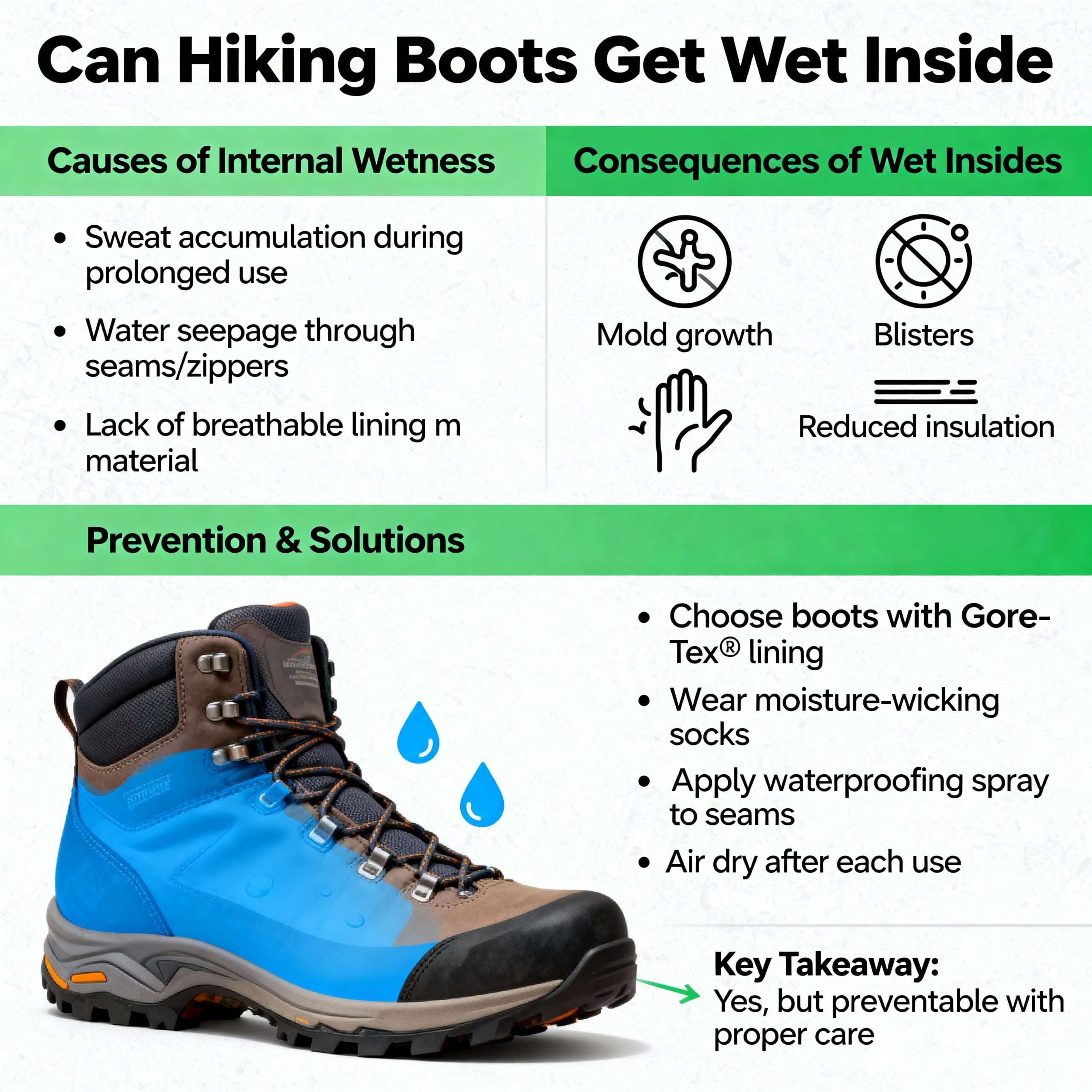
Yes, hiking boots can get wet inside. This often happens due to moisture from sweaty feet, condensation, or exposure to water. Poor ventilation traps humidity, while improper boot drying can leave residual moisture. Wet feet lead to friction, blisters, and discomfort, compromising your hiking performance. To keep your feet dry, choose waterproof boots, wear moisture-wicking socks, and ensure proper ventilation. There are more effective strategies to enhance your hiking experience and boot maintenance to explore.
Key Takeaways
- Yes, hiking boots can get wet inside due to sweaty feet or moisture from external sources like rain or streams.
- Waterproof membranes can prevent external water entry, but they may not eliminate moisture from sweat.
- Condensation can form inside boots when warm air from feet meets cooler boot interiors, trapping humidity.
- Improper drying after exposure to water can lead to residual moisture inside boots, creating a damp environment.
- Using moisture-wicking socks and ensuring proper ventilation can help manage moisture levels inside hiking boots.
Understanding Waterproof Technology in Hiking Boots
When you’re out on the trails, understanding the waterproof technology in hiking boots can make a significant difference in your comfort and performance. Most hiking boots utilize waterproof membranes, like Gore-Tex or eVent, which create a barrier against water while allowing moisture vapor to escape. This ensures your feet stay dry even in wet conditions. However, it’s also essential to consider moisture-wicking materials in the boot’s interior. These fabrics help draw sweat away from your skin, reducing the chances of blistering and discomfort. Together, waterproof membranes and moisture-wicking technology work in tandem to keep your feet dry and comfortable during your hike. Selecting boots that combine these features is crucial for an enjoyable outdoor experience.
Common Causes of Moisture Inside Hiking Boots
Even with advanced waterproof technology, moisture can still find its way inside hiking boots. One common cause is sweaty feet. As you hike, your body generates heat, leading to perspiration that can soak your socks and seep into the boot lining. Another contributor is condensation buildup, which occurs when warm air from your feet meets the cooler interior of the boot, causing moisture to condense. Poor ventilation exacerbates these issues, trapping humidity inside. Additionally, if your boots aren’t properly dried after exposure to water, residual moisture can create a damp environment. To combat these problems, consider using moisture-wicking socks, ensuring proper boot ventilation, and regularly drying your boots after hikes to maintain a dry interior.
The Impact of Wet Feet on Hiking Performance
Although you may have the best hiking boots on the market, wet feet can significantly hinder your performance on the trail. When your feet are damp, friction increases, leading to blisters and discomfort that can distract you from the hike. The body’s thermoregulation also suffers; wet feet can cause chill, reducing your stamina and endurance. Furthermore, you might find yourself slowing down to manage discomfort, ultimately affecting your pace and distance covered. Wet conditions can also lead to a loss of traction, making it harder to navigate challenging terrains. In short, prioritizing dry feet is essential for maintaining optimal hiking performance and enjoying your outdoor experience to the fullest.
Tips for Keeping Your Feet Dry on the Trails
To keep your feet dry on the trails, you’ll need to implement a few practical strategies. First, choose moisture-wicking socks made from synthetic materials or merino wool. These fabrics draw sweat away from your skin, enhancing foot comfort and keeping your feet drier. Next, ensure your hiking boots fit well, as tight spots can cause blisters and trap moisture. Consider using waterproof or water-resistant boots, but remember that breathability is essential to prevent sweat buildup inside. Also, take breaks to air out your feet when possible, especially in humid conditions. Lastly, avoid walking through deep water whenever you can. By incorporating these strategies, you can enjoy your hike while keeping your feet dry and comfortable.
How to Properly Care for Your Hiking Boots
Keeping your feet dry is just one piece of the puzzle when it comes to enjoying the great outdoors. Proper care for your hiking boots ensures they perform well and last longer. Start with regular boot cleaning; remove dirt and debris using a soft brush and mild soap. Rinse thoroughly and let them air dry away from direct heat. For drying techniques, stuff your boots with newspaper to absorb moisture or use a boot dryer if you need quicker results. Avoid drying them near a fireplace or heater, as excessive heat can damage the materials. Finally, apply a waterproofing treatment periodically to maintain their water resistance and keep your feet comfortable on every hike.
Recognizing the Signs of Water Damage
When you inspect your hiking boots, look for signs of mold and mildew growth, which can indicate excessive moisture exposure. Unpleasant odors emanating from the boots are another clear warning sign of water damage. Addressing these issues promptly can help you maintain the integrity and longevity of your footwear.
Mold and Mildew Growth
Although you might not notice it immediately, mold and mildew can quickly develop in your hiking boots after exposure to moisture. To recognize the signs of water damage, look for dark spots, a musty smell, or a fuzzy texture on the boot’s interior. These indicate mold growth, which can weaken materials and compromise performance.
Mold prevention is crucial; always dry your boots thoroughly after hikes and store them in a well-ventilated area. If you discover mildew, act promptly with proper mildew treatment. Clean the affected areas using a mixture of water and vinegar, then allow the boots to air dry. Regular maintenance will keep your hiking boots in optimal condition, extending their lifespan and ensuring comfortable adventures.
Unpleasant Odors Emanating
Unpleasant odors emanating from your hiking boots can be a clear indicator of water damage and potential mold growth. If you notice musty or sour smells, it’s essential to address the issue immediately. These odors often signal that moisture has penetrated the materials, creating an environment conducive to bacteria and mold. Effective smell prevention starts with drying your boots thoroughly after each hike, ensuring they’re stored in a well-ventilated area. For odor control, consider using moisture-absorbing inserts or sprays designed for footwear. Regularly cleaning your boots with appropriate solutions can also help mitigate unpleasant smells. Staying proactive in managing moisture will prolong the life of your hiking boots and keep your feet comfortable on the trail.
Choosing the Right Hiking Boots for Different Conditions
When choosing hiking boots, consider the conditions you’ll face. Waterproof materials keep your feet dry in wet environments, while breathable options enhance comfort during warmer hikes. Additionally, proper insulation is crucial for cold weather, and good traction helps prevent slips on wet surfaces.
Waterproof vs. Breathable Materials
Selecting the right hiking boots hinges on understanding the balance between waterproof and breathable materials. Waterproof materials, like Gore-Tex, keep moisture from entering, essential for wet conditions or stream crossings. However, these materials can trap heat and moisture inside, leading to discomfort. On the other hand, breathable fabrics allow sweat and heat to escape, which is crucial for warm weather hikes. They’re typically less effective in keeping water out, so you might end up with wet feet in rain or puddles. When choosing your boots, consider the environment you’ll encounter. If you’re facing frequent wet conditions, prioritize waterproof materials. For dry, warm hikes, breathable fabrics will enhance comfort and performance. Finding the right balance ensures a better hiking experience.
Insulation for Cold Weather
Choosing the right insulation for cold weather hiking boots is crucial for maintaining warmth and comfort on your adventures. When selecting boots, consider various insulation types like Thinsulate, fleece, or down. Thinsulate offers lightweight warmth and breathability, making it ideal for active hikes. Fleece provides softness and insulation, perfect for milder cold weather. Down insulation, while warm, can lose effectiveness if wet, so ensure your boots are waterproof. Look for boots with a temperature rating that aligns with your hiking conditions, as this will help you gauge their effectiveness in cold weather. Remember, a proper fit is essential—too tight, and circulation suffers; too loose, and heat escapes. Prioritize insulation that meets your specific needs for optimal performance.
Traction for Wet Conditions
Finding the right traction for wet conditions is essential for safe and enjoyable hiking. When selecting hiking boots, consider traction types like lugs, vibram, and rubber compounds designed for grip on slippery surfaces. Deep lugs provide better bite on muddy trails, while softer rubber enhances traction on wet rocks.
Regular traction maintenance is crucial too; keep the soles clean and free from debris to maximize grip. Check for wear and tear, as worn-out soles can compromise safety. If you’re hiking in particularly wet environments, look for boots with waterproof features to keep inner moisture at bay. Prioritizing these factors will ensure you stay stable and secure on your adventures, no matter the conditions.
Frequently Asked Questions
Can I Wear Regular Socks With Waterproof Hiking Boots?
You can wear regular socks with waterproof hiking boots, but consider moisture management. Choose sock materials like merino wool or synthetic blends to enhance comfort and wick away sweat, ensuring your feet stay dry during hikes.
How Often Should I Reapply Waterproofing Treatments?
You should reapply waterproofing treatments every 3 to 6 months, depending on usage and exposure. Regular maintenance enhances treatment effectiveness, ensuring your boots stay dry and protected during hikes and adverse weather conditions.
Are There Waterproof Hiking Boots for Summer Use?
Yes, there are waterproof hiking boots designed for summer hikes. Look for models made with breathable materials that wick moisture while providing protection against water, keeping your feet comfortable and dry during warm weather adventures.
Can Hiking Boots Lose Their Waterproof Ability Over Time?
Yes, hiking boots can lose their waterproof ability over time due to wear and tear. Regular boot maintenance, including cleaning and reapplying waterproof materials, helps prolong their effectiveness and keeps your feet dry during adventures. It’s also important to choose high-quality waterproofing in hiking boots from the start, as this can significantly impact their durability and performance. Additionally, proper storage when not in use, such as keeping them in a cool, dry place, can help maintain their waterproof features for longer. Routine inspections for any signs of damage or cracks in the material will further enhance their longevity and effectiveness.
What Should I Do if My Boots Get Wet Inside?
If your boots get wet inside, use boot drying techniques like removing insoles and using newspaper. Implement moisture management tips such as avoiding damp environments and using moisture-wicking socks to prevent future wetness.
Conclusion
In conclusion, while many hiking boots offer waterproof technology, moisture can still find its way inside through various means. Wet feet can significantly hinder your hiking performance, so it’s crucial to take preventative measures, like choosing the right boots and caring for them properly. Regularly inspect your footwear for signs of water damage, and remember to dry them thoroughly after each hike. By being proactive, you can ensure your feet stay dry and comfortable on the trails. Additionally, consider using moisture-wicking socks to further enhance your comfort and minimize the risk of wet feet during your hikes. When it comes to drying hiking boots effectively, placing them in a well-ventilated area and using newspaper or boot dryers can help speed up the drying process. Avoid using direct heat sources, as they can damage the boot materials and decrease their lifespan.
