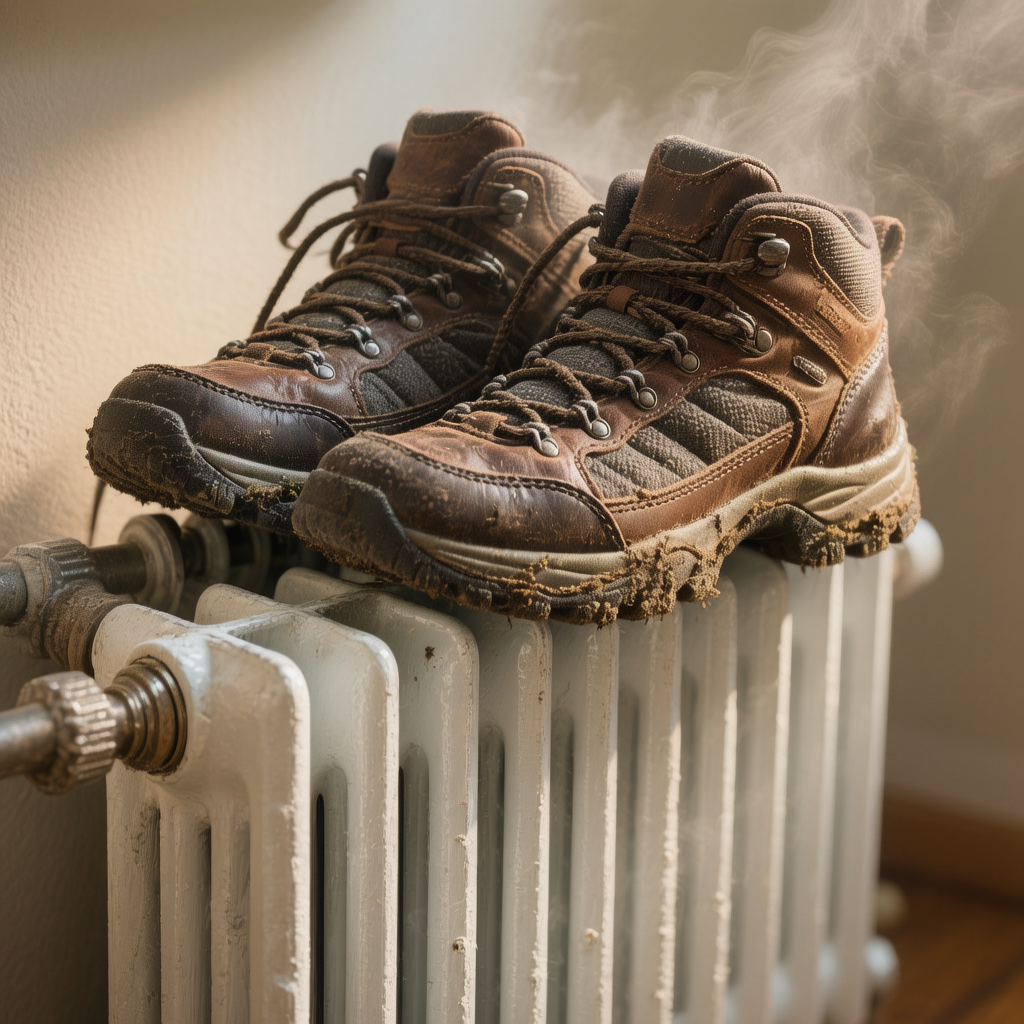
You shouldn’t dry your hiking boots on a radiator. The intense heat can warp both leather and synthetic materials, weaken adhesives, and compromise waterproofing. This may lead to cracking and loss of support over time. Instead, consider alternative drying methods like using a boot dryer or air drying in a well-ventilated area. By avoiding direct heat, you can keep your boots in top condition. Learn more about proper boot care and maintenance techniques to ensure their longevity! Additionally, it’s important to regularly inspect your boots for any signs of wear or damage, as this can help address hiking boot moisture concerns before they become a bigger issue. Make sure to clean your boots after each hike, removing dirt and debris that may trap moisture. By taking these proactive steps, you can enhance the durability of your hiking boots and ensure they remain reliable companions on your outdoor adventures.
Key Takeaways
- Drying hiking boots on a radiator can warp materials and compromise their structure.
- Excessive heat can weaken adhesives, risking sole separation and overall performance.
- High temperatures may diminish the waterproofing capabilities of the boots.
- Radiator drying increases the risk of cracking and mold growth due to moisture retention.
- It’s safer to air dry boots or use a boot dryer for gentle heat circulation.
Understanding the Materials of Your Hiking Boots
When you hit the trails, your hiking boots are your best friends, but understanding their materials is key to keeping them in top shape. Leather offers incredible durability, providing a sturdy barrier against wear and tear while naturally molding to your feet over time. It’s perfect for rugged terrains but requires proper care to maintain its integrity. On the other hand, synthetic materials are lightweight and often waterproof, making them an excellent choice for wet conditions. They dry faster and are generally easier to clean. However, they might not provide the same level of support as leather. Knowing these differences helps you choose the right pair and take care of them, ensuring your adventures are comfortable and safe.
Effects of Heat on Boot Performance
Although you might think that drying your hiking boots quickly on a radiator is a harmless solution, exposing them to excessive heat can actually compromise their performance. High temperatures can cause materials like leather and synthetic fabrics to warp, leading to heat damage that affects fit and comfort. Additionally, intense heat can weaken adhesives, which may result in sole separation over time. This deterioration not only diminishes your boots’ waterproofing capabilities but also shortens their boot longevity. Instead of relying on radiators, consider more gentle drying methods like air drying in a well-ventilated area. Protecting your boots from heat ensures they remain reliable on the trails, keeping your feet comfortable and safe during your adventures.
The Risks of Using a Radiator
Using a radiator to dry your hiking boots might seem like a quick fix, but it comes with significant risks that can jeopardize their integrity. The intense heat can lead to radiator damage, warping materials and weakening the structure of your boots. Additionally, if moisture retention occurs, it can create an environment for mold and mildew, further deteriorating your footwear. Over time, this can result in cracking, loss of waterproofing, and even compromised support. It’s essential to consider these factors before placing your boots on a radiator. While you might save time, you could end up costing yourself more in repairs or replacements. Treat your hiking boots with care to ensure they last through many adventures.
Alternative Drying Methods
There are several effective alternative methods to dry your hiking boots without risking damage. First, remove the insoles and laces to promote better airflow during boot drying. Place your boots in a well-ventilated area, preferably near a fan, to enhance moisture control. You can also stuff them with newspaper or clean, dry towels, which absorbs moisture while maintaining shape. Change the materials periodically for best results. If you’re in a hurry, consider using a boot dryer designed specifically for this purpose, as it circulates warm air without overheating. Lastly, avoid direct sunlight, which can warp or crack your boots. With these methods, you’ll keep your hiking boots dry and in good condition for your next adventure.
Tips for Proper Boot Care
Caring for your hiking boots is essential to ensure their longevity and performance on the trail. Start with regular boot cleaning—remove dirt and debris after each hike to prevent wear. Use a soft brush or damp cloth, and avoid harsh chemicals that can damage materials. For waterproof maintenance, apply a suitable waterproofing treatment after cleaning, especially if you notice water absorption. Check seams and fabric for any signs of wear, and repair them promptly to maintain waterproof integrity. Store your boots in a cool, dry place, avoiding direct heat sources that can warp them. With these simple steps, you’ll keep your boots in top shape and ready for every adventure.
Signs Your Boots Are Dry
How can you tell if your hiking boots are completely dry? First, check for any residual boot moisture by feeling the inside of the boots with your hands. If they feel cool or damp, they need more drying. Next, examine the materials; leather should feel supple, while synthetic materials should bounce back when pressed. You can also give them a gentle squeeze—if they feel squishy or waterlogged, they’re not ready yet. Lastly, smell can be a telltale sign; a musty odor means moisture is still trapped. Using drying techniques like stuffing the boots with newspaper or placing them near a fan can help speed the process, but make sure they’re fully dry before your next adventure!
Preparing for Your Next Hiking Adventure
Once your hiking boots are completely dry, it’s time to focus on preparing for your next adventure. Start by reviewing your gear checklist to ensure you have everything you need. Check your boots for any signs of wear and tear, and don’t forget to pack essentials like waterproof clothing, a first aid kit, and sufficient snacks. Hydration is crucial, so include a reliable water bottle or hydration system. Plan your route and familiarize yourself with the terrain, which helps in making effective hiking preparations. Lastly, consider the weather forecast; it can change quickly. With everything in place, you’ll be ready to hit the trails confidently and enjoy your hiking experience! Happy trails!
Frequently Asked Questions
Can I Use a Hairdryer Instead of a Radiator?
You can use a hairdryer, but be cautious. Hairdryer safety is key, as excessive heat can damage boot materials. Keep it on a low setting and maintain distance to prevent overheating and ruining your boots.
What if My Boots Have Leather Components?
If your boots have leather components, avoid direct heat. It can cause moisture damage and ruin the leather. Instead, use a room temperature method, like air drying, and apply leather care products to maintain flexibility. Additionally, be cautious about washing boots in a machine, as this can lead to further damage, including delamination and loss of shape. Always follow the manufacturer’s care instructions to ensure the longevity of your footwear. Regularly inspect your boots for any signs of wear and tear, addressing issues promptly to keep them in great condition.
How Long Does It Take for Boots to Dry on a Radiator?
Drying time for boots on a radiator varies by boot materials. Synthetic boots might dry in 1-2 hours, while leather can take longer, up to 4-6 hours. Always monitor the heat to avoid damage.
Can I Dry Insoles Separately on a Radiator?
Yes, you can dry insoles separately on a radiator. Just ensure they’re not too close to the heat source to prevent damage. Keep an eye on them for radiator safety, and they’ll dry effectively.
Will Drying on a Radiator Void My Boot Warranty?
Drying your boots on a radiator could void the warranty, especially if it damages boot materials. Always check the warranty policies before using heat; some materials may not withstand high temperatures, affecting performance and durability.
Conclusion
In conclusion, while drying hiking boots on a radiator might seem convenient, it can actually damage the materials and compromise their performance. Opt for safer methods like air drying or using a boot dryer to keep your boots in top shape. Remember to care for them properly, and always check for dryness before your next adventure. By taking these steps, you’ll ensure your boots are ready for any trail you tackle! Happy hiking!
