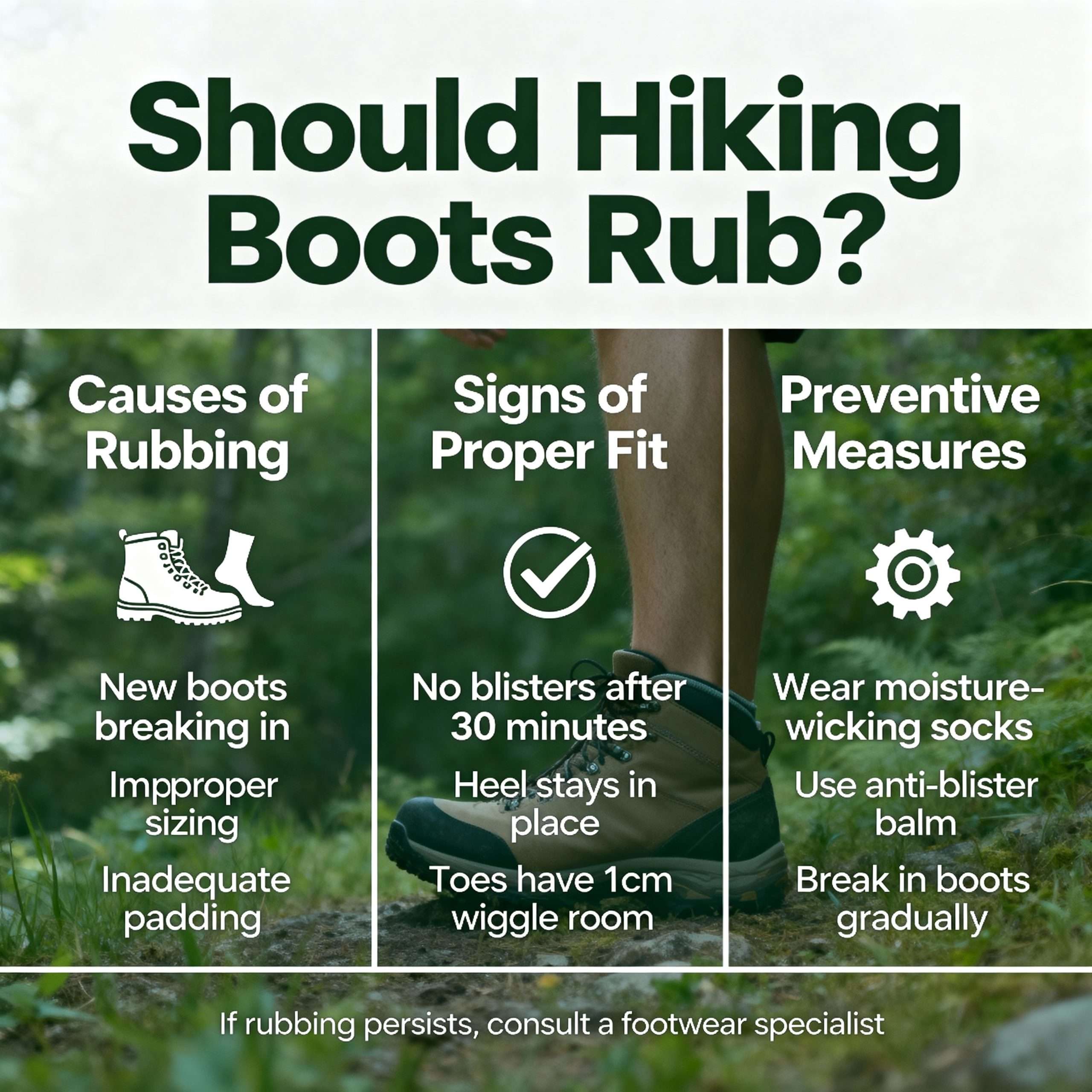
Hiking boots shouldn’t rub against your feet. If they do, it’s a sign of an improper fit, which can cause blisters and discomfort on the trail. A snug boot supports your ankles and allows for toe movement while preventing friction. Without making adjustments to fit or choosing the right socks, you risk distracting yourself from your hike. Want to know how to prevent rubbing and optimize your hiking experience? Keep exploring the details!
Should Hiking Boots Rub? Key Takeaways
- Hiking boots should not rub; friction can lead to blisters and discomfort during hikes.
- Proper fit is crucial; boots must support without creating pressure points on your feet.
- Gradually break in new boots to allow them to conform to your foot shape.
- Use moisture-wicking socks to reduce friction and enhance comfort while hiking.
- Regularly assess boot fit and make adjustments to prevent long-term foot health issues.
Understanding Boot Rub: What It Is and Why It Happens
Boot rub can be a frustrating experience for hikers, often leading to blisters and discomfort on the trail. It happens when your boots’ materials create friction against your skin, which is rooted in boot anatomy and friction mechanics.
The parts of your boot, like the heel and toe box, can press against your feet, causing irritation over time. Additionally, when you’re navigating uneven terrain, movement can intensify this friction, making it even more uncomfortable.
Understanding how your boots interact with your feet is crucial. If you notice persistent rub, it’s essential to assess the fit and adjust as needed. Proper lacing techniques or even considering different sock materials can help minimize this issue, ensuring a more enjoyable hiking experience.
The Importance of Proper Fit in Hiking Boots
When it comes to hiking, having the right fit in your boots is crucial for comfort and performance on the trail. Poor boot sizing can lead to blisters, fatigue, and even injuries during your hike.
You want a snug fit without being overly tight, allowing your toes to wiggle while providing enough support for your ankles. It’s important to make fit adjustments, whether that means trying different brands or adding insoles.
Remember to wear the socks you plan to use while hiking when you try on boots. A proper fit ensures your feet stay protected and comfortable, so you can focus on enjoying the beauty of nature instead of the pain in your feet.
Common Causes of Rubbing and Friction
When it comes to hiking boots, rubbing and friction often stem from a few key issues.
You might find that improper fit, low-quality materials, or the wrong socks can all contribute to discomfort on the trail.
Understanding these common causes can help you make better choices for a more enjoyable hiking experience.
Improper Fit Issues
Even if you’ve chosen a pair of hiking boots with the right features, improper fit can still lead to rubbing and friction.
One common issue stems from incorrect boot sizing. If your boots are too tight or too loose, they can create pressure points that cause discomfort during hikes.
Additionally, everyone’s foot shape varies, and a design that fits one person perfectly mightn’t suit you. If you have wide feet or high arches, standard boots may not provide the needed support.
Always try on different sizes and styles to find the one that conforms to your unique foot shape.
Material Quality Factors
While choosing the right hiking boots, the quality of the materials plays a significant role in preventing rubbing and friction. Higher material durability often means better protection against wear and tear, which can minimize discomfort during your hikes.
Look for boots made from breathable, moisture-wicking materials that reduce the likelihood of blisters from sweat. Performance variations can arise from different materials, such as leather versus synthetic options.
While leather may offer sturdiness and comfort, synthetic materials can provide lightweight flexibility. Be mindful of how these choices affect your feet over long distances.
Ultimately, investing in quality materials not only enhances your hiking experience but also keeps rubbing and friction at bay.
Sock Selection Importance
Choosing the right socks is crucial for preventing rubbing and friction during your hikes. The thickness of your socks can significantly impact comfort; thicker socks provide extra cushioning but may also create pressure points if your boots are too snug.
Opt for moisture-wicking materials that efficiently manage sweat, keeping your feet dry and reducing the risk of blisters. Avoid cotton, as it retains moisture and increases friction. Instead, look for synthetic blends or merino wool, which offer both comfort and breathability.
Effects of Boot Rub on Your Hiking Experience
When your hiking boots rub against your feet, it can seriously impact your comfort and enjoyment on the trail.
You might find yourself distracted by discomfort, which can lead to a shorter hike or even injury.
Understanding the causes and long-term effects of boot rub is crucial for maintaining your foot health on every adventure.
Causes of Boot Rub
Boot rub can stem from several factors that affect your comfort on the trail. Poor fit is a major cause; if your boots are too tight or too loose, they’ll create friction on your feet.
Inadequate boot maintenance, like failing to clean or condition them, can lead to stiffness and discomfort. The materials of your boots also matter; some synthetic fabrics may irritate your skin more than others.
Additionally, if you’re not practicing proper foot care—like wearing moisture-wicking socks or keeping your feet dry—you increase the chances of rubbing.
Always ensure your boots are broken in before a hike and pay attention to any signs of wear, as these can exacerbate boot rub during your adventures.
Impact on Comfort
Although a good pair of hiking boots can enhance your outdoor experience, the discomfort from boot rub can quickly ruin your adventure.
When your boots rub against your skin, it can lead to hiking discomfort that distracts you from enjoying the scenery. You might find yourself constantly shifting your weight or taking breaks to relieve the irritation, which can slow down your pace and dampen your spirit.
To maintain your comfort, focus on blister prevention by ensuring a proper fit and wearing moisture-wicking socks. If you ignore boot rub, you risk developing painful blisters that can turn your hike into a struggle.
Prioritize comfort in your footwear choices to make the most of your time on the trails.
Long-Term Foot Health
If you ignore the effects of boot rub, you might face long-term foot health issues that can hinder your hiking adventures.
Consistent rubbing can lead to blisters, calluses, and even more severe conditions like plantar fasciitis. These problems not only affect your comfort but can also impact your overall foot health benefits in the long run.
By ensuring a proper fit and addressing any rubbing early on, you can significantly reduce the risk of hiking injuries.
Prioritizing hiking injury prevention helps maintain your enthusiasm for the trail and keeps your feet in top shape.
Tips for Preventing Rubbing and Blisters
To keep your feet comfortable on the trails, it’s essential to take steps to prevent rubbing and blisters.
First, choose the right socks; opt for moisture-wicking materials that cushion your feet and reduce friction.
Always break in your hiking boots gradually, allowing them to adjust to your feet. Regular boot maintenance is crucial—check for any wear or tear and ensure they’re clean and well-lubricated.
Additionally, consider using blister prevention products, such as adhesive bandages or blister pads, in high-friction areas.
Stay mindful of your foot positioning and adjust your laces for a snug fit without being too tight.
Following these preventative measures will help you enjoy your hikes without the discomfort of blisters.
When to Replace Your Hiking Boots
Knowing when to replace your hiking boots is crucial for maintaining comfort and safety on the trails. The typical hiking boot lifespan is around 500 to 1,000 miles, but this can vary based on terrain and usage.
Keep an eye out for clear signs of replacement: if you notice excessive wear on the soles, cracks in the upper material, or a lack of support, it’s time for a new pair.
Additionally, if your boots no longer provide waterproof protection or you start experiencing discomfort or blisters during hikes, don’t ignore these signals.
Regularly assessing your boots will help you stay safe and enjoy your outdoor adventures without compromise. Invest in your comfort; your feet will thank you!
Frequently Asked Questions
Can Hiking Boots Rub After Breaking Them In?
Yes, hiking boots can still rub after you break them in. Your foot sensitivity might change over time, leading to discomfort. Make sure you choose the right size and adjust your socks for better fit.
Should I Wear Thick Socks to Prevent Rubbing?
Wearing thicker socks can enhance foot comfort and reduce rubbing, but make sure they fit well inside your boots. Experiment with different thicknesses to find the right balance for your feet on the trail.
Are There Specific Brands Known for Less Boot Rub?
Yes, some brands like Merrell and Salomon often use softer boot materials, reducing rubbing. You should check brand comparisons online to find options that prioritize comfort and minimize friction during your hikes.
How Can I Tell if My Boots Are Too Tight?
You can tell your boots are too tight if you feel pressure points, experience numbness, or notice pain in your foot anatomy. Proper boot fit should allow slight movement without excessive friction or discomfort.
Is Boot Rub More Common in Wet Conditions?
Yes, boot rub is more common in wet conditions. Moisture impacts boot fit, causing your feet to shift and increasing friction. Ensure your boots fit well and stay dry to minimize discomfort on your hikes.
Conclusion
In conclusion, hiking boots shouldn’t rub uncomfortably against your feet. Proper fit is essential to prevent friction and discomfort, which can ruin your outdoor experience. By understanding the common causes of boot rub and following tips to prevent it, you can enjoy your hikes without the worry of blisters. If your boots are causing consistent rubbing, it might be time to consider replacing them. Keep your feet happy, and you’ll have more enjoyable adventures on the trail!
