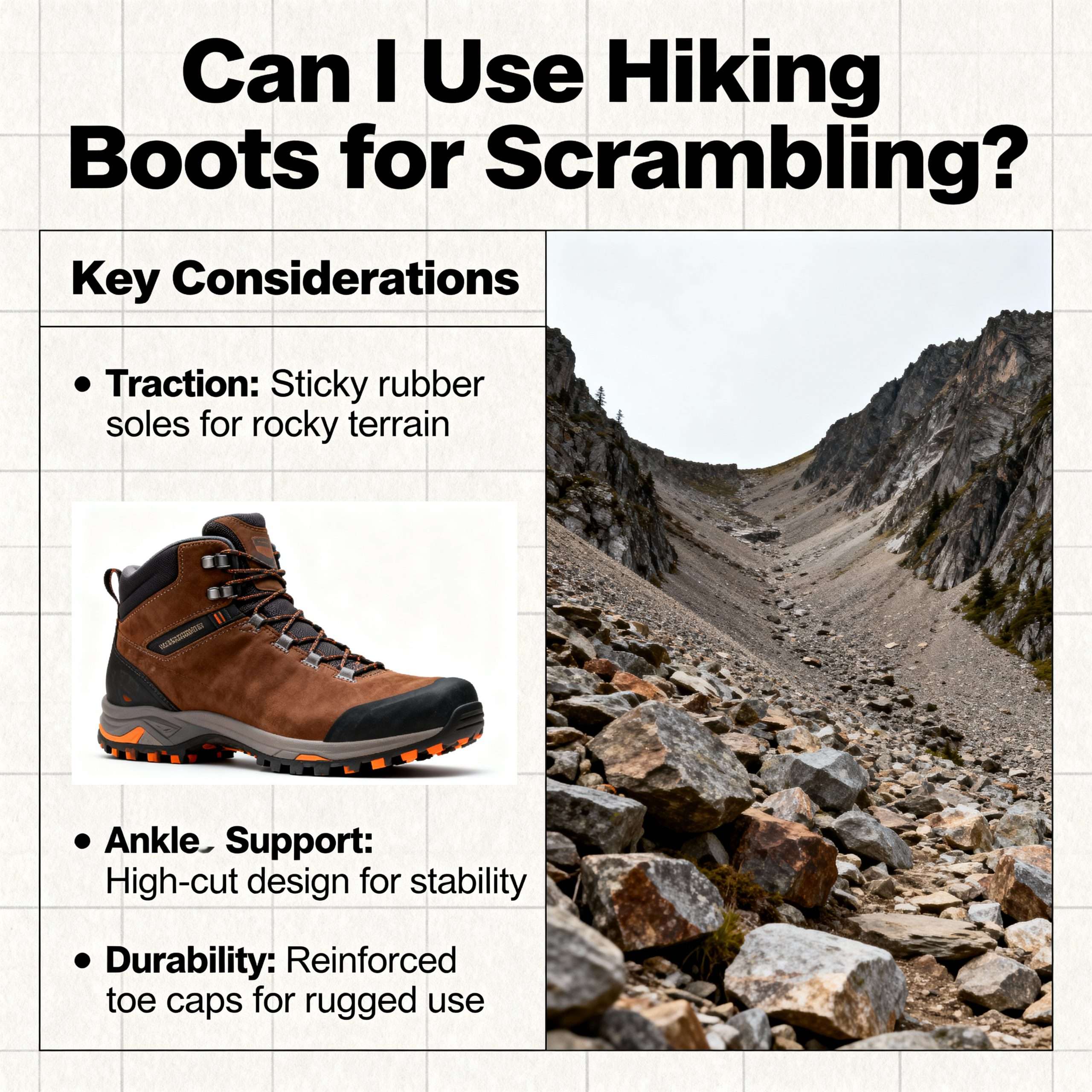
Yes, you can use hiking boots for scrambling, but there are advantages and limitations to consider. Hiking boots provide sturdy soles and ankle support, which can enhance traction on rocky paths. However, they may restrict movement and lack flexibility on technical terrain. If the route is challenging or weather conditions are tough, you might want to think about scrambling shoes. Discover more about choosing the right footwear for your adventure and improving your scrambling experience.
Can I Use Hiking Boots for Scrambling? Key Takeaways
- Hiking boots provide sturdy soles for traction, making them suitable for challenging terrains during scrambling.
- They offer excellent ankle support, which aids stability on uneven surfaces.
- However, their lack of flexibility may hinder movement in technical scrambling situations.
- Traction on loose surfaces can be unreliable with hiking boots compared to specialized scrambling shoes.
- Consider the specific route and conditions, as specialized footwear may enhance performance and comfort in scrambling.
Understanding Scrambling: What It Entails
When you think about scrambling, it’s more than just a hike; it’s an exhilarating blend of walking, climbing, and navigating rocky terrains.
To truly enjoy this adventure, you’ll need to master some scrambling techniques, like using your hands for balance and choosing the right paths. It’s not just about getting from point A to B; it’s about engaging with the environment.
Equipping yourself with essential gear is crucial, too. A good helmet protects against falling debris, while a sturdy harness can secure you on steep sections. Don’t forget about gloves for grip and protection.
With the right skills and gear, scrambling transforms from a challenge into a thrilling experience, allowing you to conquer new heights confidently.
Features of Hiking Boots
Choosing the right hiking boots is crucial for a successful scrambling adventure. You’ll want boots made from breathable materials to keep your feet comfortable during long treks. These materials help wick away moisture, preventing sweaty and uncomfortable feet.
Additionally, waterproof features are essential for protecting your feet from unexpected weather or wet terrain. Look for boots that incorporate a waterproof membrane, ensuring you stay dry without sacrificing breathability.
A sturdy sole is also important, as it provides traction on rocky surfaces, helping you maintain stability while scrambling. Lastly, make sure the boots fit well, offering support without causing blisters.
With the right features, your hiking boots can enhance your scrambling experience significantly.
Advantages of Using Hiking Boots for Scrambling
While scrambling over rocky terrain, having the right hiking boots can make a world of difference in your comfort and safety.
Hiking boots provide excellent ankle support, which helps you maintain stability on uneven surfaces. This support can significantly elevate your comfort level, allowing you to focus on your surroundings rather than worrying about potential injuries.
Moreover, the sturdy soles of hiking boots offer superior traction, giving you the confidence to navigate challenging paths.
Their design also promotes better weight distribution, reducing fatigue during long ascents or descents. With proper hiking boots, you’ll find that tackling steep inclines and rocky outcrops becomes much more manageable, enhancing your overall scrambling experience.
Limitations of Hiking Boots in Scrambling Conditions
While hiking boots offer some advantages, they do have limitations in scrambling conditions.
You might find that their traction on loose surfaces isn’t always reliable, and the ankle support can restrict your movement.
Additionally, the boots may not provide the flexibility and agility you need for more technical sections of the terrain.
Traction on Loose Surfaces
When navigating loose surfaces during scrambling, you might find that even the best hiking boots can struggle to provide adequate traction.
Most hiking boots are designed for solid ground, so when you encounter gravel, sand, or mud, their traction techniques may fall short. The tread patterns mightn’t grip well on these surface types, leading to slips or slides.
While some boots offer decent traction on packed dirt or rock, they often lack the necessary rubber compounds to handle loose terrain effectively.
You could try adjusting your foot placement and using your body weight to stabilize yourself, but if you frequently scramble on loose surfaces, investing in specialized footwear with better grip could significantly enhance your safety and performance.
Ankle Support Limitations
Although hiking boots provide some level of ankle support, their limitations become apparent in scrambling conditions.
When you’re navigating rocky terrains or steep inclines, the rigid structure of hiking boots can restrict your ankle movement, making it harder to adjust your footing. This lack of flexibility can hinder your overall balance and increase the risk of slips or falls, undermining your injury prevention efforts.
While the support they offer might help with minor twists, it doesn’t compare to the freedom needed for effective scrambling.
You’ll want a footwear option that balances ankle support with flexibility, allowing you to respond quickly to unpredictable terrain.
Investing in specialized scrambling shoes can enhance both your performance and safety on challenging routes.
Flexibility and Agility Needs
To effectively navigate the unpredictable challenges of scrambling, you need footwear that allows for both flexibility and agility.
Hiking boots, while sturdy, often lack the necessary movement freedom to adapt quickly on varied terrain. Their rigid soles can hinder your ability to feel the ground beneath you, making it tough to meet the balance requirements essential for scrambling.
Without adequate flexibility, your foot can’t adjust to sudden changes in elevation or grip on rocky surfaces. This limitation can lead to slips or stumbles, which can be dangerous.
For scrambling, consider lighter, more flexible footwear designed to enhance your agility, providing the support you need while allowing your feet to move freely.
When to Consider Scrambling Shoes
When you’re tackling rocky or uneven terrain, it might be time to think about scrambling shoes.
These specialized shoes offer better traction and flexibility, which can enhance your performance.
If you need extra ankle support, considering scrambling shoes could make a significant difference in your stability and comfort.
Terrain Type Considerations
As you plan your next adventure, understanding the terrain you’ll encounter is crucial in deciding whether to use scrambling shoes.
If you’re tackling rocky terrain, you’ll want shoes that provide superior grip and flexibility. Scrambling shoes, with their sticky rubber outsoles, can help you navigate tricky surfaces more effectively than traditional hiking boots.
On the other hand, if you expect wet conditions, scrambling shoes often feature water-resistant materials that can keep your feet dry, unlike many hiking boots. They also tend to drain water better, ensuring you maintain traction on slippery rocks.
Ankle Support Needs
While you might prioritize grip and traction in scrambling shoes, ankle support shouldn’t be overlooked. When you’re navigating rocky terrain, proper ankle stability is crucial.
Hiking boots typically offer more support variations than standard shoes, but they can sometimes restrict movement. If you often find yourself on challenging scrambles, consider shoes designed specifically for this purpose.
These offer a balance of flexibility and support, allowing your ankles to move naturally while still providing the stability you need. If you have a history of ankle injuries or plan to tackle particularly demanding routes, investing in specialized scrambling shoes could be wise.
Ultimately, assess your comfort and support needs to make the best choice for your adventures.
Tips for Choosing the Right Footwear for Scrambling
Choosing the right footwear for scrambling can make a significant difference in your comfort and safety on the trails.
Start by considering the footwear materials; look for durable options like leather or synthetic fabrics that offer breathability and water resistance.
Next, prioritize fit importance—your shoes should be snug but not restrictive. Make sure you have enough room for your toes to move, which helps prevent blisters during long scrambles.
Opt for a rubber sole with good traction to handle rocky terrains effectively. If possible, try on several pairs on uneven surfaces to assess grip and support.
Remember, the right footwear can enhance your stability and confidence as you tackle challenging routes.
Happy scrambling!
Frequently Asked Questions
Can I Wear Running Shoes for Scrambling Instead of Hiking Boots?
You can wear running shoes for scrambling, but they lack some scrambling shoe features like ankle support and traction. Running shoe advantages include lightweight comfort, but be cautious on steep or rocky terrains.
How Do I Know if My Hiking Boots Fit Properly for Scrambling?
To assess your hiking boots’ fit for scrambling, check for snugness without pinching, ensuring boot flexibility allows for natural foot movement. Try them on inclines, ensuring your toes don’t hit the front. Comfort is key!
Are There Specific Brands Recommended for Scrambling Footwear?
When choosing scrambling footwear, check brand reviews for options like La Sportiva and Scarpa. Look for features like aggressive outsoles, ankle support, and lightweight materials to ensure comfort and stability during your adventures.
Can I Use My Hiking Boots for Other Outdoor Activities?
Absolutely, your hiking boots offer great versatility for various outdoor activities. Their durability and support make them suitable for light trekking, casual walking, and even some climbing, provided you assess the terrain carefully.
How Do I Maintain My Hiking Boots for Optimal Scrambling Performance?
To maintain your hiking boots for optimal scrambling performance, clean them after each use, apply waterproofing treatments, check the laces, and ensure proper storage. Regular boot care enhances durability and grip, boosting your overall performance.
Conclusion
In conclusion, while hiking boots can be suitable for scrambling, it’s essential to consider their features and limitations. They provide good support and protection, but may lack the grip and flexibility of specialized scrambling shoes. If you’re tackling more technical terrain often, you might want to invest in specific footwear. Ultimately, choose the right gear based on your experience and the conditions you’ll face, ensuring your safety and comfort on your adventures. Happy scrambling!
