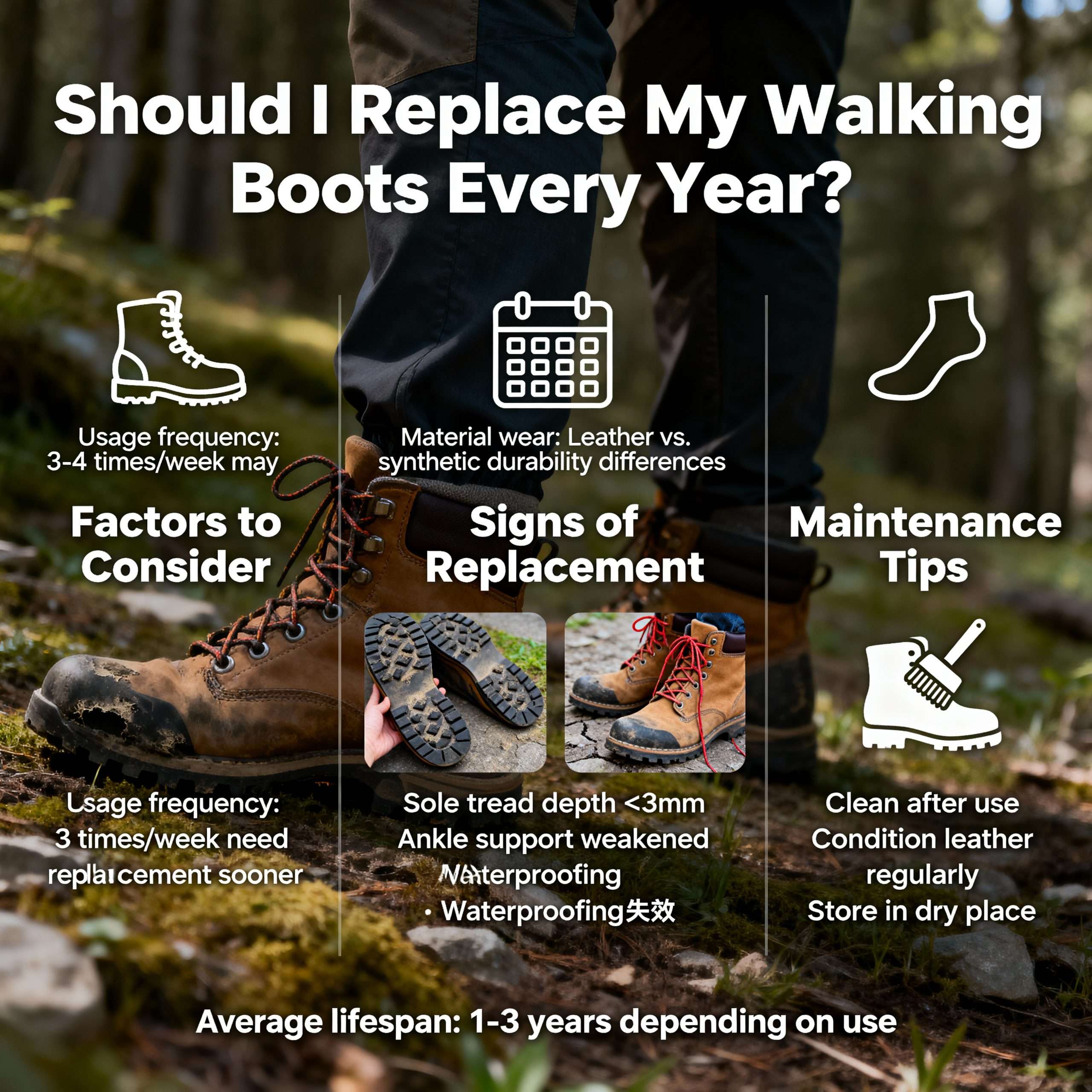
You don’t have to replace your walking boots every year. Their lifespan varies based on materials, terrain, and usage. Regular assessments are essential; signs like discomfort, worn soles, or diminished support indicate it’s time for new boots. Maintenance, such as cleaning and proper storage, can extend their life significantly. Understanding your walking habits also plays a vital role. If you’re curious about specific signs to look for and how to maintain your boots, keep going!
Should I Replace My Walking Boots Every Year? Key Takeaways
- The lifespan of walking boots varies based on materials, terrain, and maintenance; not all need replacement every year.
- Regular assessments of comfort, support, and tread wear are vital to determine if boots need replacement.
- Frequent walking on rugged terrain accelerates wear, potentially necessitating earlier replacement than boots used on flat surfaces.
- Trusting your instincts about discomfort and boot condition can prevent foot injuries and ensure optimal performance.
- Proper maintenance, such as cleaning and air drying, can significantly extend the lifespan of your walking boots.
Understanding the Lifespan of Walking Boots
When you’re out on the trails, it’s easy to overlook how much wear and tear your walking boots endure. Understanding their lifespan hinges on a few key durability factors. Regularly inspecting your boots can help you gauge their condition and identify any signs of damage before they compromise your comfort and safety. It’s essential to invest in the best hiking boots for UK trails, as these are designed to withstand the unique challenges posed by varied terrains and weather conditions. Taking proactive measures to care for your walking boots will extend their lifespan and enhance your overall hiking experience.
The boot materials play a crucial role in determining how long they’ll last. For example, leather offers great durability but can be heavier, while synthetic options are lighter and more breathable but mightn’t hold up as well over time.
Additionally, the type of terrain you frequently traverse affects their longevity. Regular maintenance, like cleaning and waterproofing, can extend their life.
Signs That Indicate It’s Time for a Replacement
How can you tell if your walking boots have hit their limit? First, pay attention to your boot comfort. If you start feeling discomfort, blisters, or hot spots during your walks, it’s a sure sign they’re past their prime.
Next, inspect the sole integrity. Look for signs of excessive wear, cracks, or uneven tread. If the soles feel thin or you can see the cushioning wearing down, it’s time for a change.
Also, if your boots no longer provide the support they once did, don’t hesitate to replace them. Trust your instincts—if you notice these changes, your feet will thank you for investing in a new pair.
Keeping your feet happy is essential for enjoyable walks!
The Impact of Wear and Tear on Performance
The wear and tear on your walking boots can significantly affect your overall performance on the trails. As the tread wears down, you’ll experience performance degradation, leading to less grip and stability. This can make navigating uneven terrain more challenging and increase your risk of slipping or twisting an ankle. To ensure optimal performance and comfort, it’s essential to choose the right footwear, particularly if you have wider feet. Investing in the best walking boots for wide feet can provide the necessary support and cushioning, allowing you to tackle challenging trails with confidence. Regularly inspecting your boots for signs of wear and replacing them when needed can also help prevent injuries and enhance your hiking experience.
Additionally, reduced cushioning from worn-out soles can cause discomfort during longer hikes, impacting your endurance. If you notice significant tread wear, it’s a clear sign that your boots are losing their effectiveness. Ignoring this can result in poor performance and even injury.
Regularly assessing your boots for wear and tear will help ensure you maintain the best possible experience on your walking adventures.
Evaluating Your Walking Habits and Terrain
Are you considering how often you hit the trails and the types of terrain you tackle? Evaluating your walking habits is crucial in determining when to replace your boots.
If you frequently walk on rugged terrain types like rocky paths or muddy trails, your boots will wear down faster. Different walking styles can also impact the lifespan of your footwear. For instance, if you enjoy brisk hiking or running, your boots may face more stress compared to casual strolls on flat surfaces.
Take note of how often you walk and the conditions you encounter. This awareness will help you assess whether your boots are still providing the support and protection you need for your adventures.
Maintenance Tips to Extend the Life of Your Boots
To keep your walking boots in top shape, regular cleaning is essential.
Make sure you also store them properly to avoid unnecessary wear and tear.
Regular Cleaning Practices
Regularly cleaning your walking boots can significantly extend their lifespan and keep them performing at their best. Aim to clean your boots after every hike, especially if you’ve trekked through mud or water.
Different boot materials require specific care; for example, leather boots often need conditioning, while synthetic materials may just need a simple rinse. Use a soft brush for dirt removal and a damp cloth for stubborn spots.
Allow your boots to air dry naturally, avoiding direct heat sources, which can damage materials. Regular cleaning not only enhances appearance but also prevents buildup that can lead to wear and tear.
Proper Storage Techniques
After cleaning your walking boots, proper storage is key to maintaining their condition and performance.
Start by keeping them in a cool, dry place, away from direct sunlight. This helps with temperature regulation and prevents materials from breaking down.
Use a breathable bag or box to store them, allowing for air circulation while protecting them from dust. To ensure humidity control, consider using silica gel packs or moisture-absorbing products to keep the interior dry.
Avoid storing your boots in damp areas, as this can lead to mold and unpleasant odors.
Lastly, always store them with the laces loosened and insoles removed, which helps maintain their shape and longevity.
Following these tips will extend the life of your beloved boots.
Making an Informed Decision on Replacement Timing
When should you consider replacing your walking boots? It’s crucial to assess their condition regularly. Look for signs of excessive wear, such as frayed seams, compromised waterproofing, or a worn-out sole. If your boots are no longer providing the support and protection you need, it may be time to invest in a new pair. Additionally, using normal shoe polish for walking boots can help maintain their appearance, but it won’t replace the need for new boots when they’re past their prime.
Different boot materials wear out at varying rates, influencing your replacement frequency. If you notice cracks, worn-out soles, or compromised waterproofing, it’s time for a change.
Pay attention to how the boots feel—if they no longer provide support or comfort, they might be past their prime.
Also, consider your activity level; frequent hikers may need to replace their boots more often than casual walkers.
Keeping a close eye on the signs of wear can help you make an informed decision about when to invest in a new pair, ensuring your feet remain protected and comfortable on every adventure.
Frequently Asked Questions
Can I Repair My Walking Boots Instead of Replacing Them?
Yes, you can repair your walking boots instead of replacing them. Explore various repair techniques, like patching holes or replacing laces. Regular boot maintenance will also extend their life, helping you save money in the long run. In addition to those techniques, you might consider using specialized adhesive products designed for outdoor gear. These can be particularly effective when repairing waterproof hiking boot tears, ensuring that your boots remain functional and dry during treks. Additionally, taking the time to regularly clean and treat your boots can prevent deterioration and make repairs easier. It’s also important to be aware that over time, can hiking boots lose waterproofing due to wear and tear or exposure to harsh conditions. Regularly reapplying a waterproofing treatment can help maintain their protective qualities. By being proactive in both repair and maintenance, you can enhance the longevity of your footwear and ensure that it performs at its best on all your adventures.
How Do Different Brands Affect the Lifespan of Walking Boots?
Different brands impact your walking boots’ lifespan significantly. Higher-priced brands often offer better durability and quality, while cheaper options might wear out quickly. Always consider brand reputation when choosing boots for your adventures.
Are There Specific Materials That Last Longer in Walking Boots?
Yes, leather typically offers better durability than synthetic materials, making it a long-lasting choice for walking boots. However, high-quality synthetic options can also provide excellent longevity, depending on their construction and intended use.
What Are the Environmental Impacts of Replacing Walking Boots Frequently?
Replacing walking boots frequently increases your carbon footprint and contributes to waste. Opting for sustainable materials can reduce environmental impact, so consider repairing or choosing durable boots to minimize harm to the planet.
How Often Should I Clean My Walking Boots to Prolong Their Life?
You should clean your walking boots every few weeks, especially after muddy hikes. Regular cleaning keeps them in good shape. Use these maintenance tips: brush off dirt, rinse, and let them dry naturally to prolong their life.
Conclusion
Ultimately, whether you should replace your walking boots every year depends on your usage and their condition. Keep an eye out for signs of wear and tear and consider how often you hit the trails. Regular maintenance can help extend their life, but if you notice decreased performance or comfort, it might be time for a new pair. Trust your instincts—your feet will thank you for making the right choice!
