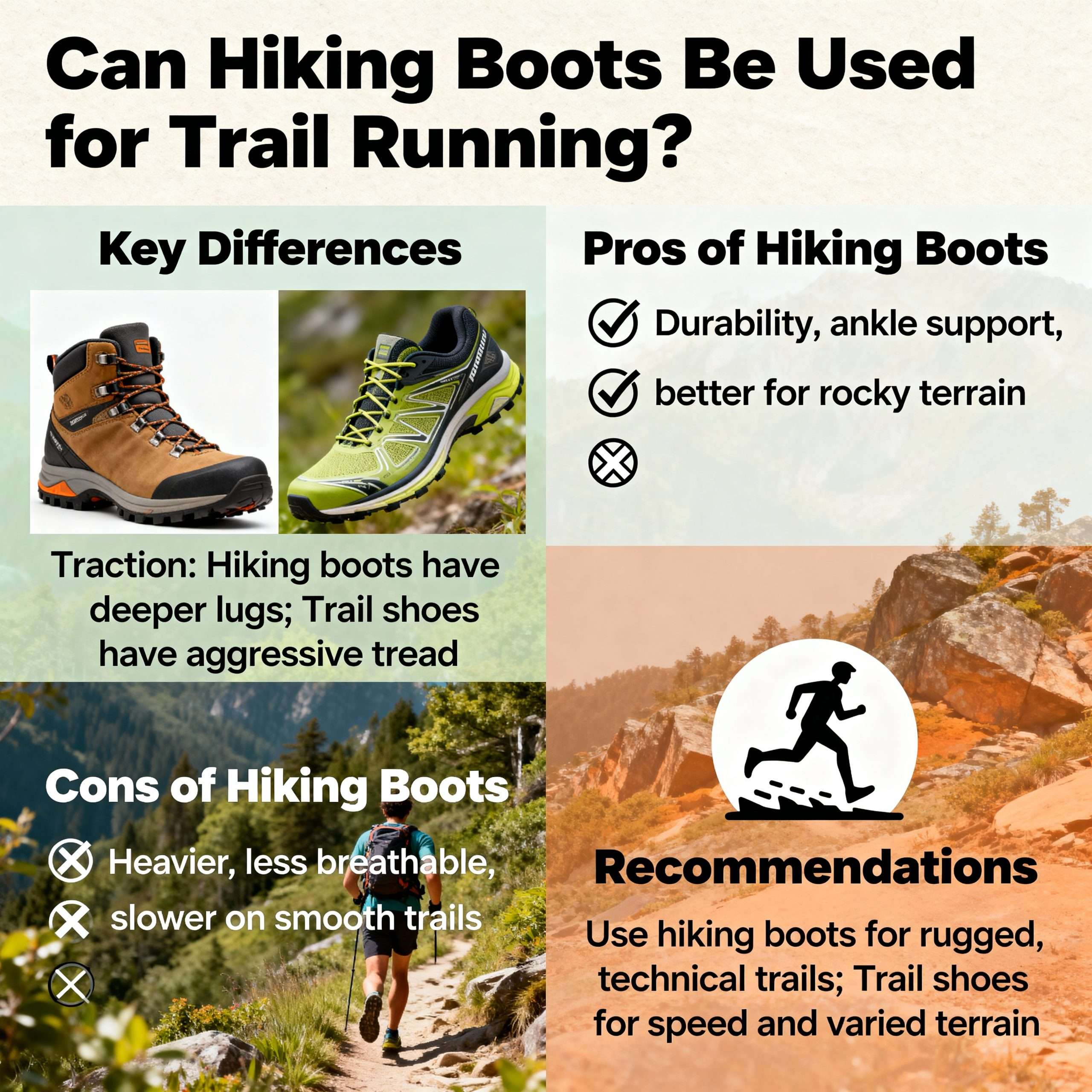
Yes, you can use hiking boots for trail running, but there are trade-offs. They offer great comfort and protection, especially on rough terrain. However, their added weight and stiffness can slow you down and limit your agility. The tread may not provide enough grip for sharp turns either. If you want to find the best footwear for your adventures, you might want to consider design features and your specific trail running needs.
Can Hiking Boots Be Used for Trail Running? Key Takeaways
- Hiking boots offer superior comfort and protection, making them a viable option for long runs on challenging terrain.
- Their sturdy construction provides excellent support against rocks and roots, reducing fatigue on uneven paths.
- However, the added weight and rigidity can hinder agility and slow down running pace.
- The tread design may not provide sufficient grip for quick turns, impacting performance.
- Overall, while hiking boots can be used for trail running, they may not be ideal for performance-focused runners.
Understanding the Design Differences
When you compare hiking boots to trail running shoes, you’ll notice several key design differences that impact performance and comfort.
Hiking boots feature a stiffer boot construction, providing excellent ankle support and durability for rugged terrain. This rigidity can limit your foot’s natural movement, making them less suitable for quick, agile maneuvers typical in trail running.
In contrast, trail running shoes emphasize outsole flexibility, allowing your feet to adapt to varying surfaces. The lighter materials and lower profiles of these shoes enhance speed and agility, letting you navigate trails more efficiently.
Understanding these differences will help you choose the right footwear for your activities, ensuring you enjoy both comfort and performance on the trail.
Pros of Using Hiking Boots for Trail Running
While trail running shoes are often preferred for their agility, there are several advantages to using hiking boots that can enhance your experience on rugged trails.
One of the key benefits is their superior comfort levels, especially during long runs. Hiking boots typically provide more cushioning and support, which can help reduce fatigue on uneven terrain.
Additionally, their sturdy construction offers excellent protection against rocks and roots, keeping your feet safe from potential injuries.
Weight considerations also play a role; while they may be heavier than trail runners, this added weight often translates to increased stability, making it easier to navigate challenging paths.
Ultimately, if you prioritize comfort and protection, hiking boots can be a viable option for trail running.
Cons of Using Hiking Boots for Trail Running
Although hiking boots offer comfort and protection, they can hinder your trail running performance in several ways.
First, their heavier weight can disrupt your weight distribution, making it harder to maintain a quick pace on uneven terrain. You might find that the added bulk slows you down, especially during long runs.
Additionally, while hiking boots provide solid ankle support, this can be a double-edged sword. The rigidity may restrict your ankle’s natural movement, limiting your agility and responsiveness on the trail.
Furthermore, the tread designed for hiking mightn’t offer the grip you need for quick turns or steep descents.
Key Features to Look for in Trail Running Shoes
If you’re venturing into trail running, choosing the right shoes is crucial for your performance and comfort.
Look for shoes made from lightweight, breathable shoe materials that provide durability and protection. A good grip is essential, so opt for outsoles with aggressive tread patterns suitable for various terrains.
Pay attention to cushioning systems as well; they should offer adequate support to absorb impact while maintaining responsiveness. Minimalist designs can enhance your connection to the ground, but make sure you have enough cushioning for longer runs.
Additionally, consider a secure fit to prevent blisters and enhance stability. By focusing on these key features, you’ll enhance your trail running experience significantly.
Evaluating Your Own Trail Running Needs
Before you choose your trail running shoes, consider the type of terrain you’ll be tackling.
Are you running on rocky paths, muddy trails, or smooth dirt?
Also, think about what feels comfortable for you in terms of fit and support—your personal preferences play a big role in your performance.
Assessing Terrain Type
When you’re planning your trail running adventures, understanding the terrain you’ll be navigating is crucial for selecting the right gear. Different surfaces can significantly impact your performance and safety.
If you’ll be running on rocky paths, you’ll need footwear that offers excellent traction and protection to keep your feet safe from sharp stones. In contrast, muddy trails require a shoe that can grip slippery surfaces and prevent you from sliding.
Consider how often you’ll encounter these conditions and whether you’ll need additional features like waterproofing for those wet paths. By evaluating the terrain type, you can better determine if your hiking boots will meet your trail running needs or if you should invest in specialized running shoes.
Personal Comfort Preferences
Understanding your personal comfort preferences is essential for selecting the right hiking boots for trail running. You need to consider your personal fit—how the boots hug your foot, the width, and the arch support.
A proper fit can significantly impact your comfort level, especially during those long runs on rugged trails. If you prefer a snug feeling, look for boots that provide a tight fit without constriction. On the other hand, if you like a bit of wiggle room, opt for a looser style.
Pay attention to cushioning and breathability, as these factors can enhance your overall experience. Ultimately, the right combination of fit and comfort level will make your trail running enjoyable and less tiring.
Making the Right Footwear Choice for Your Adventures
Choosing the right footwear for your adventures can make all the difference in your comfort and performance on the trail.
Whether you’re hiking or trail running, you need shoes that offer both support and flexibility. Hiking boots can provide excellent footwear durability, but they may not be the best choice for all running conditions.
Trail running shoes, on the other hand, are designed to enhance your adventure performance with lightweight materials and better traction.
It’s essential to consider the terrain and your specific activity when selecting footwear. Test different options to find what feels best on your feet, ensuring you’re ready to tackle any trail with confidence and ease.
The right shoes can truly elevate your outdoor experience.
Frequently Asked Questions
Can Hiking Boots Cause Blisters During Trail Running?
Yes, hiking boots can cause blisters during trail running if they don’t fit well. Prioritize blister prevention by ensuring your boots fit properly, allowing for movement without friction, and consider moisture-wicking socks for added comfort.
How Do Hiking Boots Affect Running Speed?
Hiking boots often weigh more than running shoes, which can slow you down. Their bulkiness affects your running efficiency, making it tougher to maintain speed over long distances. Lighter footwear usually enhances performance on trails.
Are There Specific Brands Better for Trail Running?
Yes, some brands excel in trail running. Look for brand comparisons emphasizing performance features like lightweight materials, responsive cushioning, and aggressive tread patterns. Brands like Salomon, Altra, and Hoka One One are popular among runners.
Do Hiking Boots Provide Adequate Grip on Wet Terrain?
Hiking boots can offer decent wet traction and terrain stability, but their effectiveness varies by brand and design. You’ll want to choose ones specifically engineered for slippery conditions to ensure better grip and safety.
Can I Wear Hiking Boots for Ultramarathon Trail Running Events?
You can wear hiking boots for ultramarathon trail running events, but their comfort might compromise your trail running performance. Lightweight trail runners usually offer better flexibility and grip, enhancing your overall experience on long runs.
Conclusion
In conclusion, while hiking boots can offer some support on trails, they’re not always the best option for trail running. Their weight and stiffness might slow you down, but if you prioritize stability or tackle rugged terrain, they could work for you. Ultimately, consider your own needs and the specific trails you’ll face. Choosing the right footwear can enhance your experience and keep you comfortable, so take the time to find what suits your adventures best.
