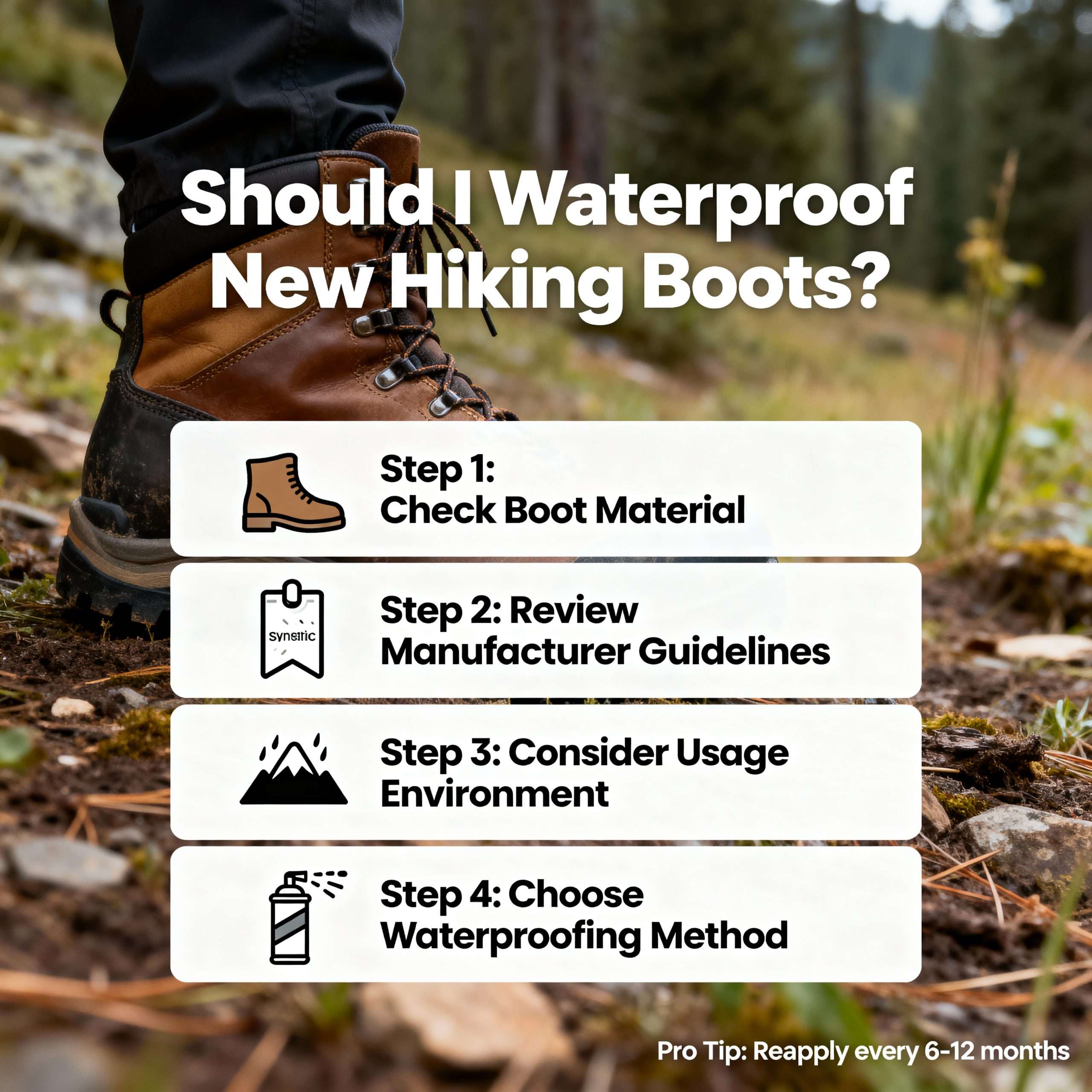
Waterproofing your new hiking boots can greatly enhance your comfort and performance, especially in wet or muddy conditions. It keeps your feet dry and prevents blisters while allowing for breathability. However, be cautious, as waterproofing might also trap moisture, leading to discomfort. Consider your hiking environment and duration before committing to waterproof options. Understanding your needs will help you make the right choice. There’s more to uncover about waterproofing technologies and alternatives.
Should I Waterproof New Hiking Boots? Key Takeaways
- Waterproofing is essential for hiking in wet conditions to keep feet dry and maintain comfort on the trail.
- Consider the climate and hike duration; high breathability is crucial for humid environments.
- Weigh the benefits of moisture protection against potential drawbacks, like trapped sweat and discomfort.
- Explore breathable alternatives or water-resistant treatments if you’re concerned about breathability.
- Proper maintenance of waterproofing treatments is necessary to ensure long-lasting effectiveness over time.
Understanding Waterproofing Technologies
When you’re gearing up for a hike, understanding waterproofing technologies can make all the difference. Different membrane types, like Gore-Tex or eVent, play a crucial role in keeping your feet dry while allowing moisture to escape.
This balance is essential, as you don’t want to trap sweat inside your boots. Breathability factors vary significantly among these membranes; some are designed for high-intensity activities, while others prioritize durability.
Consider how long you’ll be hiking and the climate you’ll encounter. For instance, if you’re tackling steep trails in humid conditions, choose a boot with high breathability.
Benefits of Waterproof Hiking Boots
Not only do waterproof hiking boots keep your feet dry in wet conditions, but they also enhance your overall hiking experience. When you’re trekking through muddy trails or unexpected rain, staying dry is crucial for comfort and performance. Waterproof materials provide a barrier against moisture, allowing you to focus on your surroundings instead of your discomfort.
Breathability considerations are vital; many waterproof boots now incorporate breathable membranes that prevent overheating while still blocking water. This balance helps maintain comfort factors, ensuring your feet stay dry without sacrificing ventilation.
Ultimately, investing in waterproof hiking boots means fewer distractions and more enjoyment on the trail, letting you tackle any adventure with confidence.
Drawbacks of Waterproofing
While waterproofing offers clear advantages, it can also come with some notable drawbacks. One significant issue is waterproofing limitations; while it keeps water out, it often traps moisture inside. This can lead to damp socks and discomfort during long hikes.
You might also face breathability concerns, as many waterproof materials don’t allow your feet to breathe as freely as non-waterproof alternatives. If your feet sweat, you could end up with a hot, clammy experience that detracts from your hike.
Additionally, waterproofing treatments can wear off over time, requiring reapplication or replacement, which adds to your maintenance routine. Ultimately, you need to weigh these drawbacks against your hiking needs before deciding on waterproofing your new boots.
When Waterproofing Is Essential
When you’re hiking in wet weather, waterproofing can be a game-changer.
It helps maintain traction on slippery surfaces and keeps your feet dry during extended outdoor adventures.
If you want to enjoy your hike without the worry of soggy socks, consider waterproofing your boots.
Wet Weather Conditions
Rainy days and muddy trails can quickly turn a pleasant hike into a soggy ordeal if your boots aren’t properly waterproofed.
Investing in waterproofing for your new hiking boots is crucial when you know you’ll face wet weather conditions. Proper moisture management helps keep your feet dry and comfortable, reducing the risk of blisters and other foot issues.
Without waterproofing, your boots may soak up water, leading to heavy, cold footwear that dampens your spirit.
Pair your boots with appropriate wet weather gear, like waterproof socks and breathable pants, to enhance your overall protection.
Don’t let unexpected downpours ruin your adventure—waterproof your boots and stay focused on enjoying the journey ahead.
Traction on Slippery Surfaces
Wet conditions not only soak your boots but can also make trails dangerously slippery. When navigating slippery terrain, having proper traction control is crucial for your safety.
Waterproofing your boots helps ensure that they maintain their grip and performance, even in wet environments. A well-sealed boot keeps the materials dry, allowing the rubber sole to stay flexible and provide optimal traction on slick surfaces.
When boots absorb water, they can become heavy and lose their ability to grip effectively, increasing your risk of slipping and falling.
By investing in waterproofing, you enhance your confidence and stability on challenging trails, ensuring that you can tackle any adventure without worrying about losing your footing.
Don’t compromise on safety—make waterproofing a priority.
Extended Outdoor Adventures
As you embark on extended outdoor adventures, having waterproof hiking boots becomes essential for keeping your feet dry and comfortable.
Whether you’re trekking through muddy trails or crossing streams, wet feet can lead to blisters and discomfort, ruining your experience. Proper outdoor preparation includes investing in quality hiking gear that withstands various weather conditions.
Waterproof boots will protect you from unexpected rain or snow, ensuring you stay focused on the trail ahead. Additionally, these boots often include breathability features, preventing moisture buildup from sweat.
By prioritizing waterproofing, you’re not just investing in footwear; you’re enhancing your overall hiking experience.
Alternatives to Waterproofing
While waterproofing is a popular choice for hikers, there are several effective alternatives that can keep your feet dry and comfortable.
One option is to choose boots made from breathable materials. These allow moisture to escape while providing a barrier against water, ensuring your feet stay dry during hikes.
Another alternative is to use water resistant treatments on your boots. These treatments can enhance the natural water resistance of the material without compromising breathability.
Additionally, wearing moisture-wicking socks can help manage sweat and keep your feet dry.
Lastly, consider planning your hikes around weather conditions to avoid wet environments when possible.
Making the Right Choice for Your Hiking Needs
How do you determine which hiking boots are right for your adventures? First, consider the hiking terrain you’ll encounter. If you’re tackling rocky paths or muddy trails, opt for boots with durable materials like leather or synthetic blends that offer both support and flexibility.
For wet conditions, waterproof boot materials are essential to keep your feet dry and comfortable. Next, think about the boot’s weight and breathability—lighter materials are great for long treks, while breathable fabrics help regulate temperature.
Lastly, ensure the fit is snug but not tight, allowing for some wiggle room in your toes. By assessing these factors, you can confidently choose boots that will enhance your hiking experience and keep you prepared for any challenge along the way.
Frequently Asked Questions
Can I Waterproof My Boots After Purchasing Them?
Yes, you can waterproof your boots after purchasing them. For effective boot care, use treatment methods like sprays or waxes. These options help protect your boots from water damage and extend their lifespan significantly.
How Often Should I Reapply Waterproofing Treatments?
You should reapply waterproofing treatments every few months, depending on reapplication frequency and treatment types. If you hike frequently or in wet conditions, consider applying more often to maintain effective protection.
Are All Waterproof Boots the Same?
No, not all waterproof boots are the same. Different boot materials and waterproof technologies affect performance and durability. You should research specific brands and features to find the right pair for your hiking needs.
Will Waterproofing Affect Breathability?
Waterproofing methods can impact breathability concerns. While some treatments maintain good airflow, others may restrict it, leading to sweaty feet. Choose a method wisely to balance waterproofing with the breathability you need on hikes.
Can I Use Regular Spray on My Hiking Boots?
You can use regular spray on your hiking boots, but ensure it’s suitable for their materials. Different spray types work better with specific boot materials, so choose wisely for the best protection and performance.
Conclusion
In the end, deciding whether to waterproof your new hiking boots depends on your hiking style and environment. If you often tackle wet or muddy trails, waterproofing can keep your feet dry and comfortable. However, if you prefer dry conditions, you might skip it. Consider your needs and weigh the pros and cons of waterproofing technologies. Whatever you choose, make sure your boots fit well and suit your hiking adventures for the best experience on the trails.
