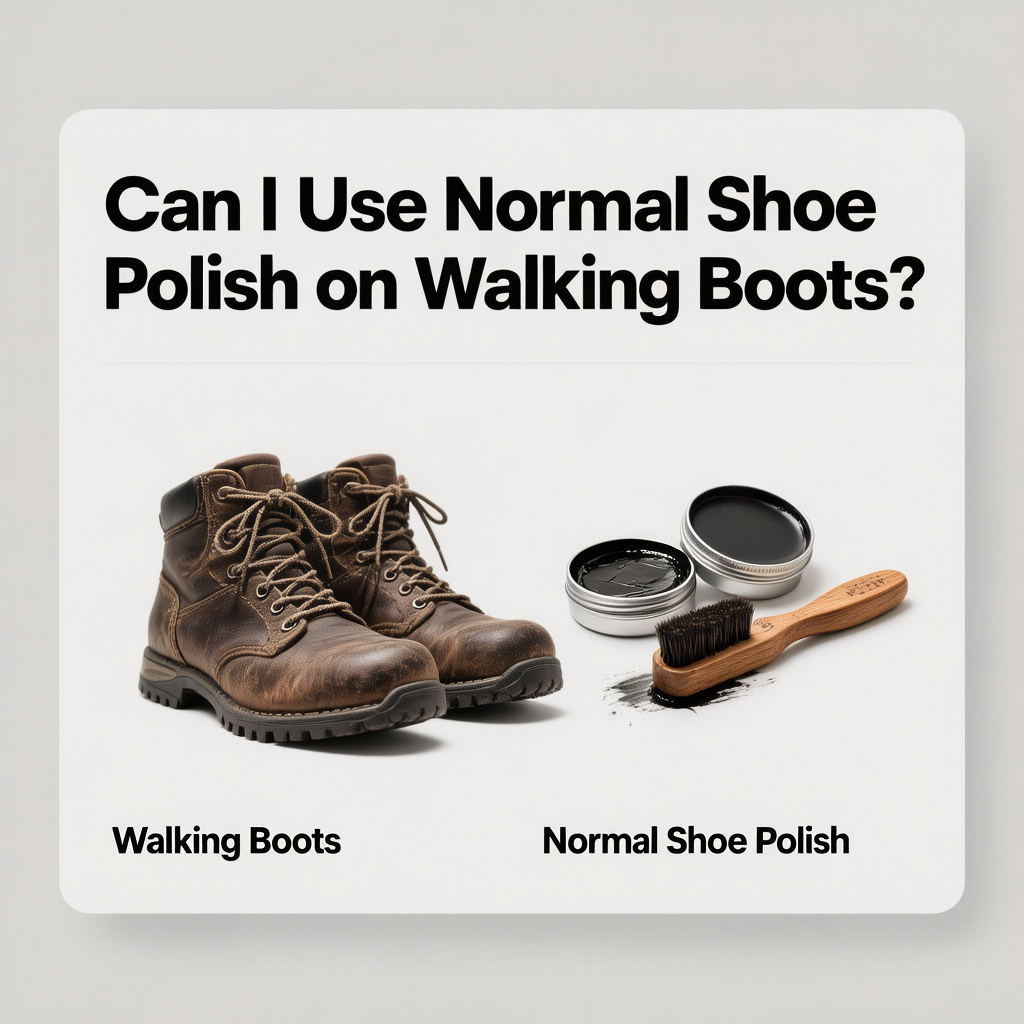
Using normal shoe polish on walking boots isn’t recommended. It can damage the materials and disrupt their waterproofing capabilities. Walking boots require specialized care products that clean, protect, and maintain their unique materials. Regular shoe polish may lead to fading or uneven tint, compromising your boots’ performance. To keep your boots in top shape, consider other maintenance techniques and suitable products designed specifically for them. Learn more about proper boot care techniques and alternatives.
Can I Use Normal Shoe Polish on Walking Boots? Key Takeaways
- Normal shoe polish can damage synthetic materials used in many walking boots, affecting their performance and appearance.
- It may clog the pores of waterproof fabrics, compromising their waterproofing capabilities.
- Specialized boot care products are designed to clean and protect walking boots without causing material damage.
- Using normal shoe polish can lead to uneven color application, fading, or altering the boot’s original tint.
- Invest in specialized cleaners and conditioners to ensure longevity and optimal performance of walking boots.
Understanding the Composition of Shoe Polish
Shoe polish is a blend of various ingredients designed to clean, protect, and enhance the appearance of leather. To understand how it works, consider the polish ingredients: waxes provide a protective layer, oils nourish the leather, and pigments add color.
These components work together to keep your boots looking their best while preventing damage.
When applying shoe polish, you’ll want to use effective application techniques. Start by cleaning the boots thoroughly to remove dirt and debris.
Then, using a soft cloth or applicator, spread the polish evenly, making sure to cover all areas. Allow it to dry before buffing with a brush for a nice shine.
Following these steps ensures your walking boots maintain their integrity and appearance.
The Importance of Specialized Boot Care Products
While normal shoe polish can enhance the appearance of your walking boots, it’s important to recognize the benefits of specialized boot care products.
These products are designed specifically for the materials used in walking boots, ensuring they receive the right treatment for maximum boot longevity. Specialized cleaners and conditioners can effectively remove dirt and moisture while nourishing the leather or fabric, preventing damage over time.
Moreover, using the correct cleaning techniques helps maintain the boots’ waterproofing features and breathability. By investing in these tailored products, you not only preserve the functionality of your boots but also enhance their overall performance on the trail.
Ultimately, specialized boot care keeps your gear in top shape, ready for your next adventure.
Potential Risks of Using Regular Shoe Polish
Using regular shoe polish on your walking boots can lead to several issues you mightn’t expect.
You could face material compatibility problems, which can damage your boots over time.
Additionally, it might compromise the waterproofing and alter their color, leaving you with more than just a cosmetic concern.
Material Compatibility Issues
When you apply regular shoe polish to walking boots, you might unknowingly damage the materials. Many walking boots are made from specialized materials designed for durability and performance.
Regular shoe polish can compromise this material durability, leading to issues like cracking or discoloration. The ingredients in standard polish, like dyes and waxes, may not be compatible with synthetic or breathable fabrics. This can affect the product effectiveness, reducing your boots’ ability to withstand harsh conditions.
Instead of enhancing the look, you could end up shortening their lifespan. To maintain your boots, it’s best to use products specifically formulated for their materials, ensuring they stay in top condition and perform as intended during your adventures.
Waterproofing Compromise
Applying regular shoe polish to your walking boots can compromise their waterproofing capabilities, leaving you vulnerable to wet conditions.
These polishes often contain waxes and dyes that can clog the breathable membranes designed for waterproofing. When you rely on these traditional products, you risk undermining the specialized waterproofing techniques your boots are built with.
Instead of providing a protective barrier, regular polish can create a false sense of security while allowing moisture to seep in.
For effective boot maintenance, stick to products specifically formulated for your walking boots, ensuring they remain waterproof and functional.
Protect your investment by choosing the right care options to prolong the life of your boots and keep your feet dry on every adventure. By investing in high-quality care products and following proper maintenance routines, you can ensure that your boots remain in top condition, ready for any outdoor challenge. Additionally, if you’re in the market for new footwear, consider exploring the best affordable hiking boots in the UK, which provide both comfort and durability without breaking the bank. With the right combination of care and quality gear, your hiking experience will be elevated, allowing you to fully enjoy the beauty of nature.
Color Alteration Risks
Regular shoe polish can also pose a significant risk of color alteration for your walking boots.
Different polish types contain various dyes and chemicals that mightn’t match your boots’ original color. When you apply a regular polish, you could end up with color fading or an uneven tint, which can be particularly noticeable on lighter materials.
If your boots are made from suede or nubuck, the wrong polish can even damage the texture and appearance. Always test a small, inconspicuous area first to see how the color reacts.
To maintain your boots’ original look, consider using a polish specifically designed for them, ensuring you keep their aesthetic intact while also providing protection.
Effects on Different Boot Materials
When it comes to boot care, the material of your walking boots matters a lot.
Applying regular shoe polish on leather might give it a nice shine, but it could harm synthetic materials or compromise waterproofing.
Understanding how different materials react to polish can help you make the right choice for your boots.
Leather Boot Care
Leather boots require special care to maintain their durability and appearance, especially when compared to other materials like synthetic fabrics or rubber.
To keep your leather boots in top shape, you should focus on proper leather cleaning and conditioning techniques. Start by using a soft brush to remove dirt and debris, then apply a suitable leather cleaner to prevent damage.
After cleaning, it’s crucial to condition the leather to keep it supple and prevent cracking. Choose a high-quality leather conditioner, applying it evenly and allowing it to absorb.
Regular maintenance not only enhances the boots’ look but also extends their lifespan, ensuring you get the most out of your investment.
Synthetic Material Concerns
While leather boots have their unique care requirements, synthetic materials present their own set of concerns that can impact the longevity and performance of your walking boots.
Using normal shoe polish on synthetic materials can compromise their durability, leading to potential damage.
Synthetic fabrics, like nylon or polyester, often rely on specific treatments for optimal performance. If you apply shoe polish, it can clog pores, affecting breathability and moisture management.
To maintain synthetic durability, you should focus on regular cleaning and use specialized products designed for these materials.
Adjusting your maintenance frequency based on wear and environmental conditions will help preserve your boots.
Waterproofing Impact
Using regular shoe polish on synthetic materials can hinder their performance, especially when it comes to waterproofing.
Many walking boots use advanced waterproofing techniques designed to keep your feet dry. When you apply standard polish, it can clog the pores of these materials, preventing them from breathing and reducing their ability to repel water. This can lead to moisture buildup inside the boot, compromising comfort and boot longevity. To ensure optimal performance, it is essential to choose footwear that is compatible with your specific needs, such as the best walking boots for wide feet. By selecting boots designed for your foot shape, you can enhance comfort and support, allowing for better mobility on your adventures. Always prioritize the maintenance of waterproofing features to guarantee that your footwear remains effective in keeping your feet dry despite the conditions.
On the other hand, using products specifically formulated for synthetic boots will maintain their waterproofing properties while enhancing durability.
Always check the care instructions for your boots and opt for waterproofing sprays or creams meant for the material to ensure optimal performance and protection against the elements. In addition to regular waterproofing, being proactive about maintaining your boots can extend their lifespan significantly. If you notice any damages or leaks, take the time to address these issues promptly; repairing waterproof hiking boots can often save you from needing to invest in a new pair. Remember that proper storage and cleaning techniques also play a critical role in keeping your footwear in top shape.
Recommended Care Techniques for Walking Boots
Caring for your walking boots is essential to ensure they last for many adventures. Start with regular boot cleaning; after each hike, remove dirt and mud using a soft brush or cloth. If they’re particularly dirty, use lukewarm water and a mild soap. Always let your boots air dry away from direct heat sources.
For maintenance tips, apply a suitable waterproofing treatment every few months, especially if you notice water absorption. Check the laces and eyelets for wear, replacing them as needed to ensure a snug fit.
Finally, store your boots in a cool, dry place, avoiding damp areas, to keep them in top condition. With these simple techniques, your walking boots will be ready for your next adventure!
Alternative Products for Boot Maintenance
When it comes to maintaining your walking boots, several alternative products can enhance their longevity and performance. Applying a waterproof treatment can protect against moisture and prevent damage, while a suitable cleaner can remove dirt and grime without compromising the material. Additionally, if you’re in the market for new footwear, consider the best hiking boots for comfort to ensure an enjoyable trekking experience. Regularly inspecting and replacing laces and insoles will also contribute significantly to the overall durability of your boots. It’s important to remember that even the best boots can experience wear over time, raising the question, ‘can hiking boots lose waterproofing?’ Regularly reapplying waterproof treatments can help maintain their protective qualities, but aging materials can still become less effective. Ultimately, keeping an eye on their performance will help you determine when it’s time for a replacement.
For effective boot cleaning, consider using specialized cleaners that target dirt and grime without damaging the materials. Waterproofing sprays are another great option; they help keep your boots dry and protected from moisture.
You might also want to explore conditioning creams that nourish leather and prevent cracking. Incorporating these products into your maintenance routine will ensure your boots remain in top shape for years to come.
Don’t forget to regularly check for wear and tear, and treat any issues promptly to avoid bigger problems down the road. Keeping your boots well-maintained will make your walking experience much more enjoyable.
Frequently Asked Questions
Can Regular Shoe Polish Damage Waterproof Walking Boots?
Yes, regular shoe polish can damage waterproof materials, compromising your boots’ functionality. It may lead to reduced boot longevity, so it’s best to use products specifically designed for waterproof walking boots to maintain their effectiveness.
How Often Should I Polish My Walking Boots?
You should polish your walking boots every few months, depending on usage. Regular boot care enhances longevity and performance. If you’re frequently hiking, consider more frequent maintenance to keep them in top shape.
Is There a Specific Application Technique for Walking Boots?
Yes, you should use specific application methods for walking boots. Start by cleaning them thoroughly, then apply polish with a soft cloth in circular motions, ensuring even coverage for optimal protection and appearance.
Can Shoe Polish Affect Boot Breathability?
Yes, shoe polish can affect boot breathability. Many polish ingredients create a barrier, trapping moisture inside. To maintain breathability factors, use products specifically designed for walking boots that allow air circulation while providing necessary protection.
What Should I Do if I Accidentally Used Regular Polish?
If you accidentally used regular polish, clean your boots thoroughly with a damp cloth. Consider using boot care products specifically designed for your boots. Explore polish alternatives that enhance protection without compromising breathability.
Conclusion
In conclusion, while you might be tempted to use regular shoe polish on your walking boots, it’s best to avoid it. Specialized boot care products are designed to protect and maintain the unique materials of your footwear. Using the wrong polish can lead to damage and reduced performance. Instead, invest in products specifically made for your boots to ensure they stay in top shape for all your adventures. Your feet will thank you!
