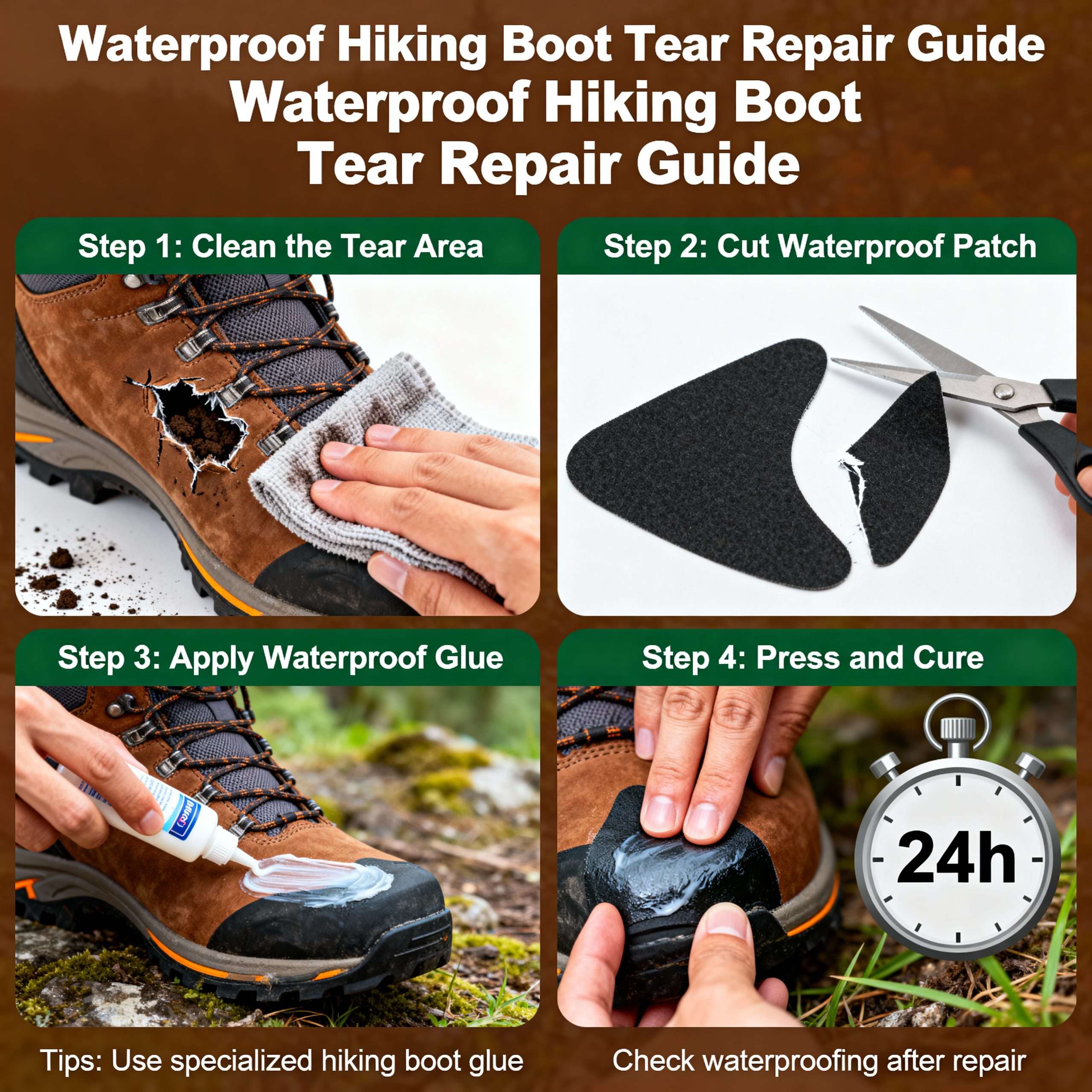
Yes, you can repair a tear in your waterproof hiking boots. Start by assessing the damage and gathering high-quality adhesives and patches. Clean the torn area thoroughly, then apply the adhesive and press the edges together. For larger tears, consider using a patch for extra support. Don’t forget to test their waterproof integrity afterward. If you want to ensure a proper repair and maintenance, there’s more useful info ahead.
Can I Repair a Tear in Waterproof Hiking Boots? Key Takeaways
- Yes, tears in waterproof hiking boots can be repaired using specialized repair adhesives and waterproof patch materials.
- Assess the damage type and location to determine the best repair method, especially near seams.
- Clean the affected area thoroughly before applying adhesive to ensure a strong bond.
- Use patches for larger tears and test the repair by submerging the boots in water.
- Regular maintenance and inspections can prevent further damage and extend the life of your boots.
Understanding the Construction of Waterproof Hiking Boots
When you look at waterproof hiking boots, you’ll notice they’re engineered for durability and protection. These boots often feature advanced materials that repel moisture while allowing breathability, ensuring your feet stay dry and comfortable on any terrain. As you explore options, keep an eye out for the best hiking boots for 2025, as brands are continuously innovating to enhance performance and comfort. Investing in high-quality waterproof hiking boots can significantly elevate your outdoor experience, giving you the confidence to tackle challenging trails. Proper care of your boots is essential for their longevity. Be sure to follow waterproof hiking boot maintenance tips, such as cleaning them after each hike and applying suitable waterproofing treatments when necessary. This will ensure that your investment remains in top condition, providing the best protection and comfort for every adventure.
The construction typically involves high-quality boot materials that can withstand rugged terrains. These materials include leather, synthetic fabrics, and rubber, which provide both support and flexibility. In addition to durability, these high-quality materials help ensure a comfortable fit for extended wear on trails. For those seeking affordability without compromising on performance, exploring options like the best budget hiking boots UK can be a smart choice. Such boots often incorporate advanced technologies that enhance traction and moisture management, making them suitable for various outdoor adventures. Additionally, it’s essential to consider features like waterproofing and breathability when selecting footwear for outdoor activities. Many brands offer the best hiking boots for men that combine innovative designs with practical functionality, ensuring optimal performance on the trail. By investing in such reliable footwear, hikers can tackle diverse environments with confidence and ease.
A key feature is the waterproof membranes, often made from materials like Gore-Tex, which keep your feet dry while allowing breathability. This combination ensures that moisture doesn’t seep in from external sources, while still letting sweat escape.
The soles are usually designed for traction, enhancing your grip on slippery surfaces.
Understanding these components helps you appreciate the craftsmanship that goes into making boots ready for any adventure, ensuring your feet stay comfortable and protected on the trail.
Assessing the Damage: Types of Tears and Holes
Before you can effectively repair your waterproof hiking boots, it’s crucial to assess the damage. Start by identifying the tear types: a clean cut may be easier to fix than a jagged rip, while punctures require different attention.
Look for holes where water could seep in, as these can compromise the boot’s waterproofing features. During your damage assessment, consider the location of the tear; ones near seams might be more challenging to repair.
Take note of the material involved, as leather and synthetic fabrics have unique repair needs. Understanding the extent of the damage will help you determine the best approach and whether you need professional help or can tackle the repair yourself.
Essential Tools and Materials for Repair
To successfully repair your waterproof hiking boots, you’ll need a few essential tools and materials.
First, gather high-quality repair adhesives designed specifically for footwear. These adhesives will help bond the damaged areas securely.
Next, you’ll want to select appropriate patch materials, such as fabric or rubber, that match the boot’s original construction. Make sure these patches are waterproof to maintain the boot’s integrity.
Don’t forget a pair of sharp scissors for cutting the patch to size and a clean cloth for surface preparation. Some sandpaper can also be handy for roughening up the area to ensure better adhesion.
With these tools and materials on hand, you’ll be well-equipped to tackle your boot repair.
Step-by-Step Guide to Repairing Tears
When you notice a tear in your hiking boots, the first step is to assess the damage closely.
After that, gather the necessary materials to ensure a successful repair.
Finally, you’ll apply the right techniques to restore your boots to their waterproof glory.
Assess the Damage
Assessing the damage on your waterproof hiking boots is crucial before diving into any repairs. Start with tear identification by examining the affected areas closely. Look for any visible rips or punctures, and don’t forget to check the seams and edges, as these are common trouble spots.
Next, conduct a damage evaluation to determine how extensive the tear is. Is it a small split, or has the material been compromised significantly? Consider how this damage might affect the boot’s waterproof capabilities. If you’re unsure, lightly pull on the tear to see if it worsens.
This assessment will guide you in choosing the right repair method and materials later on, ensuring your boots are back in action for your next adventure.
Gather Necessary Materials
Before you start repairing your waterproof hiking boots, you’ll need to gather a few essential materials.
First, check for a suitable repair kit designed for footwear. These kits often include patches, adhesive options, and tools to help with the repair process. Make sure you choose a waterproof adhesive that’s compatible with your boot material.
You might also want a pair of scissors to trim any excess material and a clean cloth for surface preparation. If the tear is significant, consider getting additional patch material, like fabric or rubber, to reinforce the area.
Having everything ready will streamline the repair, ensuring you can get back to your hiking adventures without delay.
Apply Repair Techniques
Now that you’ve gathered all the necessary materials, it’s time to put your repair skills to work. Start by cleaning the tear area thoroughly, ensuring no dirt or debris remains.
Next, apply a suitable adhesive designed for waterproof materials around the tear. Press the edges together firmly, making sure the adhesive seeps into the tear for a strong bond.
If the tear is significant, consider using a patch of waterproof fabric over it, securing it with more adhesive. Allow the repair to cure according to the adhesive instructions, usually 24 hours.
Finally, test your boots by submerging them in water to ensure the repair holds and remains waterproof. Enjoy your newly restored hiking boots!
Tips for Maintaining Waterproof Integrity
To keep your waterproof hiking boots performing at their best, regular maintenance is key.
Start by cleaning them after every hike to remove dirt and debris that can damage waterproof materials. Use a soft brush and mild soap, then let them air dry naturally—never use heat sources.
Inspect your boots regularly for any signs of wear or damage, focusing on seams and fabric. If you notice any issues, address them immediately with appropriate repair techniques.
Reapply a waterproofing treatment every few months to maintain their integrity, especially after thorough cleaning.
Lastly, store your boots in a cool, dry place to prevent mold and mildew.
Following these maintenance tips will help extend the life of your hiking boots and keep them waterproof.
When to Seek Professional Help
While it’s possible to handle minor repairs on your hiking boots, there are times when seeking professional help is the best option.
If you notice significant damage, like a deep tear or compromised waterproofing, it’s wise to consult experts. Professional services can assess the issue more accurately and offer solutions that extend the life of your boots.
Additionally, if you’re unsure about your repair skills or lack the right materials, don’t hesitate. Investing in professional repair can save you money in the long run, as improper fixes often lead to higher repair costs later.
Frequently Asked Questions
Can I Use Duct Tape for Temporary Waterproofing?
Yes, you can use duct tape for temporary waterproofing. Its effectiveness lies in creating a quick seal over small leaks. Just remember, it’s a short-term solution, so plan for a more permanent fix soon.
Will Repairing Void My Boot’s Warranty?
Repairing your boots might void warranty policies, depending on the manufacturer. Check their guidelines for specific repair methods, as some allow minor fixes while others require professional services to maintain coverage. Always confirm first! It’s also important to keep in mind that regular maintenance can extend the life of your footwear. Many experts recommend that you replace walking boots annually to ensure optimal performance and support. By following the manufacturer’s recommendations and staying proactive with your repairs, you can enjoy your boots for many adventures to come.
How Long Will the Repair Last?
The repair’s longevity depends on the material durability and the quality of your repair method. If you use strong adhesives and properly patch the tear, you can expect it to last for many hiking adventures.
Can I Repair Boots Made From Different Materials?
Yes, you can repair boots made from different materials, but ensure the repair methods are compatible with each material. Using the right adhesives or patches will enhance durability and maintain your boots’ functionality.
Is It Safe to Wear Repaired Boots in Extreme Conditions?
It isn’t always safe to wear repaired boots in extreme weather. Consider the repair’s quality and materials; if they’re reliable, you might manage, but always prioritize safety considerations to avoid potential hazards during your adventures.
Conclusion
Repairing a tear in your waterproof hiking boots is definitely possible with the right tools and techniques. By understanding the construction of your boots and assessing the damage, you can effectively patch them up and maintain their waterproof integrity. Just remember to follow the steps carefully and keep an eye on their condition over time. If the damage seems beyond your skills, don’t hesitate to seek professional help to ensure your boots are ready for your next adventure.
