The Ultimate Guide
Knowing what to wear hiking in the Lake District is the single most important factor in ensuring your safety and comfort while exploring the Cumbrian fells. The Lake District National Park is world-renowned for its stunning vistas, but it is equally famous for its unpredictable and often harsh weather conditions. Whether you are planning a gentle stroll around a low-level tarn or a challenging ascent of Scafell Pike, your choice of Lake District hiking clothing will determine whether you enjoy the experience or find yourself in a potentially dangerous situation.
For those embarking on Lake District Day Hikes, the terrain can vary from boggy valley floors to exposed, rocky ridges. This diversity requires a versatile Lake District walking outfit that can adapt to rapid changes in temperature, wind speed, and precipitation. In this guide, we will break down the technical requirements of UK hiking clothing layers and provide expert advice on selecting the right Lake District weather clothing for every season.
what to wear hiking in the Lake District
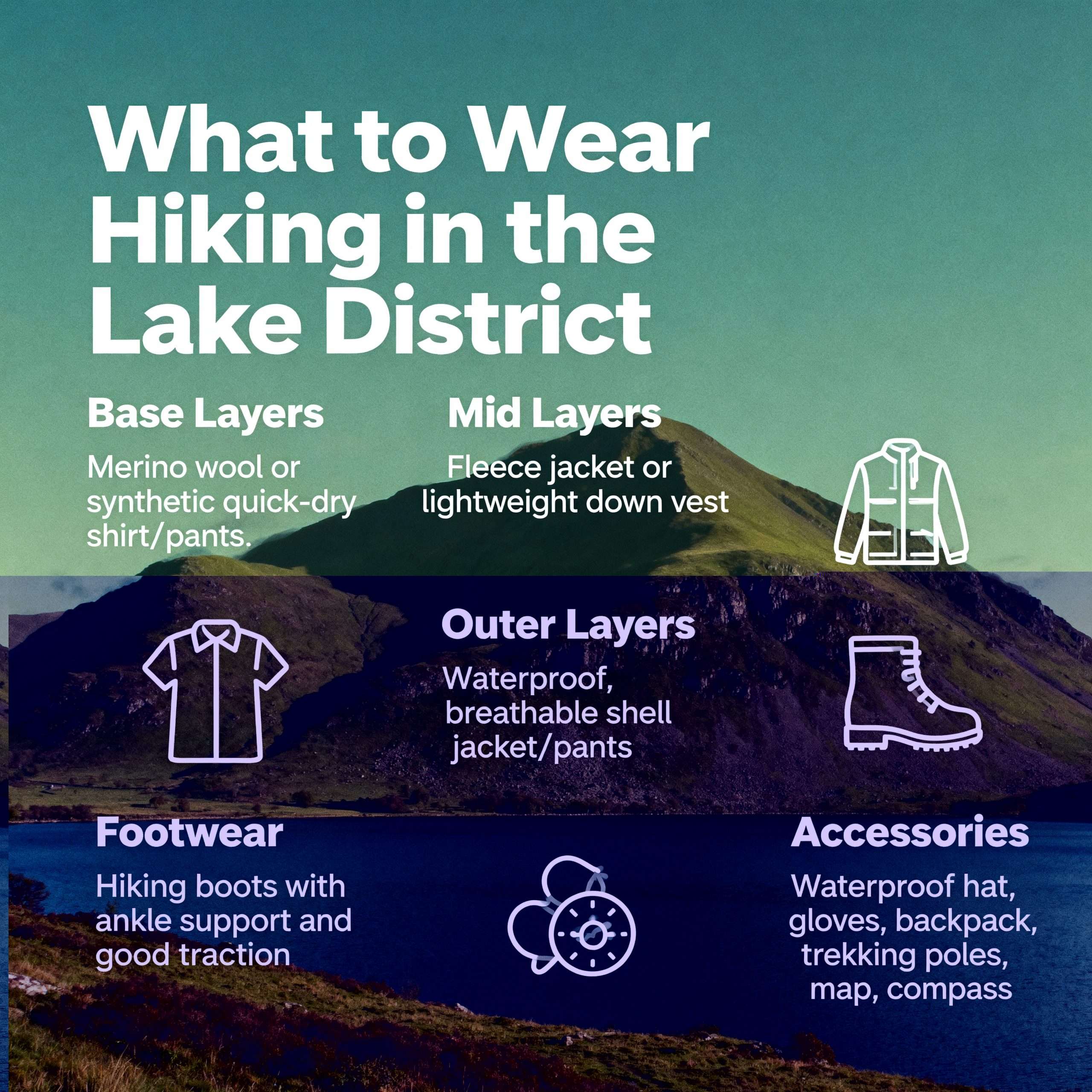
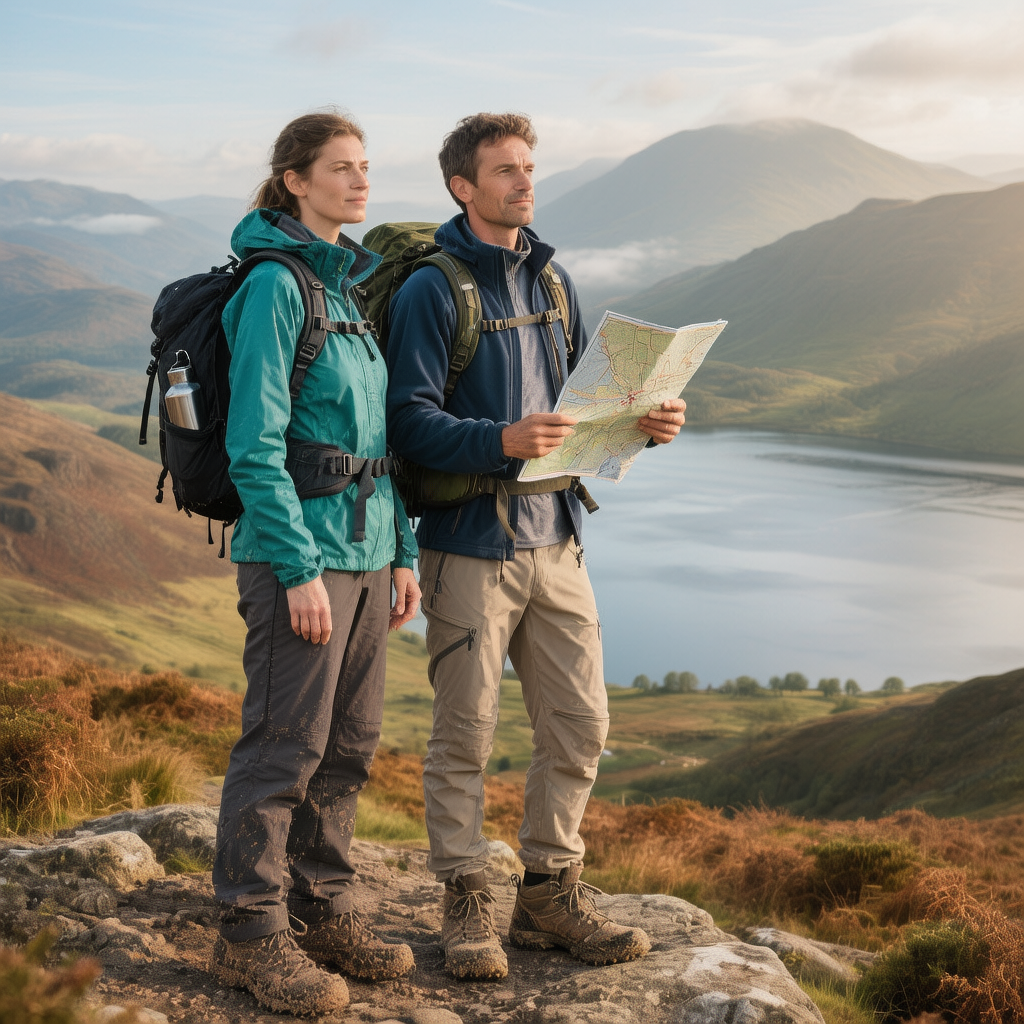
When deciding what to wear hiking in the Lake District, the “layering system” is the gold standard used by mountain professionals and experienced hikers alike. This system involves wearing multiple thin layers rather than one heavy garment, allowing you to add or remove clothing as your exertion levels and the external conditions change. The primary goal of what to wear hiking in the Lake District is to manage moisture (sweat) from the inside while blocking wind and rain from the outside.
A standard Lake District walking outfit consists of three main components: a wicking base layer, an insulating mid-layer, and a protective outer shell. This combination ensures that even if you are caught in a sudden downpour on Helvellyn, you can remain warm and dry. Furthermore, UK hiking clothing layers must be made of synthetic or wool materials; cotton should be strictly avoided as it absorbs water, dries slowly, and can lead to hypothermia in cold, windy conditions.
Safety is the paramount concern. According to Mountain Rescue England & Wales, many call-outs are attributed to hikers being ill-equipped for the weather. By following a structured approach to what to wear hiking in the Lake District, you significantly reduce the risk of exposure-related illnesses. Your clothing is your first line of defence against the elements, and investing in quality Lake District hiking clothing is an investment in your mountain safety.
Understanding Lake District Weather Conditions
The Lake District has a maritime climate, which means it is heavily influenced by the Atlantic Ocean. This results in high rainfall and frequent cloud cover. It is common to experience “four seasons in one day,” where a sunny morning can transition into a torrential afternoon. Understanding Lake District weather clothing requirements starts with checking a specialist forecast. General weather apps are often inaccurate for mountain summits; instead, hikers should always consult the Met Office mountain forecast for the Lake District.
Temperature drops significantly with altitude, typically by about 1°C for every 100 metres of ascent. This means that while it might be a pleasant 15°C in Ambleside, it could be near freezing with a significant wind chill on the summit of a fell. Wind is another critical factor. The exposed ridges of the Lakes can experience gusts that make walking difficult and strip body heat away rapidly. Your Lake District walking outfit must be capable of blocking these winds while remaining breathable enough to prevent overheating during steep climbs.
Visibility can also change in minutes. Low cloud (clag) can descend, making navigation difficult and dropping the temperature instantly. This is why UK hiking clothing layers must include high-visibility or bright colours to help search teams in an emergency, and why your Lake District hiking clothing should always include a spare warm layer in your pack, even if the sun is shining at the trailhead.
Core Clothing Layers for Lake District Hiking
To master what to wear hiking in the Lake District, you must understand the function of each layer in the UK hiking clothing layers system. Each piece of clothing serves a specific purpose in maintaining your core body temperature.
- The Base Layer: This is the layer in direct contact with your skin. Its job is to “wick” moisture away from your body. Synthetic fabrics (like polyester) or natural Merino wool are ideal. They dry quickly and keep you feeling dry even when you are working hard.
- The Mid-Layer: This layer provides insulation by trapping air. A fleece jacket or a lightweight synthetic “puffy” jacket is the standard choice for a Lake District walking outfit. On colder days, you might wear two thin mid-layers rather than one thick one for better temperature regulation.
- The Outer Shell (Waterproofs): This is arguably the most important part of what to wear hiking in the Lake District. You need a high-quality waterproof jacket and waterproof over-trousers. Look for breathable membranes like Gore-Tex or eVent, which allow sweat vapour to escape while keeping rain out. A good hood is essential for protecting your face and neck from driving rain.
When selecting Lake District hiking clothing, consider the “Hydrostatic Head” rating of your waterproofs. For the Lakes, a rating of at least 15,000mm to 20,000mm is recommended to withstand the heavy, sustained rainfall common in the region. Additionally, ensure your trousers are made of quick-drying “technical” fabric rather than denim or heavy canvas.
[IMAGE: A flat-lay of hiking gear including a waterproof jacket, mid-layer fleece, merino base layer, and hiking boots | alt=”A detailed view of what to wear hiking in the Lake District including waterproof shell and boots”]
Footwear and Socks for Lake District Walks
Your choice of footwear is as critical as your Lake District weather clothing. The terrain in the Lake District is notoriously rocky and often saturated. For most Cat Bells walkers, a sturdy pair of hiking boots with ankle support is the best choice. Boots provide protection against rolling an ankle on uneven ground and keep your feet drier when crossing small streams or boggy patches.
When considering what to wear hiking in the Lake District, look for boots with a Vibram or similar high-traction sole. The “greasy” slate and wet grass of the fells can be incredibly slippery. Many hikers prefer boots with a waterproof lining (like Gore-Tex), though some ultralight hikers opt for non-waterproof trail running shoes that drain and dry quickly. However, for beginners, a waterproof boot is generally the safer and more comfortable component of a Lake District walking outfit.
Do not overlook socks. A common mistake in UK hiking clothing layers is wearing thin everyday socks. Instead, choose dedicated hiking socks made of wool blends. These provide cushioning, reduce friction (preventing blisters), and maintain warmth even when wet. Carrying a spare pair of socks in your dry bag is a pro-tip for any long day on the fells.
Seasonal Clothing Advice (Spring, Summer, Autumn, Winter)
The requirements for what to wear hiking in the Lake District shift significantly with the seasons. While the layering principle remains the same, the weight and type of Lake District hiking clothing will vary.
- Spring: Often the most deceptive season. You may find snow on the high peaks while daffodils bloom in the valleys. Your Lake District walking outfit should include a warm hat and gloves, as well as full waterproofs.
- Summer: While it can be warm, the wind chill on summits remains a factor. Lightweight UK hiking clothing layers are best, but always carry a waterproof shell. Sun protection (hat and sunglasses) is vital, as the UV levels are higher at altitude.
- Autumn: This season brings more wind and rain. Heavier mid-layers and robust Lake District weather clothing are necessary. Daylight hours decrease, so a headtorch becomes a mandatory part of your kit, even if you don’t “wear” it.
- Winter: Winter in the Lakes is a serious undertaking. What to wear hiking in the Lake District in winter includes heavy-weight thermal base layers, a thick insulated jacket, and potentially crampons and an ice axe. Winter hiking requires specialist skills and equipment beyond standard walking gear.
Regardless of the season, always follow the Ordnance Survey advice on being prepared. This includes carrying a map and compass and knowing how to use them, as electronic devices can fail in the cold or wet conditions typical of Lake District weather clothing testing grounds.
Common Clothing Mistakes to Avoid
Even experienced walkers can make mistakes when choosing what to wear hiking in the Lake District. The most frequent error is wearing cotton. Cotton “kills” in the mountains because it absorbs up to 27 times its weight in water and loses all insulating properties when wet. This includes jeans, cotton t-shirts, and hoodies. If you get wet in cotton, your body heat will be used to try and dry the fabric, leading to a rapid drop in core temperature.
Another mistake is failing to test a Lake District walking outfit before a long hike. New boots should be broken in on shorter walks to avoid debilitating blisters. Similarly, ensure your waterproof jacket actually still repels water; the DWR (Durable Water Repellent) coating on Lake District hiking clothing needs to be reapplied periodically to prevent the fabric from “wetting out.”
Finally, many hikers forget the “extremities.” Your UK hiking clothing layers are incomplete without a hat and gloves. Even in summer, a cold wind on a summit can make your hands go numb, making it difficult to handle a map or zip up a jacket. Always pack these items as part of your standard Lake District weather clothing kit. By avoiding these common pitfalls and focusing on a technical, layered approach, you will be well-prepared for any adventure the Lake District throws at you.