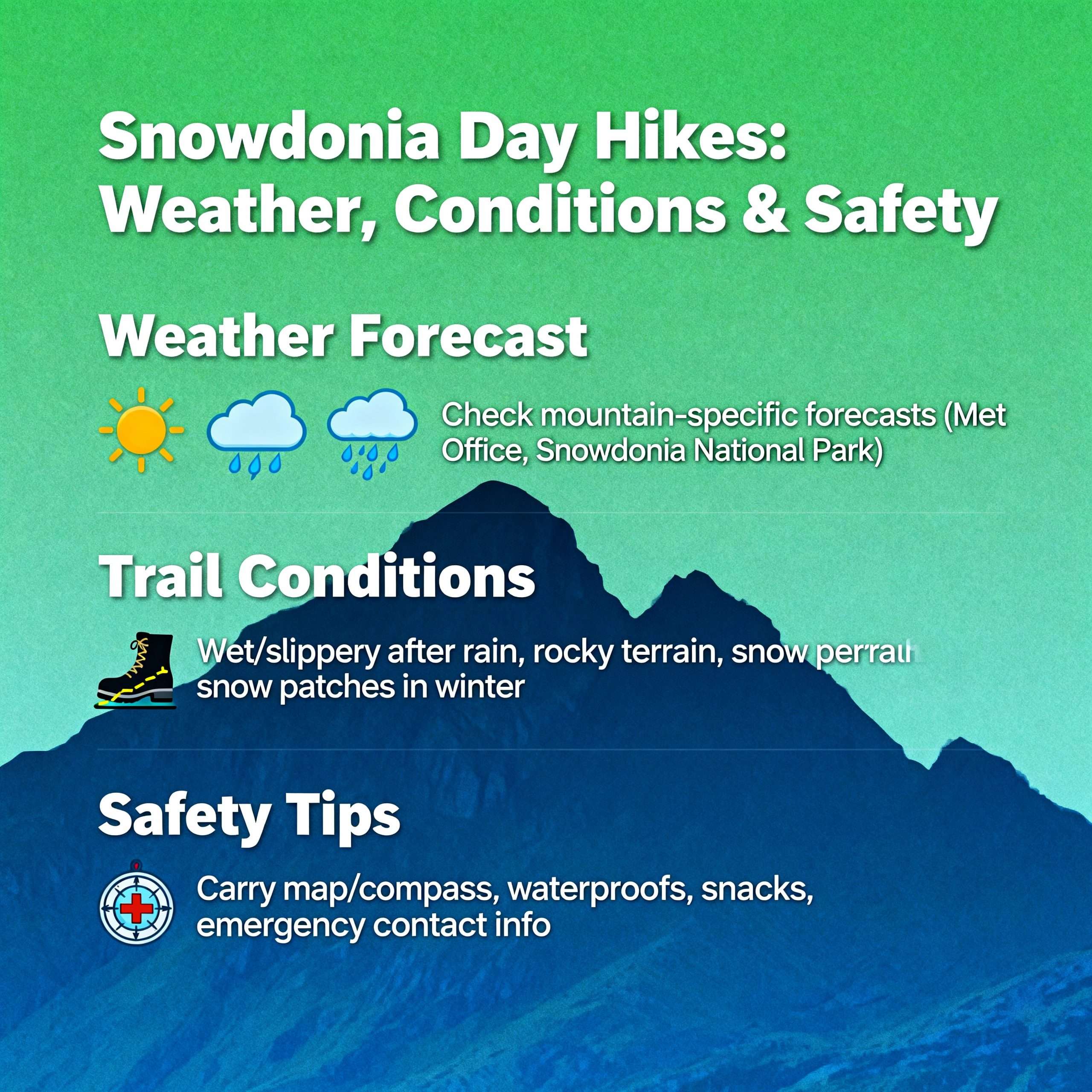
Snowdonia weather and safety is the single most important factor to consider before heading out on any of the popular Snowdonia Day Hikes. Eryri (Snowdonia) is a region of extreme contrasts, where a sunny morning in the Llanberis valley can quickly transform into a life-threatening storm on the upper reaches of Yr Wyddfa (Snowdon). Understanding the nuances of Snowdonia mountain weather is not just about comfort; it is a fundamental requirement for anyone venturing into the high peaks of North Wales. Whether you are planning a casual walk or a technical challenge like the Tryfan North Ridge Scramble Guide, your ability to interpret Snowdonia walking conditions will dictate the success and safety of your journey.

The mountains of North Wales are the first major landmass that weather systems encounter as they sweep across the Atlantic Ocean. This geographic position makes the region prone to rapid changes, high rainfall, and ferocious winds. For the day hiker, Snowdonia hiking safety begins long before you lace up your boots. It involves a combination of rigorous planning, the right equipment, and the humility to turn back when the elements turn against you. This guide provides a deep dive into UK mountain weather safety, specifically tailored for the unique environment of the Snowdonia National Park.
Snowdonia weather and safety
When we discuss Snowdonia weather and safety, we are looking at the intersection of environmental hazards and human preparation. The mountains do not care about your summit goals; they are indifferent to your schedule. Therefore, the primary rule of Snowdonia hiking safety is to adapt your plans to the environment, never the other way around. Statistics from mountain rescue teams consistently show that the majority of incidents are preventable through better understanding of Snowdonia walking conditions and more conservative decision-making.
Safety in the mountains is a skill that is developed over time. It involves learning how to read the sky, understanding how wind accelerates over ridges, and knowing how temperature drops as you gain altitude. By prioritising Snowdonia weather and safety, you ensure that your mountain experiences remain positive and that you do not become a statistic. This involves checking specialist forecasts, such as the Met Office (mountain forecast), which provides specific data for summit heights rather than just valley floors. Additionally, familiarizing yourself with the various sources for mountain weather forecasts in the UK can significantly enhance your preparedness. Understanding local climate patterns and potential hazards can make a substantial difference in your safety. Always ensure you have a plan in place and remain flexible, as conditions can change rapidly in mountainous terrains.
Understanding Snowdonia Mountain Weather
The Snowdonia mountain weather is famously unpredictable due to a phenomenon known as orographic lift. As moist air from the Atlantic is forced upward by the steep slopes of the Carneddau, Glyderau, and Snowdon massifs, it cools and condenses, forming clouds and precipitation. This means it can be raining heavily on the summits while the coastal towns just a few miles away are bathed in sunshine. Understanding this dynamic is a core part of UK mountain weather safety.
One of the most critical aspects of Snowdonia mountain weather is the temperature lapse rate. On average, the temperature drops by about 1°C for every 100 metres of ascent. If it is a pleasant 15°C in Betws-y-Coed, it could easily be near freezing on the summit of Snowdon once wind chill is factored in. Furthermore, wind speeds on the ridges can be double or triple those recorded in the valleys. A 20mph breeze at the car park can become a 50mph gale on a narrow ridge, making movement difficult and significantly increasing the risk of a fall. Always check the “Feels Like” temperature and wind gust speeds when assessing Snowdonia walking conditions.
Common Weather-Related Risks
The risks associated with Snowdonia weather and safety are varied, but they generally fall into three categories: visibility, temperature, and physical force. Poor visibility is perhaps the most common challenge. Thick mountain mist can descend in minutes, obscuring landmarks and making navigation nearly impossible for those without a map and compass. This is a frequent cause of hikers wandering off-track on routes like the Snowdon Miners Track vs Pyg Track, leading them into dangerous, steep terrain.
Hypothermia is a year-round risk in Wales. Even in summer, a combination of wet clothing and high winds can strip body heat at an alarming rate. Conversely, heat exhaustion is a growing concern during summer heatwaves, where the lack of shade on the open mountains can lead to dehydration and collapse. Lightning is another significant, though less frequent, risk. If you are on a high ridge and hear thunder or feel your hair standing on end, you must descend immediately. Lightning naturally seeks the highest point, and on a mountain, that is often you. Monitoring Snowdonia mountain weather for storm developments is a non-negotiable part of Snowdonia hiking safety. Preparation is key to enjoying the outdoor experience safely. Familiarizing yourself with treatment options for hypothermia, such as warming the body gradually and avoiding direct heat sources, can make a crucial difference in emergencies. Additionally, carrying a well-stocked first aid kit that addresses both hypothermia and heat-related illnesses can enhance your preparedness for any weather challenges encountered on the trails.
Staying Safe on Snowdonia’s Mountains
To maintain a high standard of Snowdonia hiking safety, you must adopt a “dynamic risk assessment” mindset. This means constantly evaluating your surroundings as you hike. Is the cloud lowering? Is the wind increasing? Is the group tiring? The Snowdonia National Park Authority emphasizes the importance of the “Adventure Smart” approach: Do I have the right gear? Do I have the right skills? Did I check the weather? If the answer to any of these is “no,” you should reconsider your route.
Another key element of Snowdonia weather and safety is knowing the terrain. Some paths are much safer in poor weather than others. For instance, the Llanberis Path on Snowdon is relatively broad and easy to follow, whereas the Crib Goch ridge is lethal in high winds or wet conditions. Choosing a route that matches the current Snowdonia walking conditions and your group’s ability is the hallmark of an experienced hiker. Always have a “Plan B” lower-level walk ready in case the Snowdonia mountain weather makes the high summits untenable.
What to Carry for Safety
Your equipment is your life support system when Snowdonia weather and safety conditions deteriorate. A common mistake is relying solely on a smartphone for navigation. Cold temperatures and moisture can cause battery failure, and GPS signals can be unreliable in deep cwms. UK mountain weather safety standards dictate that you must carry a physical map (OS Explorer OL17) and a high-quality baseplate compass—and know how to use them.
For Snowdonia hiking safety, your pack should always include:
- Waterproof Shell: High-quality jacket and trousers (Gore-Tex or similar).
- Insulation: A spare warm layer (fleece or synthetic down) kept in a dry bag.
- Emergency Shelter: A group kisu or a lightweight bivvy bag.
- First Aid Kit: Including blister plasters, bandages, and any personal medication.
- Headtorch: Even if you plan to be back by daylight, delays happen.
- High-Energy Food: Extra calories to help your body generate heat.
By carrying these items, you are prepared for the worst Snowdonia walking conditions, ensuring that a minor delay doesn’t turn into a major emergency. This level of preparation is the cornerstone of UK mountain weather safety.
What to Do in an Emergency
Despite the best efforts in Snowdonia weather and safety planning, emergencies can still occur. If someone in your party is injured or you become hopelessly lost in dangerous terrain, you must know how to summon help. The Mountain Rescue England & Wales service is a volunteer organisation that operates 24/7. To contact them, dial 999 or 112 and ask for the “Police” and then “Mountain Rescue.” To enhance your safety while exploring the rugged terrain, it’s essential to familiarize yourself with lost hiking safety tips. These guidelines can help you stay calm and make informed decisions should you find yourself in a precarious situation. Always ensure your group has a reliable plan for navigation and communication before heading out on your adventure.
When you call, you will need to provide your exact location. This is where your map reading skills are vital; providing a six-figure grid reference is the most effective way for rescuers to find you. If you have no signal, try moving to a higher point or sending a text message (you must register your phone with the emergency SMS service beforehand). While waiting for help, your priority is to stay warm and visible. Use your emergency shelter and use a whistle (six short blasts, one minute silence) or a torch to signal your position. Remember, Snowdonia hiking safety is about being prepared for this exact scenario, even if you hope never to face it. Understanding Snowdonia walking conditions and the limits of Snowdonia mountain weather will hopefully mean you never need to make that call.
In conclusion, Snowdonia weather and safety is a discipline that requires respect and constant learning. By staying informed about Snowdonia mountain weather, carrying the correct gear for UK mountain weather safety, and making sensible choices based on Snowdonia walking conditions, you can enjoy the majestic beauty of Eryri while minimising risk. The mountains will always be there; your goal is to ensure you are too.
