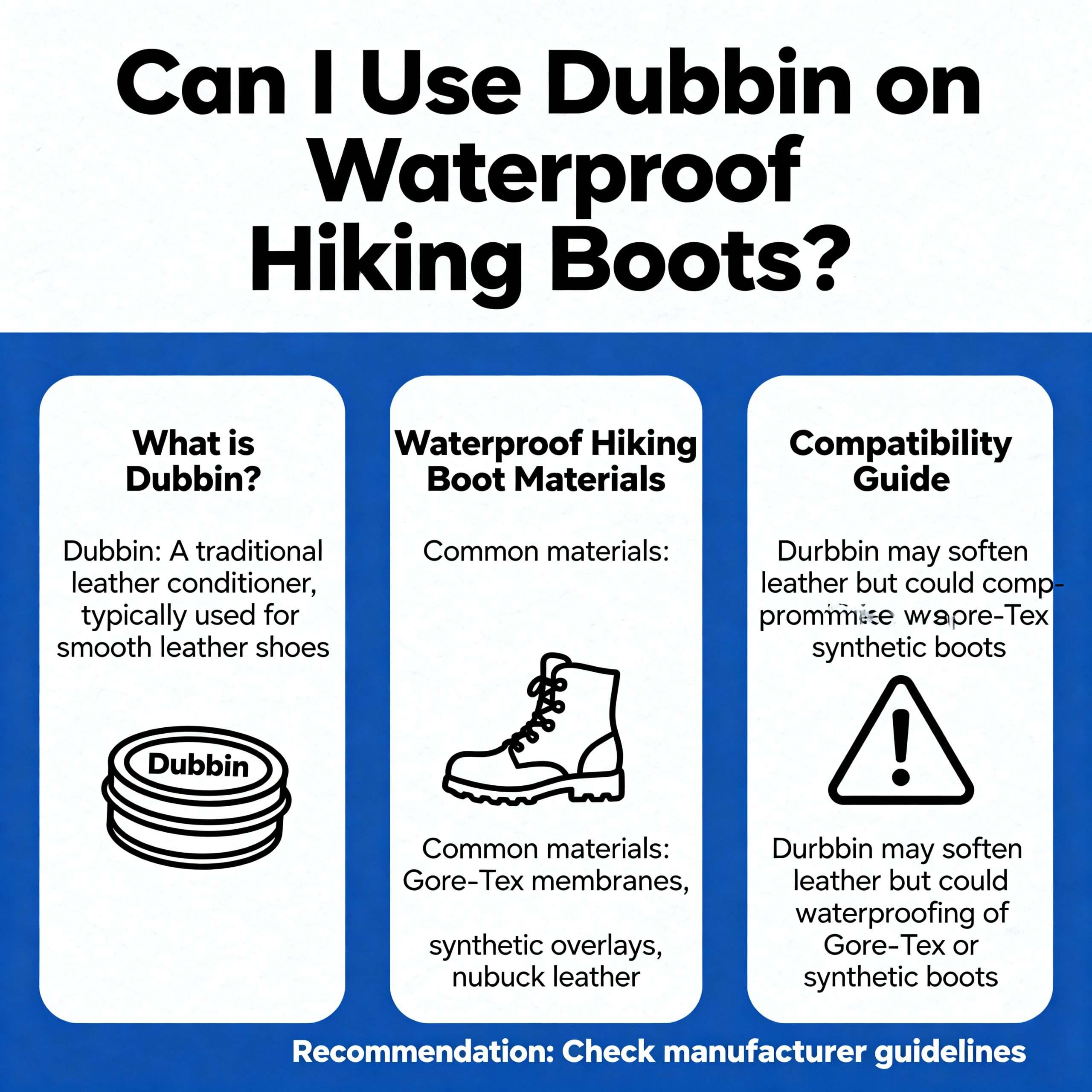
Using Dubbin on waterproof hiking boots can be risky. The oils in Dubbin might clog the waterproof membrane pores, which can reduce breathability and overall performance. Additionally, it may interfere with moisture-wicking functions. Always check your boot’s care instructions before applying anything. If you choose to use Dubbin, test it on a small area first and apply it sparingly. There’s more to consider about keeping your boots in top shape and choosing the right products.
Can I Use Dubbin on Waterproof Hiking Boots? Key Takeaways
- Dubbin can condition leather, enhancing its durability and water resistance, but caution is needed for waterproof boots.
- Oils in Dubbin may clog waterproof membranes, potentially compromising breathability and reducing the boot’s effectiveness.
- Always check manufacturer’s care instructions before applying Dubbin to ensure compatibility with waterproof materials.
- Test Dubbin on a small, inconspicuous area first to assess any negative effects on the boot’s waterproofing.
- Apply Dubbin in moderation to avoid over-saturation, and reapply based on usage and environmental conditions.
Understanding Dubbin and Its Properties
Dubbin is a versatile leather treatment that enhances the durability and water resistance of your hiking boots. When you apply dubbin, you’re not just protecting your boots from moisture; you’re also conditioning the leather, which prevents cracking and extends their lifespan.
The dubbin benefits are clear: it keeps your boots looking good and feeling comfortable during your outdoor adventures.
For effective dubbin application, make sure your boots are clean and dry. Use a soft cloth to rub the dubbin into the leather, focusing on seams and creases where water might seep in.
Let it absorb for a few hours, then buff the surface for a smooth finish. With this simple process, your hiking boots will be ready for any terrain.
The Composition of Waterproof Hiking Boots
When choosing waterproof hiking boots, it’s essential to understand the materials and technologies that keep your feet dry.
You’ll find various types of materials and construction features that contribute to the overall performance of the boots.
Let’s break down what makes up these reliable companions for your outdoor adventures.
Material Types Explained
Understanding the different materials used in waterproof hiking boots is crucial for making an informed purchase.
You’ll typically find two main leather types: full-grain and split-grain. Full-grain leather is durable and offers excellent water resistance, while split-grain leather is lighter and more breathable but may not be as waterproof.
Alongside leather, many boots use synthetic materials like nylon or polyester, which can provide lightweight comfort and flexibility. These boot materials often include a waterproof membrane, adding an extra layer of protection against moisture.
When choosing your hiking boots, consider how these materials affect not only waterproofing but also weight, breathability, and durability, ensuring you get the best fit for your hiking adventures.
Waterproofing Technologies Overview
While choosing waterproof hiking boots, it’s essential to grasp the various waterproofing technologies that enhance their performance. Many people fall for waterproofing myths, believing that all boots labeled “waterproof” offer the same level of protection.
In reality, technologies like Gore-Tex, eVent, and proprietary membranes provide varying degrees of breathability and waterproofing. These materials help keep your feet dry, but they also play a significant role in boot longevity.
Proper care, such as regular cleaning and conditioning, can maintain these technologies over time. Understanding these differences ensures you invest in boots that meet your needs, keeping you comfortable and dry on your hikes while maximizing the lifespan of your footwear.
Boot Construction Features
The construction of waterproof hiking boots significantly influences their performance and durability. When you choose boots, consider the construction materials used, as they determine how well your boots withstand the elements. High-quality leather, synthetic fabrics, and rubber soles are common materials that enhance boot durability, ensuring they last through tough terrains.
Look for boots with reinforced stitching and sealed seams, which prevent water from seeping in while maintaining breathability. A sturdy outsole provides traction, essential for stability on slippery surfaces.
Additionally, a supportive midsole can enhance comfort during long hikes. By understanding these construction features, you can select waterproof hiking boots that not only keep your feet dry but also stand the test of time on your adventures.
Benefits of Using Dubbin on Leather
Using Dubbin on your leather hiking boots can significantly enhance their durability and performance.
One of the key dubbin benefits is its ability to condition leather, keeping it supple and preventing cracks. When you apply Dubbin, it penetrates the leather fibers, providing essential moisture that helps maintain flexibility.
This leather conditioning not only protects against wear but also repels water, making your boots more effective in wet conditions. Additionally, Dubbin helps to safeguard against dirt and stains, ensuring your boots look good for longer.
Potential Risks of Applying Dubbin to Modern Waterproof Boots
Applying Dubbin to your leather hiking boots can have great benefits, but it’s important to consider the potential risks, especially with modern waterproof boots that often feature specialized membranes.
While Dubbin can enhance leather’s flexibility and water resistance, its effects on these membranes can be detrimental. The oils in Dubbin may clog the pores of the waterproof layer, compromising breathability and reducing boot longevity.
Additionally, if your boots are designed to be moisture-wicking, applying Dubbin can interfere with this function, leading to discomfort during long hikes.
Before using Dubbin, it’s wise to check your boots’ care instructions to avoid unintended consequences that could impact their performance and durability.
Always prioritize preserving the integrity of your waterproof footwear.
Alternative Products for Waterproofing Hiking Boots
If you’re looking for alternatives to Dubbin, consider wax-based waterproofing solutions or synthetic waterproofing sprays.
These products can offer effective protection and may suit your boots better, depending on their materials.
Let’s explore how each option can keep your hiking boots dry and comfortable.
Wax-Based Waterproofing Solutions
While many hikers rely on traditional sprays and creams for waterproofing their boots, wax-based waterproofing solutions offer a durable alternative that effectively repels moisture.
These products, such as beeswax or other natural waxes, create a tough barrier against water. When using a wax-based solution, you’ll want to ensure proper dubbin application for optimal results.
Start by cleaning your boots thoroughly, then apply the wax evenly, focusing on seams and high-wear areas. Use a heat source, like a hairdryer, to help the wax penetrate the leather.
This waterproofing technique not only protects against rain but also conditions the leather, extending the life of your boots. Embrace these alternatives for reliable protection on your hiking adventures.
Synthetic Waterproofing Sprays
When you need a quick and effective way to waterproof your hiking boots, synthetic waterproofing sprays can be an excellent choice.
These sprays offer several synthetic benefits, such as lightweight protection and fast-drying formulas. You can easily apply them in just a few minutes, making them perfect for last-minute preparations before a hike.
The spray application ensures an even coat, penetrating the material for optimal waterproofing without clogging the boot’s pores. Plus, they usually come in convenient bottles that you can carry in your pack.
Just remember to reapply as needed, especially after long hikes or exposure to wet conditions.
With synthetic waterproofing sprays, you’ll keep your feet dry and comfortable on your outdoor adventures.
Best Practices for Maintaining Your Hiking Gear
To keep your hiking gear in top shape, regular maintenance is essential. Start with gear cleaning after every hike. Remove dirt, mud, and debris to prevent wear and tear. Use mild soap and water, and let everything dry completely before storing.
Proper storage is just as important; keep your gear in a cool, dry place to avoid moisture buildup and mold. For boots, ensure they’re not crammed together, allowing air circulation.
Inspect your gear periodically for any signs of damage and address it immediately to prolong its life. Lastly, consider using protective treatments like Dubbin on leather items to enhance waterproofing.
Frequently Asked Questions
Can Dubbin Be Used on Synthetic Hiking Boots?
You shouldn’t use dubbin on synthetic hiking boots, as it can damage the materials. Instead, opt for products specifically designed for synthetic materials to maintain your boots effectively and ensure their longevity during outdoor adventures.
How Often Should I Apply Dubbin to My Boots?
You should apply dubbin every few months, or more frequently if you hike in wet conditions. Regular dubbin application ensures optimal boot maintenance, keeping your footwear protected and extending its lifespan for all your adventures.
Does Dubbin Affect Breathability in Waterproof Boots?
Yes, dubbin can affect breathability concerns in waterproof boots. While it offers great leather treatment, it might clog pores, reducing airflow. Use it sparingly to maintain a balance between waterproofing and breathability for optimal comfort.
Can Dubbin Restore Old, Cracked Leather Boots?
Yes, using dubbin can aid in leather restoration for old, cracked boots. It nourishes the leather, improves flexibility, and enhances waterproofing—essential for effective boot maintenance. Just apply it evenly and let it absorb for best results.
Is Dubbin Waterproof or Water-Resistant Itself?
Dubbin isn’t completely waterproof but offers water-resistant properties. When you apply different dubbin types, like beeswax or silicone-based, it enhances protection. Remember, regular application helps maintain your boots’ water resistance and overall condition.
Conclusion
In conclusion, while you can use dubbin on leather hiking boots for added moisture resistance and conditioning, be cautious with modern waterproof models. They often have specialized membranes that could be compromised by oils in dubbin. Instead, consider using products specifically designed for waterproofing to maintain your boots’ integrity. Regular maintenance, including cleaning and using appropriate treatments, will help extend the life of your hiking gear, ensuring you’re ready for your next adventure.
