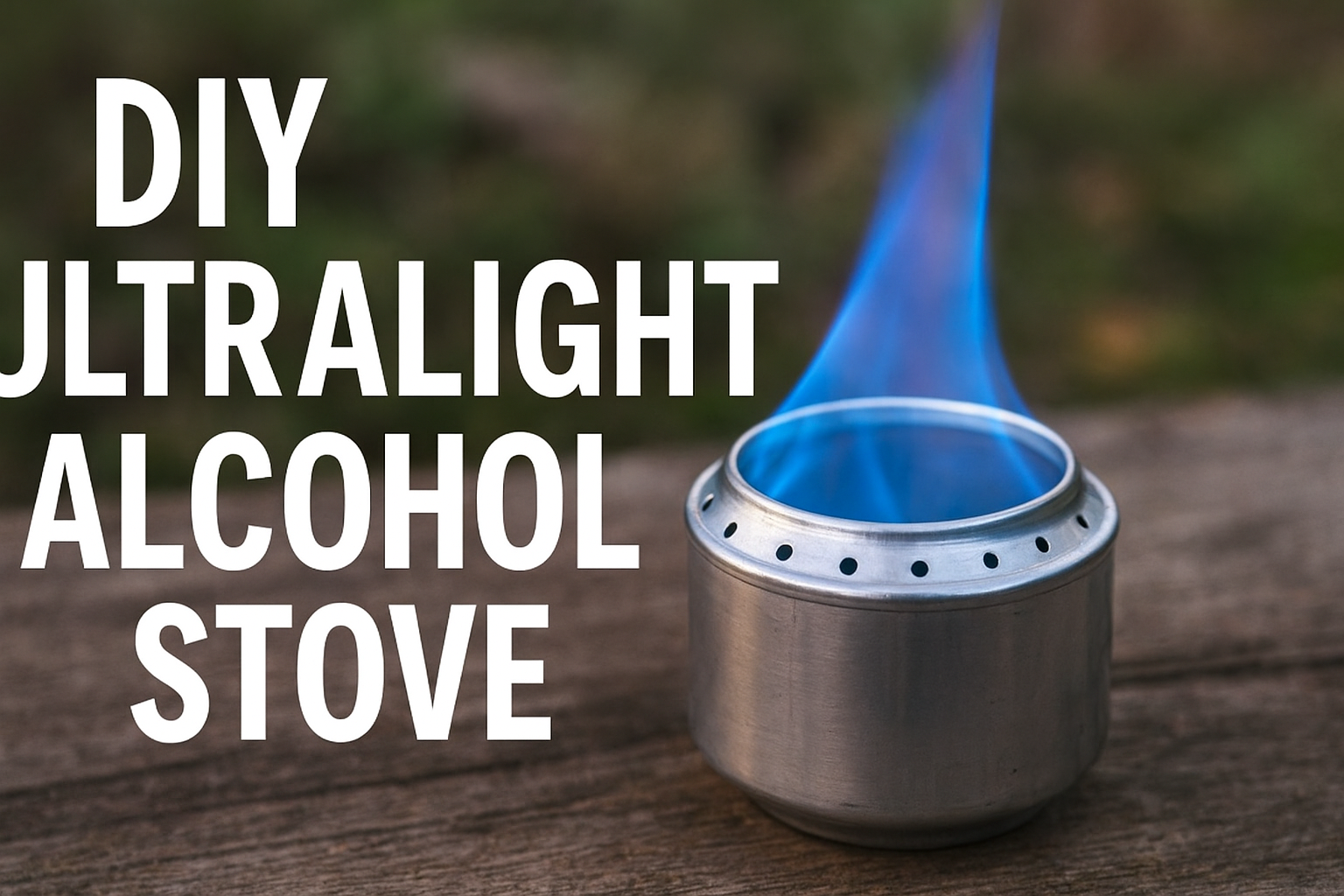
Build a 10-gram stove that rivals £60 ultralight burners.
Why DIY Ultralight Alcohol Stoves Are Still King of Ultralight Cooking
Despite the rise of titanium gas stoves, powerful remote canister burners, and fast-boiling integrated systems, the humble alcohol stove refuses to die — especially among UK ultralight backpackers.
Why? Because nothing else combines:
- Ridiculous weight savings (as low as 7–12g)
- Rock-bottom cost (under £3 of materials)
- Reliability in cold temperatures
- Simplicity that never fails
- Compatibility with methylated spirits (“meths”) sold everywhere in the UK
For British hikers, DIY alcohol stoves are uniquely appealing. UK conditions — damp air, constant wind, drizzle, and cold water — favour systems that work predictably and don’t rely on canister pressure. Meths burns consistently even at freezing temperatures, unlike gas.
Alcohol stoves are especially popular for:
- West Highland Way
- Pennine Way
- Snowdonia wild camps
- Lake District overnighters
- Dartmoor and Exmoor micro-adventures
They are quiet, lightweight, simple, and perfect for solo cooking.
In this guide, you’ll learn how to build four proven ultralight stove designs, each tested in real UK conditions — plus how to build a windscreen, pot stand, and optimise performance using UK fuels.
Throughout the article, internal links guide you to related resources like:
- Best Backpacking Stoves UK 2025
- Ultralight Cooking Utensils
- Our DIY category
Let’s start with what you need.
🔧 Ultralight Alcohol Stove Materials You Need (All Available in the UK)
All items listed can be purchased in supermarkets, hardware stores, or online.
1. Cans (Main Stove Bodies)
- Red Bull / Monster Ultra (UK 250ml)
- Tesco Kick (cheap, thin aluminium)
- Sheba / Whiskas cat food tins
- Aldi / Lidl energy drinks
2. Tools
- Hole punch (Poundland)
- Precision drill bits (1.5–2mm) — Screwfix
- Utility knife / scalpel
- Scissors (metal-safe)
- Permanent marker
- Ruler or calipers
3. Windscreen Supplies
- Aluminium oven liner (Tesco / Sainsbury’s)
- Foil baking tray
- Aluminium flashing (B&Q)
4. Fuel (UK ONLY)
The best alcohol fuel in the UK is:
- Methylated spirits (“meths”) — widely available at
Tesco, B&Q, Screwfix, Wilko, Go Outdoors
Alternatives:
- Bio-ethanol (works well, burns cleaner)
- Surgical spirit (not recommended — sooty and smelly)
5. Insulation (For some designs)
- Fibreglass insulation (B&Q, Wickes)
- Carbon felt (Amazon UK)
Total estimated cost:
£4–£7 depending on tools you already own.
🔥 Build #1 — Cat Can Alcohol Stove (The Classic 5-Minute Stove)
Weight: 10–14g | Difficulty: ★☆☆ | Best for: Beginners
This is the easiest stove to build and one of the most reliable in windy British weather.
You need
- 1x Sheba cat food tin
- Hole punch or 1.5mm drill bit
- Fibreglass or carbon felt
Step-by-Step Build Guide
Step 1 — Empty & Clean the Tin
Remove the label and clean thoroughly.
Step 2 — Punch Burner Holes
Punch 16 evenly spaced holes around the top rim.
Distance between holes: approx 10mm.
These holes act as jets.
Step 3 — Add Wick Material
Cut a strip of fibreglass or carbon felt and line the inside wall.
This improves vapourisation in cold UK conditions.
Step 4 — Fill with 20–25ml of meths
This amount reliably boils 500ml water at 12°C with a windscreen.
Step 5 — Light & Bloom
The stove “blooms” (jets ignite) after 10–12 seconds.
Performance
Boil time (500ml water, 10°C wind-shielded UK conditions):
6:30–7:15
Fuel consumption: 20–25ml
Pros
- Easiest to build
- Reliable in cold weather
- Very wind-resistant
- No pot stand required
Cons
- Heavier than side-burner can stoves
- Larger diameter limits small pots
🔥 Build #2 — Penny Stove (High-Performance Jet Stove)
Weight: 8–15g | Difficulty: ★★★ | Best for: Tinkerers
The famous penny stove uses two aluminium cans and a copper coin to pressurise the system.
Materials
- 2x Red Bull cans
- 1 penny (1p)
- Drill bit (1mm–1.5mm)
Build Steps (Simplified)
Step 1 — Cut the Bases
Cut the bottom 30mm off each can.
Step 2 — Drill Jet Holes
Drill 32 jets around the rim of one can bottom.
Step 3 — Add Centre Fill Hole
A 6mm hole in the centre is filled with fuel then sealed by the penny.
Step 4 — Press-Fit the Two Halves
Slide one can bottom into the other.
Step 5 — Test & Optimise
Fuel: 25–30ml
Bloom time: 20–25 seconds
Boil time: 5:40–6:10
Pros
- Fastest boil times
- Pressurised jets = strong flame
- Works well in mild UK wind
Cons
- Harder to build
- Fussy in cold temperatures
- Requires pot stand
🔥 **Build #3 — Fancy Feast Stove
(The Thru-Hiker Favourite)**
Weight: 10–12g | Difficulty: ★★☆ | Best for: UK Solo Hikers
Uses a cat food tin + hole punch + fibreglass.
Pros:
- Light
- Simple
- Uses UK-standard cans
- Great for alcohol + solid fuel combos
Cons:
- Slower boil times
- Needs windscreen for UK conditions
🔥 Build #4 — Side-Burner Can Stove
Weight: 7–10g | Difficulty: ★★☆ | Best for: UL purists
Pot sits directly on the stove — no pot stand needed.
Pros:
- Lightest possible design
- Strong, even jets
- Great for 550–750ml titanium pots
Cons:
- Poor performance with wide pots
- Jet holes can deform with use
🌬️ DIY Windscreen (Massive Performance Gains)
Alcohol stoves are extremely wind-sensitive, especially in the UK’s breezy uplands.
Best Material Options
- Oven liner (Tesco)
- Aluminium flashing (B&Q)
- Foil baking tray cut into strips
Key Measurements
- Height: 10–12cm
- Air gaps: 10–12mm
- Wrap loosely around pot
- Leave 25mm gap for airflow
A good windscreen reduces boil times by 2–3 minutes.
🍲 Pot Stand Options
Best ultralight options:
- Titanium wire frame (8–12g)
- Bike spoke tripod
- Mesh stand from pencil holder
- 3x titanium tent pegs
Cat can stoves and sideburners need no stand.
🧪 Testing & Optimising Your Stove
Use the following procedure:
Test Parameters
- 500ml tap water at 10–12°C
- Pot: 750ml Toaks
- Wind: simulate 5–10mph
- Fuel: 20–30ml meths
- Windscreen in place
Optimisation Tips
- Reduce pot-to-stove gap to 30–35mm
- Widen jets for more heat
- Add insulation for cold winter use
- Use bio-ethanol for cleaner burn
🔥 Fuel Types in the UK
Best fuel: Methylated Spirits (“Meths”)
Available at:
Tesco, Wilkinson, Screwfix, B&Q, Go Outdoors.
Bio-Ethanol
Burns cleaner, slightly hotter.
Avoid
- Isopropyl alcohol (yellow flame, soot)
- Pure ethanol (expensive, hard to find)
📊 Efficiency Comparison: UK Boil Times
| Stove Type | Weight | Fuel | Boil Time | Notes |
|---|---|---|---|---|
| Penny Stove | 10–15g | Meths | 5:40–6:10 | Fastest |
| Side-Burner | 7–10g | Meths | 6:00–7:00 | UL favourite |
| Cat Can | 10–14g | Meths | 6:30–7:15 | Most reliable |
| Fancy Feast | 10–12g | Meths | 7:00–8:00 | Simple + durable |
⚖️ UK Legal Considerations
Alcohol stoves are open flame devices, meaning:
Legal Constraints:
- Scotland Outdoor Access Code: stoves allowed, must be controlled
- Dartmoor: restrictions during fire-risk conditions
- Peak District: fires prohibited; stoves must be raised off ground
- Wild camping: no fires, but stoves generally permitted
- Fire bans: during extreme heat (e.g., Saddleworth Moor fire events)
Always check for:
- Local fire warnings
- Ground dryness
- Wind speeds over 25mph
🔥 Safety Tips
- Alcohol flames are almost invisible
- Never refill a hot stove
- Use a fireproof base (aluminium tray)
- Keep fuel bottle sealed away from cooking area
- Avoid cooking inside tents (condensation + fire risk)
❓ FAQ (10+ Questions)
1. Are DIY alcohol stoves legal in the UK?
Generally yes, but local fire restrictions may apply. Stoves count as controlled flames.
2. Do alcohol stoves work in winter?
Yes — meths burns even at freezing temperatures.
3. How much fuel should I carry?
Typical UK usage: 60–90ml per day.
4. Is meths safe?
It burns cleanly but is toxic — avoid skin contact.
5. Why does my stove burn yellow?
Airflow is restricted or fuel is poor quality.
6. Can I use bio-ethanol?
Yes — it burns cleaner with less soot.
7. Do alcohol stoves work in wind?
Only with a proper windscreen.
8. What pot size works best?
500–900ml titanium pots.
9. Are DIY stoves safe in a tent porch?
Risky. Use only with extreme ventilation.
10. Do I need a pot stand?
Only for penny stoves and some Fancy Feast builds.
🏁 Final Recommendations
For UK hikers:
Best All-Round DIY Stove:
Cat Can Stove
Simple, reliable, and wind-resistant.
Best for Ultralight Purists:
Side-Burner Can Stove
The lightest working design.
Fastest Boiling:
Penny Stove
Ideal for tinkerers and performance enthusiasts.
Best for Beginners:
Fancy Feast Stove
Easy build, consistent flame.
DIY alcohol stoves are the perfect entry to ultralight backpacking — cheap, fun to make, and surprisingly capable. With UK-available materials and proper testing, you can build a 10-gram stove that rivals commercial burners.
