The Essential Guide
Scottish Highlands weather and mountain safety is the single most important factor to consider before setting foot on any trail in the north of the UK. The Scottish mountains, while modest in height compared to the Alps or the Himalayas, possess a unique and often volatile maritime climate that can challenge even the most experienced mountaineers. For those embarking on Scottish Highlands Day Hikes, understanding the relationship between the environment and personal preparation is not just a matter of comfort—it is a matter of survival. The rugged beauty of the peaks is matched only by the speed at which Scottish Highlands walking conditions can deteriorate, turning a pleasant summer stroll into a high-stakes navigation exercise.
Whether you are planning to tackle the Ben Nevis Mountain Track or explore the hidden depths of the Glencoe Lost Valley Walk, your success depends on a “safety-first” mindset. This guide is designed to provide authoritative, practical advice on navigating the complexities of Scottish Highlands mountain weather and implementing robust Highlands hiking safety protocols. By mastering the fundamentals of UK mountain weather safety, you can enjoy the wilderness with the confidence that you are prepared for whatever the elements may throw at you.
Scottish Highlands weather and mountain safety
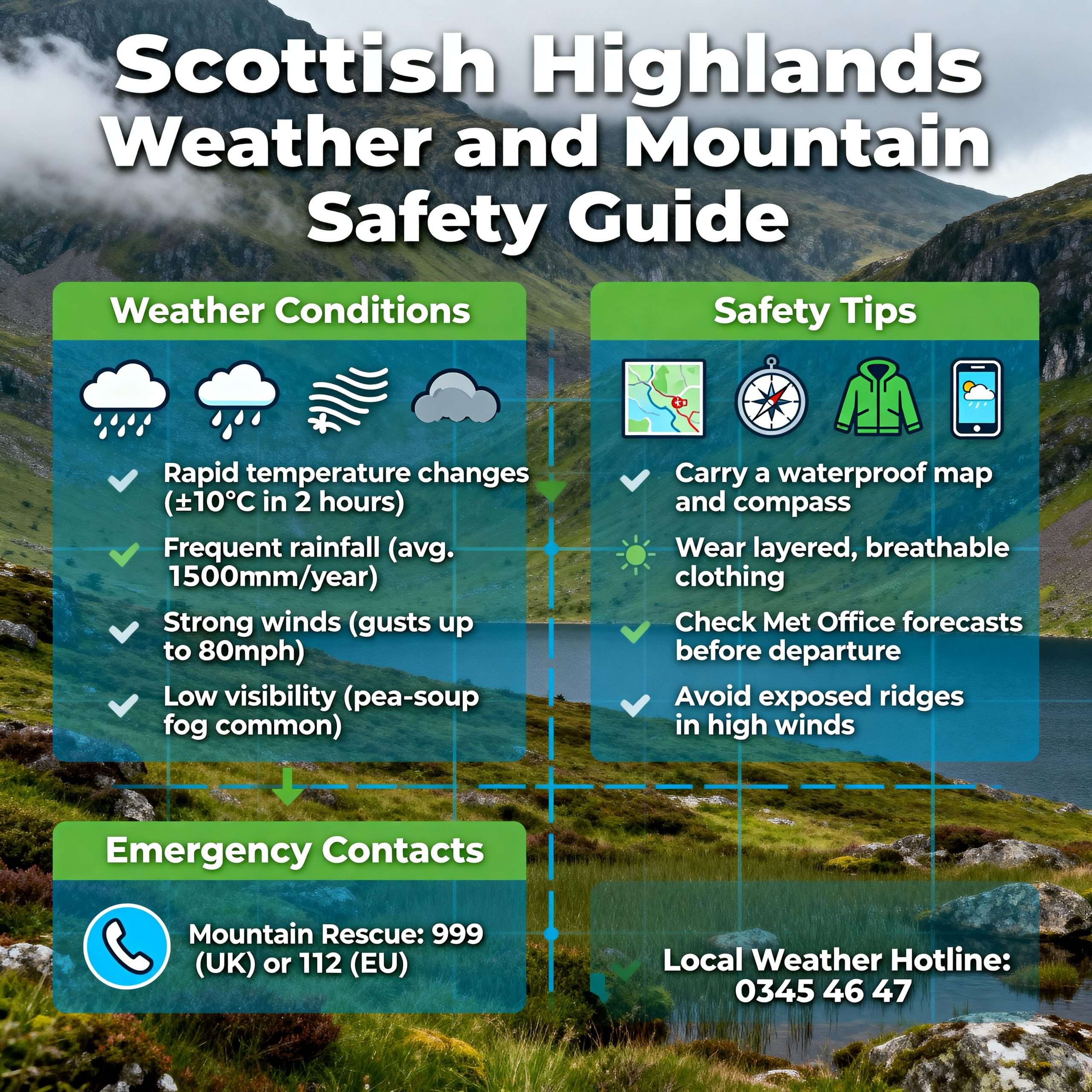
The core of Scottish Highlands weather and mountain safety lies in the recognition that the mountains create their own weather systems. Because the Highlands sit directly in the path of the Atlantic jet stream, they are the first landmass to encounter moist, fast-moving air masses. This results in high rainfall, frequent cloud cover, and winds that can reach hurricane force on the summits while remaining moderate in the glens. Effective Highlands hiking safety starts with the realization that the forecast you see on your television or phone for a nearby town like Fort William or Inverness will not accurately reflect the conditions at 3,000 feet.
A fundamental principle of UK mountain weather safety is the “Lapse Rate.” On average, the temperature drops by approximately 1°C for every 100 metres of ascent. This means that if it is a comfortable 15°C at sea level, it could be near freezing on the summit of a Munro. When you factor in the wind chill—the cooling effect of moving air on exposed skin—the “feels like” temperature can easily drop into the negatives even in mid-summer. This is why Scottish Highlands walking conditions are often described as “four seasons in one day,” and why your gear must be versatile enough to handle rapid transitions.
Furthermore, Scottish Highlands weather and mountain safety involves understanding the topography. The deep glens and high ridges can funnel wind, creating “venturi effects” where wind speeds double in narrow passes. Similarly, the proximity to the sea means that “haar” (sea mist) can roll in with incredible speed, reducing visibility to just a few metres in minutes. For anyone attempting the Ben Lomond Tourist Path Walk or other popular routes, being able to transition from visual navigation to map-and-compass work is a non-negotiable aspect of Highlands hiking safety.
Understanding Mountain Weather in the Highlands
To truly grasp Scottish Highlands mountain weather, one must look at the synoptic scale. The Highlands are a battleground between cold polar air from the north and warm, moist tropical air from the south. When these meet, they form weather fronts that bring sustained rain and heavy cloud. However, it is the “orographic lift” that defines the local experience. As moist air is forced upward by the mountains, it cools and condenses, forming rain and mist specifically over the peaks. This explains why the mountains are often shrouded in cloud even when the surrounding lowlands are bathed in sunshine.
Another critical element of UK mountain weather safety is the “Föhn Effect.” This occurs when moist air loses its moisture as rain on the windward side of a mountain range (usually the west) and descends as warm, dry air on the leeward side (the east). This creates vastly different Scottish Highlands walking conditions between the West Highlands and the Cairngorms. Understanding these patterns allows hikers to make informed decisions about where to walk based on the prevailing wind direction, a key component of Highlands hiking safety.
Reliable data is the foundation of Scottish Highlands weather and mountain safety. Hikers should never rely on general weather apps. Instead, use specialist services like the Met Office mountain forecasts or the Mountain Weather Information Service (MWIS). These providers give specific details on the “probability of cloud-free summits,” “wind at 900m,” and “freezing levels.” Interpreting these forecasts correctly is the first step in ensuring UK mountain weather safety before you even leave your accommodation. Additionally, hikers should familiarize themselves with key terminology and metrics used in these forecasts, as they can significantly impact safety decisions. Understanding mountain weather forecasts is essential for recognizing changing conditions and adapting plans accordingly. Always be prepared for unexpected weather shifts, as the Highland climate can be notoriously unpredictable.
Common Weather-Related Risks
The most frequent threat to Scottish Highlands weather and mountain safety is hypothermia. Contrary to popular belief, hypothermia is most common in temperatures between 0°C and 10°C, especially when combined with wet clothing and wind. The “wet-cold” environment of the Highlands is particularly dangerous because water conducts heat away from the body 25 times faster than air. Maintaining Highlands hiking safety means staying dry; once your base layers are wet, your ability to regulate body temperature is severely compromised, regardless of how much you are moving. To mitigate the risks of hypothermia, it’s crucial to recognize the early signs, such as shivering, confusion, or a decrease in physical coordination. In cases where hypothermia does develop, prompt action is necessary, and knowing the treatment options for hypothermia can be life-saving. This may include gradually warming the individual, providing warm, non-alcoholic beverages, and seeking medical attention if symptoms worsen.
Wind is the second major risk factor in Scottish Highlands mountain weather. Once wind speeds exceed 40mph, walking becomes difficult; at 60mph, a person can be blown off their feet. On narrow ridges like those found on the Ben Nevis Mountain Track, high winds are a lethal hazard. UK mountain weather safety protocols dictate that if the forecast predicts gusts over 50mph, high-level routes should be abandoned in favour of low-level glen walks. This is a prime example of how Scottish Highlands walking conditions dictate the day’s itinerary.
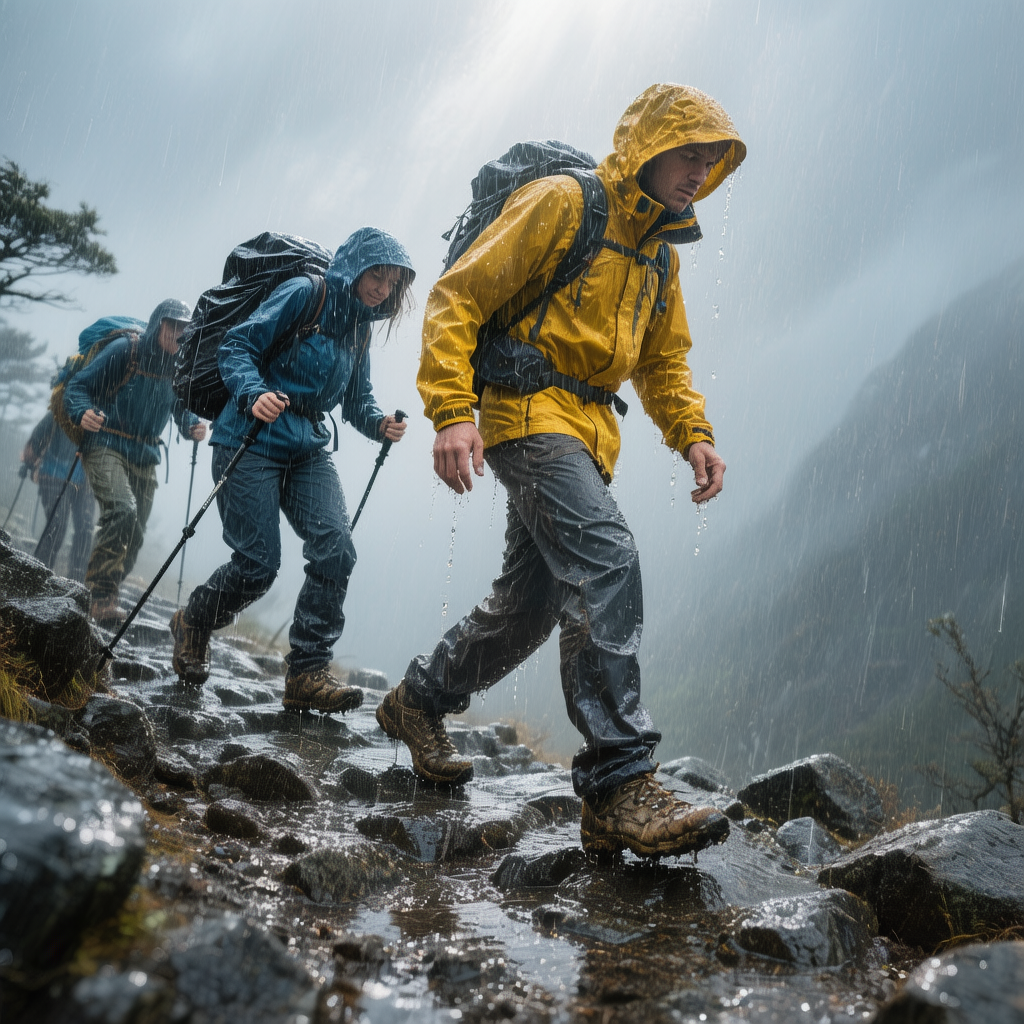
Lightning and flash flooding are also significant, though less frequent, risks. During summer, the Highlands can experience “heat lows” that lead to intense afternoon thunderstorms. Being on a high, exposed ridge during a lightning storm is extremely dangerous. Similarly, the thin soils of the mountains mean that heavy rain quickly runs off into the burns (streams), causing them to swell rapidly. A stream that was an easy hop in the morning can become an impassable torrent by the afternoon, potentially cutting off your return route and compromising your Scottish Highlands weather and mountain safety plan.
Staying Safe on Highland Mountains
The cornerstone of Highlands hiking safety is the “Dynamic Risk Assessment.” This means constantly evaluating your environment as you walk. Are the clouds lowering? Is the wind increasing? Is the group tiring? Scottish Highlands weather and mountain safety is not a static checkbox but an ongoing process. If the Scottish Highlands walking conditions change for the worse, the most courageous decision is often to turn back. The mountains will always be there; your goal is to ensure you are too.
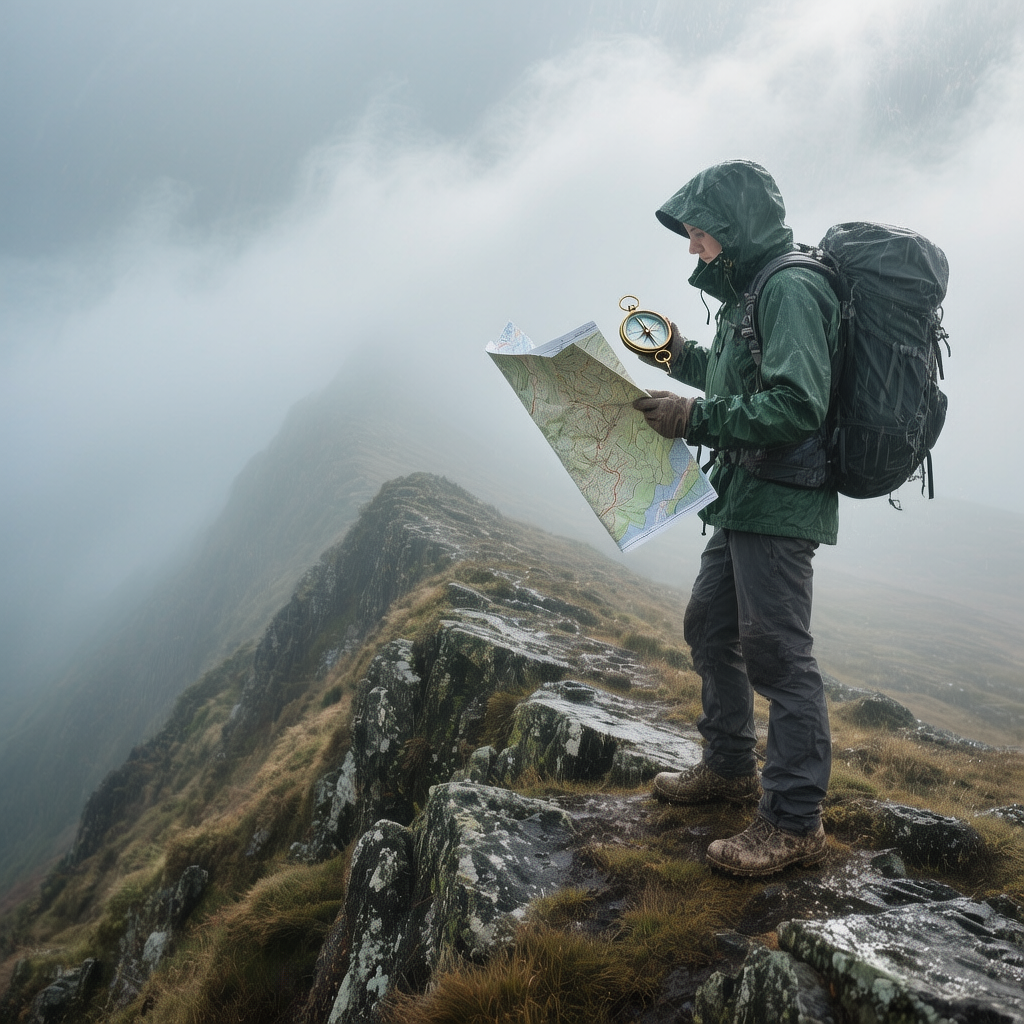
Navigation is the primary skill required for UK mountain weather safety. In the Highlands, you cannot rely on “following the path,” as many paths disappear into boulder fields or are obscured by snow and mist. Every member of a group should ideally know how to use a map and compass. This includes taking a bearing, timing your legs, and “pacing” to know exactly where you are on the map. Relying solely on GPS is a failure of Highlands hiking safety, as batteries fail in the cold and signals can be lost in deep corries. For professional guidance on these skills, consult Mountaineering Scotland. In challenging conditions, having a clear plan is essential for maintaining safety. If you find yourself disoriented, knowing the immediate steps to take when lost can be crucial: stop and assess your situation, retrace your steps if possible, and use your map and compass to determine your location. Staying calm and making informed decisions will increase your chances of regaining your bearings and safely navigating back to familiar territory.
Group management is another vital aspect of Scottish Highlands weather and mountain safety. A group is only as fast and as safe as its slowest member. Pushing someone beyond their physical or mental limit in poor Scottish Highlands mountain weather leads to mistakes, slips, and exhaustion—all of which are precursors to accidents. Effective Highlands hiking safety involves regular “check-ins” with all group members, ensuring everyone is eating, drinking, and staying warm enough to maintain their cognitive function and physical stability.
What to Carry for Safety
Your pack is your life-support system when dealing with Scottish Highlands weather and mountain safety. The “layering system” is the standard for UK mountain weather safety. This consists of a wicking base layer (merino or synthetic), an insulating mid-layer (fleece), and a high-quality waterproof shell (Gore-Tex or similar). Avoid cotton at all costs, as it holds moisture and induces cooling. This kit is essential whether you are on a short Glencoe Lost Valley Walk or a full day on the high plateaus.
Beyond clothing, Highlands hiking safety requires specific emergency equipment. Every pack should contain a “group shelter” (often called a bothy bag). This is a lightweight, windproof and waterproof nylon tent that you sit inside, using your collective body heat to warm the air. It can be a literal lifesaver if you are forced to wait out a storm or tend to an injured walker. Additionally, carry a dedicated whistle (six blasts for an emergency), a high-powered headtorch with spare batteries, and a small first aid kit tailored for mountain use.
- Navigation: OS Map (1:25k or 1:50k), Compass, and a GPS backup.
- Protection: Emergency bivvy bag or group shelter.
- Communication: Fully charged mobile phone and a portable power bank.
- Nutrition: 500 extra calories of high-energy food (emergency rations).
- Visibility: A bright, reflective item or a high-quality headtorch.
Maintaining Scottish Highlands weather and mountain safety also means carrying enough water and food to sustain your energy levels in the cold. When your body is working hard to stay warm in harsh Scottish Highlands walking conditions, you burn calories much faster than on a flat trail. Dehydration also contributes to the onset of fatigue and hypothermia, so regular intake of fluids is a key part of Highlands hiking safety. Even on a popular Ben Lomond day hike, these items should be considered mandatory. In addition to ensuring proper hydration and nourishment, it’s essential to dress in layers to adapt to the rapidly changing weather on scenic trails in the Scottish Highlands. Being prepared for both warm spells and sudden cold snaps can make a significant difference in overall comfort and safety. Always inform someone of your route, especially when venturing into lesser-known areas, to enhance your safety while enjoying the stunning landscapes.
What to Do in an Emergency
If an accident occurs despite your best efforts at Scottish Highlands weather and mountain safety, your first priority is to stabilize the situation. Move the casualty out of the wind if possible, provide extra layers, and get everyone into the group shelter. Highlands hiking safety protocols emphasize that you should not move a casualty with a suspected spinal or lower-limb injury unless they are in immediate danger from rockfall or rising water. Use your whistle or a torch to signal for help: six blasts/flashes, wait one minute, then repeat.
To summon help in the UK mountains, dial 999 or 112 and ask for “Police,” then “Mountain Rescue.” Be prepared to provide your exact location (preferably a six-figure grid reference), the number of people in your party, and the nature of the injuries. Scottish Mountain Rescue is a world-class volunteer service, but they can take several hours to reach remote locations, especially in poor Scottish Highlands mountain weather. Your ability to survive those first few hours depends entirely on the safety gear you carried and your knowledge of UK mountain weather safety.
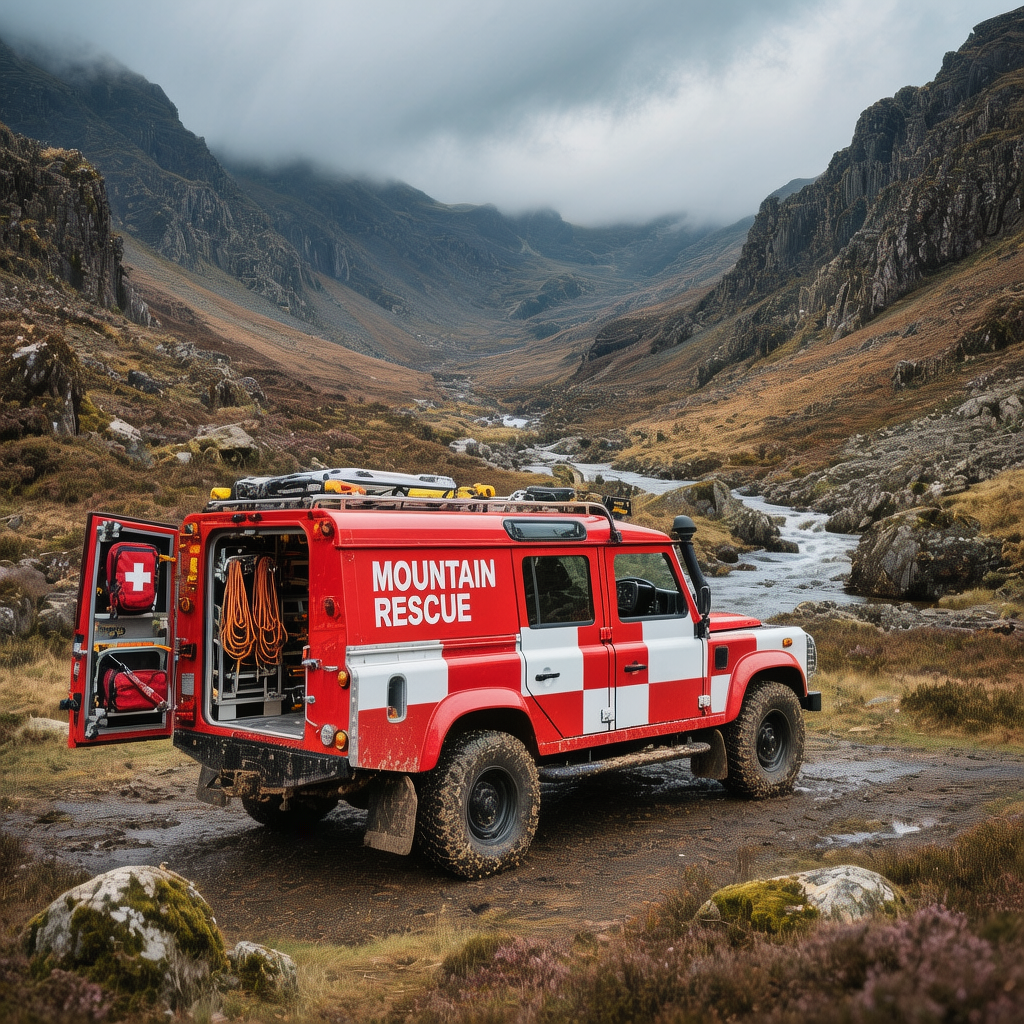
Before you head out, register your phone with the emergency SMS service by texting “register” to 999. In areas of poor signal, a text message can often get through when a voice call cannot. This simple step is a vital part of Highlands hiking safety. For more information on emergency procedures and to support the volunteers who keep us safe, visit Scottish Mountain Rescue. By respecting the Scottish Highlands weather and mountain safety guidelines, you ensure that your mountain adventures remain a source of joy rather than a statistic. The Highlands are a magnificent playground, but they demand a level of respect and preparation that only a dedicated UK mountain weather safety approach can provide.
