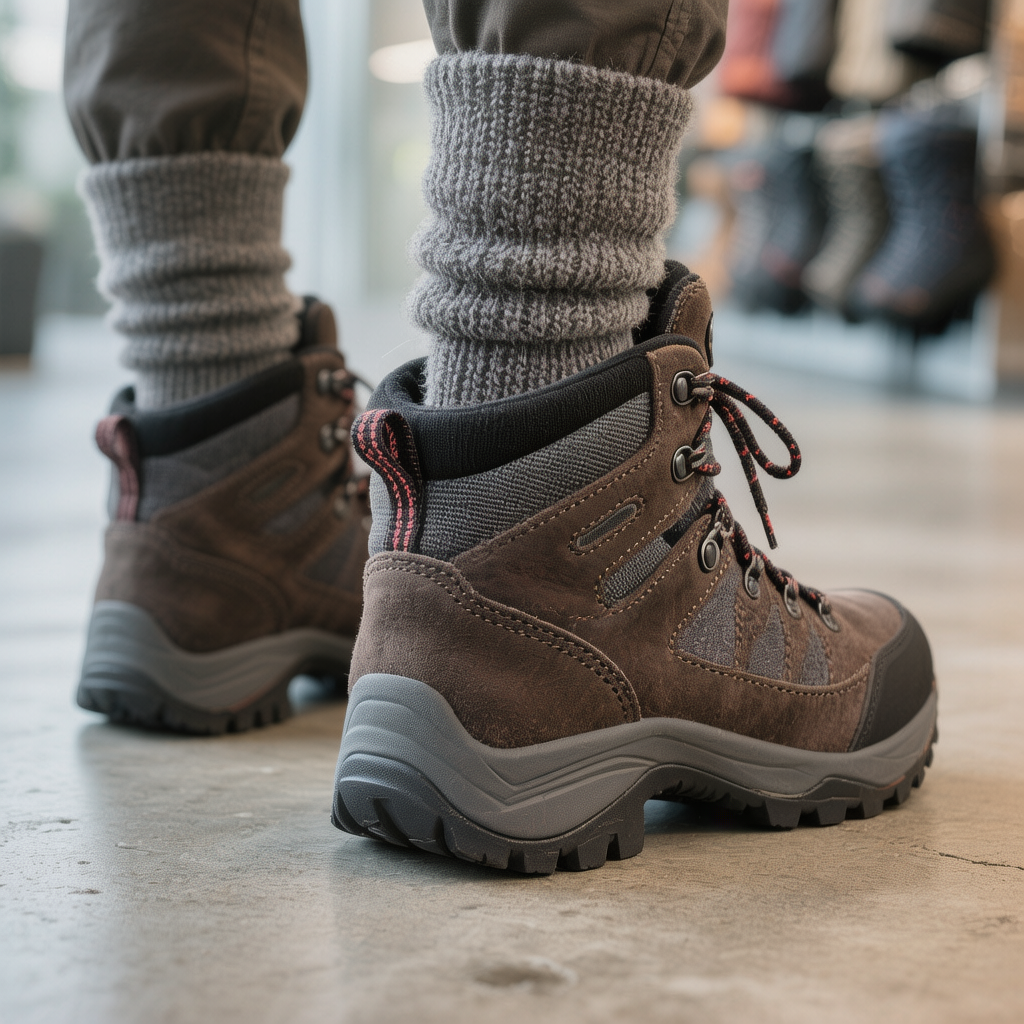
No, walking boots shouldn’t feel loose at the heel. A snug fit is crucial for comfort, stability, and performance while hiking. A properly fitted boot enhances energy transfer and reduces the risk of blisters. If your heel is slipping, it may indicate an inadequate fit, leading to foot fatigue. You can test your fit by walking around in the boots and checking for heel lift. Learn how to find your ideal fit and make your hiking experience even better.
Should Walking Boots Feel Loose at the Heel? Key Takeaways
- A snug heel fit is essential for comfort and stability, preventing blisters during walks.
- A slightly loose heel can improve blood circulation and flexibility for long hikes.
- Signs of poor heel fit include heel slipping, pain, and instability while walking.
- Testing fit involves walking around, checking for heel lift, and using appropriate socks.
- Regularly reassess fit, as foot shape and size can change over time.
Understanding Heel Fit in Walking Boots
When it comes to walking boots, you might wonder how your heel should fit. The fit of your heel is crucial for comfort and stability.
You’ll find different heel types in walking boots, including narrow, wide, and padded, each designed to accommodate various foot shapes. Depending on the boot materials, like leather or synthetic fabrics, the fit can change over time.
A snug heel fit helps prevent blisters and enhances your overall walking experience. If your heel feels loose, it may be due to selecting the wrong heel type or inadequate boot materials.
Always consider how your heel sits within the boot, as a secure fit is essential for effective performance on your outdoor adventures.
The Importance of Proper Fit
Getting the right fit in your walking boots is crucial for a comfortable experience.
A secure heel lock not only enhances your comfort during activities but also boosts your overall performance.
When your boots fit properly, you can focus more on your adventure and less on discomfort.
Heel Lock Importance
A proper fit in walking boots is essential for comfort and performance, and heel lock plays a crucial role in achieving that. When your heel is secured, you minimize the risk of blisters and discomfort.
To achieve a solid heel lock, you can use various heel lock techniques, such as lace-locking or crisscrossing your laces at the top. These methods help keep your heel in place, allowing for better control on uneven terrain.
Additionally, make necessary heel fit adjustments to ensure your boots hug your foot without being overly tight. Remember, a snug heel can significantly enhance your stability and confidence while walking, making your outdoor adventures more enjoyable and efficient.
Comfort During Activities
While comfort is often overlooked, it’s crucial for an enjoyable experience during any activity, especially when wearing walking boots. Proper fit directly impacts your comfort levels, allowing you to focus on the adventure ahead instead of your aching feet.
Whether you’re hiking rugged trails or strolling through a city, the right fit caters to various activity types. A snug yet comfortable boot prevents blisters and fatigue, helping you stay on your feet longer.
If your walking boots feel too loose at the heel, you might face discomfort that distracts you from enjoying your journey. Remember, prioritizing comfort during your footwear selection can make all the difference in your overall experience.
Impact on Performance
Comfort directly affects your performance when you’re out on the trail or exploring new places. If your walking boots fit properly, they provide crucial support and stability, enhancing your overall performance factors.
A snug fit at the heel ensures you maintain control, reducing the risk of blisters and discomfort. Loose heels can lead to instability, which negatively impacts your stride and energy efficiency.
Additionally, boot flexibility plays a vital role; the right amount allows for natural movement while still providing adequate support. When your boots strike the perfect balance between fit and flexibility, you can tackle any terrain with confidence, maximizing your enjoyment and minimizing fatigue on your adventures.
Benefits of a Snug Heel
Achieving a snug fit at the heel is crucial for optimal performance in walking boots. A well-fitted heel provides excellent heel stability, reducing the risk of blisters and friction during your trek.
When your heel stays secure, it allows for better energy transfer with each step, which can enhance your overall comfort and efficiency. You’ll notice improved control over uneven terrain, making your hikes safer and more enjoyable.
A snug fit also helps distribute pressure evenly across your foot, preventing hotspots that can lead to discomfort. Plus, it ensures that your foot doesn’t slide around inside the boot, giving you confidence in every step.
Investing in a proper fit means you can focus on the adventure ahead, not on your feet.
Advantages of a Slightly Loose Heel
Having a slightly loose heel in your walking boots can actually enhance your comfort during movement.
This little bit of wiggle room helps improve blood circulation and reduces the risk of blisters.
Enhanced Comfort During Movement
While a snug fit is often recommended for footwear, a slightly loose heel can actually enhance your comfort during movement.
When your heels have room to move, it allows for better foot movement, reducing the risk of blisters and discomfort. This extra space can also contribute to boot flexibility, letting your boots adapt more naturally to the terrain you’re traversing.
You’ll find that a loose heel provides a more relaxed fit, which can be particularly beneficial during long hikes or walks. This comfort can help you maintain a steady pace without the distraction of pinching or tightness.
Ultimately, a slightly loose heel balances support and freedom, giving you the best of both worlds while enjoying your outdoor adventures.
Improved Blood Circulation
A slightly loose heel not only enhances comfort but also plays a significant role in improving blood circulation.
When your heel has some wiggle room, it allows for better blood flow throughout your foot and leg. This increased blood flow brings more oxygen and nutrients to your muscles, which is essential during long walks.
Plus, improved circulation can help reduce fatigue, making your outdoor adventures more enjoyable. You’ll feel less restricted, allowing you to move freely and efficiently.
In turn, this helps prevent stiffness and promotes overall foot health. So, while you might think a snug fit is ideal, a little looseness at the heel can provide important circulation benefits that keep you feeling great on your feet.
Reduced Blister Risk
When your heel has a bit of extra space, it significantly lowers the risk of blisters during long walks. A slightly loose heel allows your foot to move naturally, reducing heel friction that often leads to painful blisters.
When you walk, your foot expands, and if your boot’s too tight, that pressure can cause irritation. By prioritizing blister prevention, you’ll stay comfortable on the trail. This extra room helps your foot breathe and prevents excessive rubbing against the boot material.
Finding Your Ideal Fit
Finding the right fit for your walking boots is crucial for comfort and performance. To achieve ideal sizing, start by measuring your foot accurately, considering both length and width.
Your foot anatomy plays a significant role in determining how a boot will fit. Pay attention to your arch type and toe shape, as these factors can influence the fit.
When trying on boots, wear the same socks you plan to use for walking. Ensure there’s enough space to wiggle your toes, while the heel should remain snug without slipping.
A proper fit means your boots should support your foot without causing pressure points. Take your time to find that perfect balance, ensuring you’re ready for the trails ahead.
Tips for Trying on Walking Boots
Trying on walking boots is an important step in ensuring you get the right fit.
Start by wearing the socks you plan to use while hiking, as this affects shoe sizing. When you slip on a boot, make sure there’s enough room for your toes to wiggle, but not so much that your heel lifts.
Pay attention to the boot materials; some may stretch over time, while others won’t. Walk around the store to test comfort and support. If the boots feel tight in any area, try a different size or brand.
Lastly, don’t hesitate to ask for assistance from store staff; their expertise can guide you to the best choice for your needs.
Frequently Asked Questions
Can Heel Slippage Cause Blisters During Long Hikes?
Yes, heel slippage can cause blisters during long hikes. To prevent this, ensure your boots provide proper heel stability. Tightening laces and using blister prevention techniques can help keep your feet comfortable and blister-free.
How Do I Know if My Boots Are Too Loose?
You’ll know your boots are too loose if you feel excessive heel movement or discomfort. Proper boot sizing should ensure heel comfort, allowing just a slight wiggle without causing blisters or instability during hikes.
Are There Different Heel Fit Preferences for Various Terrains?
Yes, there are different heel fit preferences based on terrain adaptability. For rocky trails, you’ll want snug heels for stability, while softer terrains might allow for a slightly looser fit, enhancing comfort without compromising support.
Should I Size up for Thicker Socks?
Yes, you should size up for thicker socks. This adjustment ensures boot comfort, allowing for proper circulation and reducing friction. A snug fit with thicker socks enhances support, keeping your feet happy during long walks.
Can Insoles Help With Heel Fit Issues?
Yes, insoles can definitely help with heel fit issues. Using insole materials that offer good arch support can fill gaps, providing a snugger fit and improving overall comfort during your walks. Consider them for better stability!
Conclusion
In conclusion, finding the right fit for your walking boots is crucial for comfort and performance. While a snug heel is generally preferred to prevent blisters and provide stability, a slightly loose heel might work for some, especially during longer treks. Ultimately, it’s about personal preference and what feels best for you. So, take the time to try on different pairs, and don’t hesitate to walk around in them to ensure you’ve found your ideal fit.
