

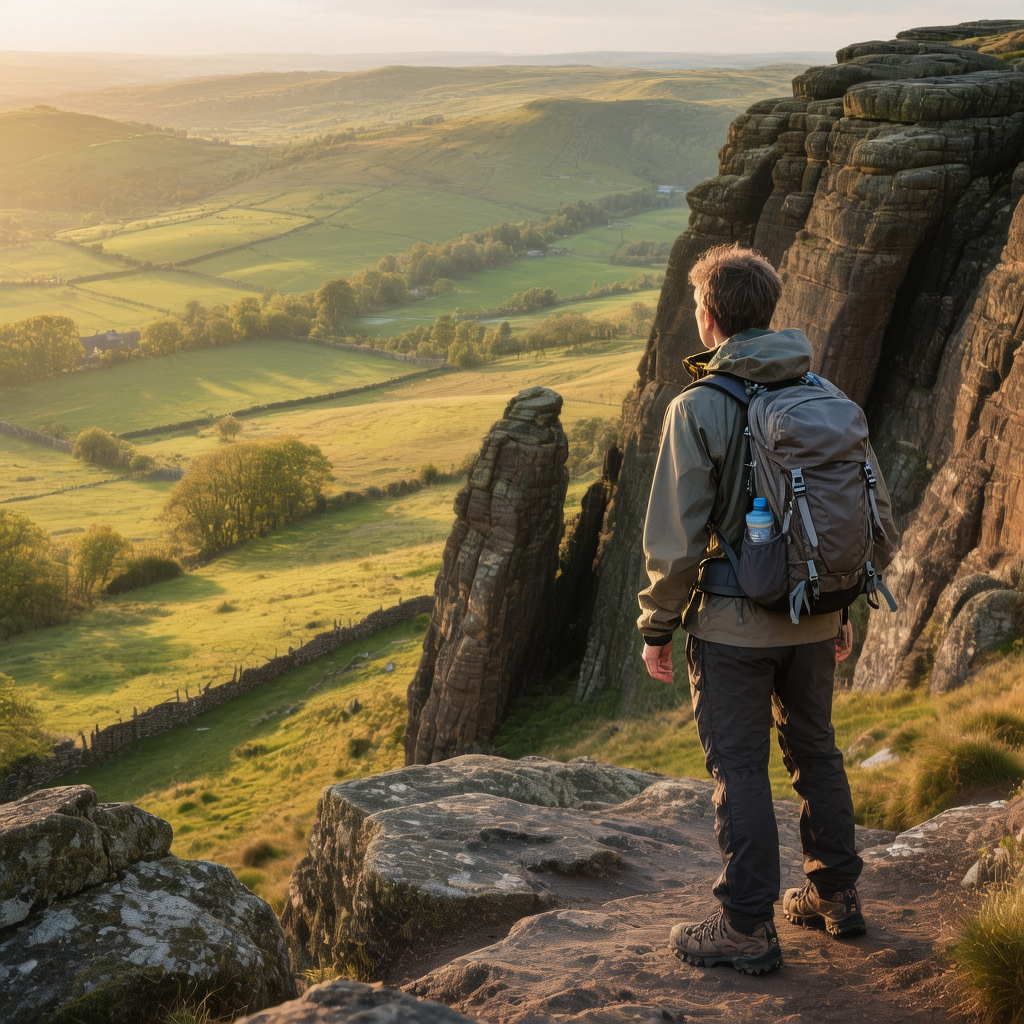
The Stanage Edge Walk is widely considered the quintessential gritstone experience for anyone exploring the Dark Peak region of Derbyshire. Stretching for nearly four miles, this imposing escarpment offers some of the most spectacular views in England, overlooking the Hope Valley and the distant Mam Tor. Whether you are a seasoned hillwalker or a casual visitor looking for a classic Stanage Edge walk Peak District experience, this route delivers a perfect blend of accessible terrain, fascinating industrial history, and rugged natural beauty. As one of the most popular Peak District Day Hikes, it provides a sense of scale and exposure that is hard to match elsewhere in the National Park.
For those planning a Stanage Edge circular walk, the journey typically begins in the valley below, climbing steadily through silver birch woodlands before emerging onto the vast, wind-swept plateau. The edge itself is famous not just for hikers, but as a world-class destination for rock climbers, who have been scaling these gritstone buttresses for over a century. Walking along the top, you will encounter the famous abandoned millstones, remnants of a bygone industry that now serve as silent monuments to the area’s heritage. This Peak District edge walk is a must-do for anyone wanting to understand the unique character of the gritstone moors.
While many visitors stick to the well-trodden paths near the popular parking areas, a full Stanage Edge hike allows you to escape the crowds and find solitude further north toward High Neb. The terrain here is classic Dark Peak: peat hags, heather moorland, and the distinctive “dark” rock that gives the region its name. If you have already completed the Mam Tor Great Ridge Walk or the challenging Kinder Scout via Grindsbrook Clough, you will find Stanage Edge offers a different, perhaps more atmospheric, perspective on the landscape.
Stanage Edge Walk
The Stanage Edge Walk is defined by its sheer scale. At approximately 458 metres at its highest point (High Neb), it isn’t the highest peak in the district, but its continuous cliff line makes it feel incredibly prominent. The gritstone here was formed over 300 million years ago, and the relentless Peak District weather has carved the rock into fantastic, gravity-defying shapes. For the modern hiker, the Stanage Edge walk Peak District offers a relatively level high-level traverse once the initial ascent is completed, making it an excellent choice for those who want big views without excessive climbing.
The area is managed with care by the Peak District National Park Authority and the National Trust (Stanage Edge), ensuring that the delicate moorland ecosystem is protected while remaining accessible to the public. As you traverse the Stanage Edge circular walk, you are walking through a landscape steeped in literary and cinematic history. Most famously, the edge featured in the 2005 film adaptation of Pride and Prejudice, where Keira Knightley’s Elizabeth Bennet stood atop the rocks, capturing the romantic essence of the English countryside. However, for the Peak District edge walk enthusiast, the real draw is the raw, unpolished nature of the gritstone and the expansive horizon.
Route Overview and Key Facts
Before setting off on your Stanage Edge hike, it is essential to understand the logistics of the route. While there are various ways to tackle the edge, the most rewarding is a circular loop that takes in both the high escarpment and the lower bridleways. This allows you to see the edge from two entirely different perspectives: looking out from the top and looking up at the towering cliffs from below.
- Distance: Approximately 9.5 kilometres (6 miles) for the standard circular loop.
- Time: 3 to 4 hours, depending on pace and photo stops.
- Total Ascent: Roughly 250 metres.
- Terrain: Well-defined gritstone paths, some rocky sections, and potentially muddy bridleways in the valley.
- Difficulty: Moderate. The climb to the edge is steady but short, and the top is relatively flat.
- Navigation: Generally straightforward in clear weather, but the plateau can become disorienting in thick mist.
The Stanage Edge Walk is accessible year-round, but each season brings a different character. In late summer, the moors are a sea of purple heather. In winter, the gritstone takes on a darker, more forbidding tone, often dusted with snow or rimed with frost. Regardless of when you visit, the Stanage Edge walk Peak District requires sturdy footwear, as the gritstone can be abrasive and the paths uneven.
Starting Point and Parking Options
Choosing the right starting point for your Stanage Edge circular walk is crucial, as the area can become exceptionally busy on weekends and bank holidays. There are several parking areas located along the road that runs parallel to the edge, known as The Long Causeway and the Ringinglow Road.
1. Hook’s Carr Car Park: This is perhaps the most popular starting point for the Stanage Edge Walk. It is located at the southern end of the edge and provides the quickest access to the cliffs. It is a free car park, but it fills up very early. From here, a short, steep path leads directly up to the trig point at the southern end of Stanage.
2. Hollin Bank Car Park: Located slightly further north and lower down the slope, this is a pay-and-display car park managed by the National Park. It offers better facilities, including public toilets (usually open during peak hours). This is an excellent base for a Peak District edge walk as it sits right below the most dramatic section of the cliffs, near the famous Robin Hood’s Cave.
3. Dennis Knoll: For those looking for a longer Stanage Edge hike, the Dennis Knoll parking area at the northern end of the edge is a quieter alternative. It provides direct access to the Long Causeway, an ancient trackway that cuts across the moor toward Bamford.
If you prefer to use public transport, the village of Hathersage is the best gateway. From Hathersage station, you can walk up through the fields and woods to reach the edge, adding about 3-4 kilometres to your total Stanage Edge walk Peak District distance. This approach is highly recommended as it allows you to enjoy a celebratory pint in one of Hathersage’s excellent pubs after your walk.
Step-by-Step Stanage Edge Route Description
This Stanage Edge circular walk begins at the Hollin Bank car park, providing a comprehensive tour of the edge’s best features.
Phase 1: The Ascent to the Edge
From the Hollin Bank car park, follow the well-marked path heading uphill through the plantation. The gradient is steady but manageable. As you emerge from the trees, the full scale of the Stanage Edge Walk becomes apparent. Continue climbing toward the base of the cliffs. You will notice dozens of discarded millstones lying in the grass. These were carved from the gritstone in the 19th century but were abandoned when the demand for flour-grinding stones shifted to harder French burr stone. They are now an iconic symbol of the Peak District.
Phase 2: Traversing the Escarpment
Once you reach the top of the edge, turn left (northwest). The path here is wide and composed of solid gritstone. This is the heart of the Peak District edge walk. To your left, the ground drops away dramatically, offering uninterrupted views of the Hope Valley, Win Hill, and the Great Ridge. Keep an eye out for Robin Hood’s Cave, a natural fissure in the rock face that provides a sheltered ledge with a “balcony” view. It is tucked slightly below the main path and requires a short, careful scramble to reach.
Phase 3: Reaching High Neb
Continue following the edge path as it winds through weathered rock formations. The crowds usually thin out as you move further from the car parks. Your objective is High Neb, the highest point of the Stanage Edge hike. Marked by a trig pillar, this spot offers a 360-degree panorama of the Dark Peak. On a clear day, you can see as far as the Manchester skyline to the west and the Sheffield suburbs to the east. The sense of space here is immense, a hallmark of any great Stanage Edge walk Peak District.
Phase 4: The Return via the Long Causeway
From High Neb, continue a short distance further north before taking a path that cuts back down the slope toward the Long Causeway. This ancient track was once a major packhorse route and is often erroneously referred to as a Roman road. Follow the track back toward the south. Walking below the edge gives you a completely different appreciation for the Stanage Edge Walk, as you can look up at the soaring buttresses and watch climbers tackling famous routes like ‘Flying Buttress’ or ‘Right Unconquerable’.
Phase 5: Closing the Loop
The track eventually leads you back toward the Hollin Bank area. You can choose to stay on the lower bridleway, which meanders through ferns and silver birch, or take one of the smaller paths that weave between the fallen boulders at the foot of the cliffs. This final section of the Stanage Edge circular walk is particularly beautiful in the late afternoon sun, when the gritstone glows with an orange hue.
Difficulty, Exposure and Terrain
The Stanage Edge Walk is often described as a “moderate” hike, but that doesn’t mean it should be underestimated. The primary challenge on any Peak District edge walk is the terrain underfoot. Gritstone is incredibly grippy when dry, but it can be surprisingly slippery when wet or icy. The paths along the top are often uneven, with large gaps between rocks that require careful foot placement.
Exposure is another factor to consider. While the path is generally wide enough to feel safe, the drops are sheer. If you suffer from vertigo, you may prefer to stay a few metres back from the actual rim. The wind is also a constant companion on a Stanage Edge hike. Because the edge acts as a massive barrier to the prevailing westerly winds, gusts can be significantly stronger at the top than in the valley. On very windy days, it is advisable to stay well away from the edge to avoid being buffeted off balance.
For those used to the boggy peat of Kinder Scout via Grindsbrook Clough, the Stanage Edge walk Peak District will feel much firmer and drier. However, the return leg on the lower paths can become quite muddy after heavy rain, so waterproof boots are highly recommended. Overall, the route is suitable for anyone with a basic level of fitness and a good pair of walking shoes.
Safety, Weather and Edge Walking Advice
Safety should always be your priority when embarking on the Stanage Edge Walk. The weather in the Peak District can change with startling rapidity. It is not uncommon to start a Stanage Edge circular walk in bright sunshine and finish it in a torrential downpour or thick “clag” (low cloud). Always check the mountain weather forecast before heading out.
If visibility drops, navigation on the plateau can become tricky. While the edge itself provides a natural handrail, finding the correct descent paths in thick mist requires a map and compass (and the knowledge of how to use them). Do not rely solely on smartphone GPS, as battery life can drain quickly in cold temperatures and signal can be spotty in the valleys.
In the event of an emergency, you should contact Mountain Rescue England & Wales by dialling 999 and asking for the Police, then Mountain Rescue. The Edale Mountain Rescue Team frequently operates in this area and is highly experienced in gritstone rescues. To avoid needing their help, stay hydrated, carry extra layers, and be mindful of the fading light, especially during the winter months.
Finally, remember the “Leave No Trace” principles. The Stanage Edge hike passes through a sensitive upland environment that supports rare ground-nesting birds like the Curlew and Golden Plover. Keep dogs on a short lead during the nesting season (March to July) and always take your litter home with you. By respecting the landscape, we ensure that the Stanage Edge Walk remains a pristine destination for generations of hikers to come.

Whether you are visiting for the history, the climbing, or simply the breathtaking views, the Stanage Edge walk Peak District never fails to impress. It is a place where the industrial past and the natural world collide, creating a landscape that is uniquely British and endlessly fascinating. Once you have mastered this route, you will find yourself drawn back to the edges time and again, perhaps to explore the nearby Burbage Rocks or the heights of Derwent Edge. For now, enjoy the gritstone, the wind, and the incomparable feeling of standing on top of the world at Stanage.
