The Complete Authority Hub
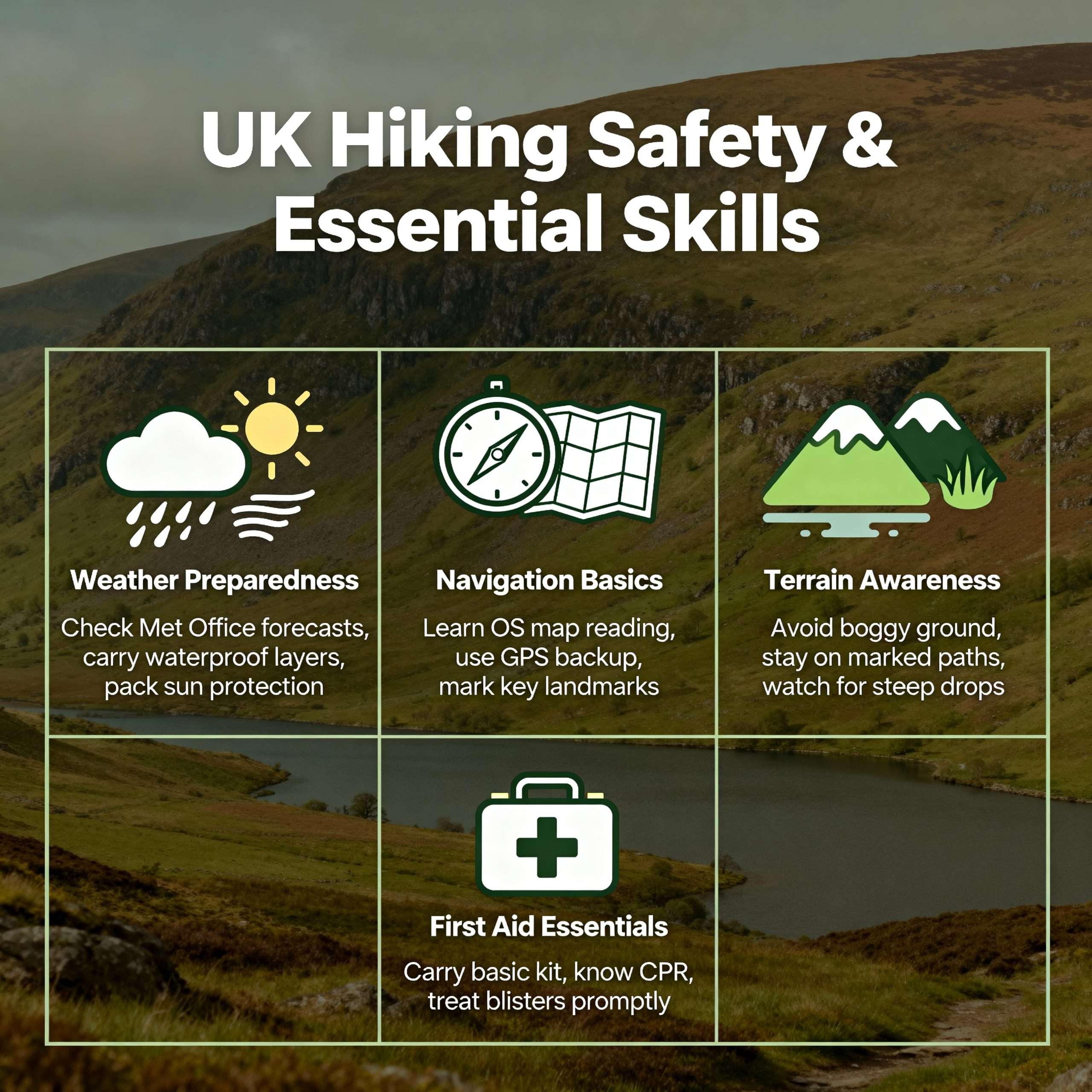
UK Hiking Safety & Essential Skills are the foundation of every successful day out in the British hills, whether you are exploring the rolling peaks of the Peak District or the rugged ridges of the Scottish Highlands. The British landscape is uniquely beautiful, but it is also defined by its unpredictability. From fast-changing weather systems that can move from sunshine to heavy mist in minutes to remote terrain where mobile signals are non-existent, the environment demands a specific set of competencies. Developing these skills is not about preparing for extreme scenarios, but about building the confidence to enjoy the outdoors responsibly and return home safely after every adventure. Familiarizing yourself with basic first aid, including treatment options for hypothermia, is essential for every hiker. Knowing how to recognize the early signs of cold stress and how to respond effectively can mean the difference between a successful outing and a dangerous situation. By prioritizing safety and preparation, you can fully immerse yourself in the breathtaking beauty of the British outdoors.
Why UK Hiking Safety & Essential Skills Matter
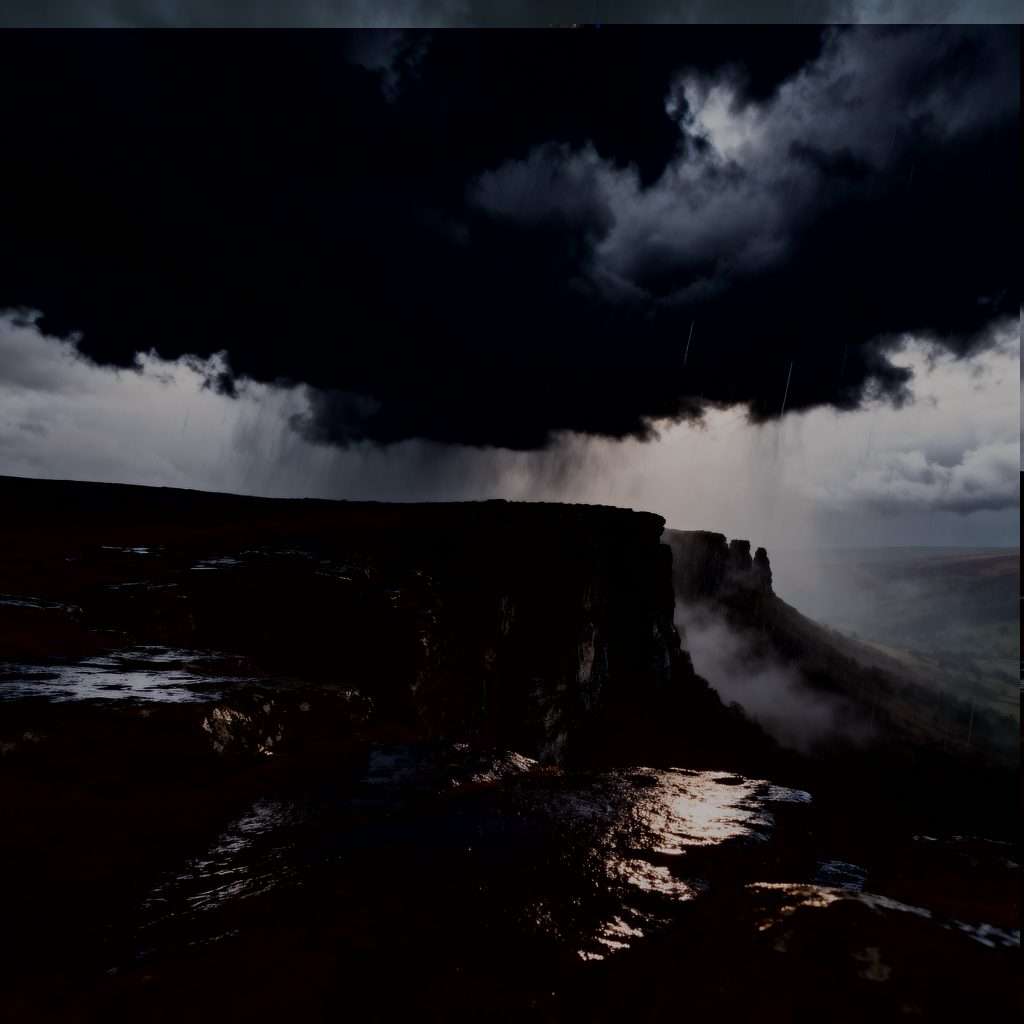
The terrain in the United Kingdom can be deceptively challenging. What appears to be a gentle, grassy slope on a map may hide steep crags, peat bogs, or scree slopes that require careful movement. Unlike some continental mountain ranges where weather patterns are more stable, the UK’s maritime climate means that conditions at the summit are often vastly different from those at the trailhead.
Preparation is the primary pillar of hiking safety UK. It is often said that mountain safety is 90% preparation and 10% reaction. Having the physical fitness to climb a hill is only one part of the equation; having the mental toolkit to navigate a whiteout or manage a group’s energy levels is what truly ensures a safe journey. By taking responsibility for your own safety, you not only protect yourself but also reduce the pressure on volunteer Mountain Rescue teams who operate across the country.
Core Hiking Skills Every UK Walker Should Learn
Mastering essential hiking skills UK involves a blend of technical knowledge and practical experience. Below are the core areas that every hillwalker should understand before heading into more remote areas. This includes navigation techniques, first aid basics, and understanding local weather patterns. Hillwalkers should also know what to do if lost hiking, such as staying calm, retracing steps if possible, and using a map and compass to find the way back. By mastering these essential skills, hikers can significantly increase their safety and enjoyment on the trails.
Navigation & Route Planning
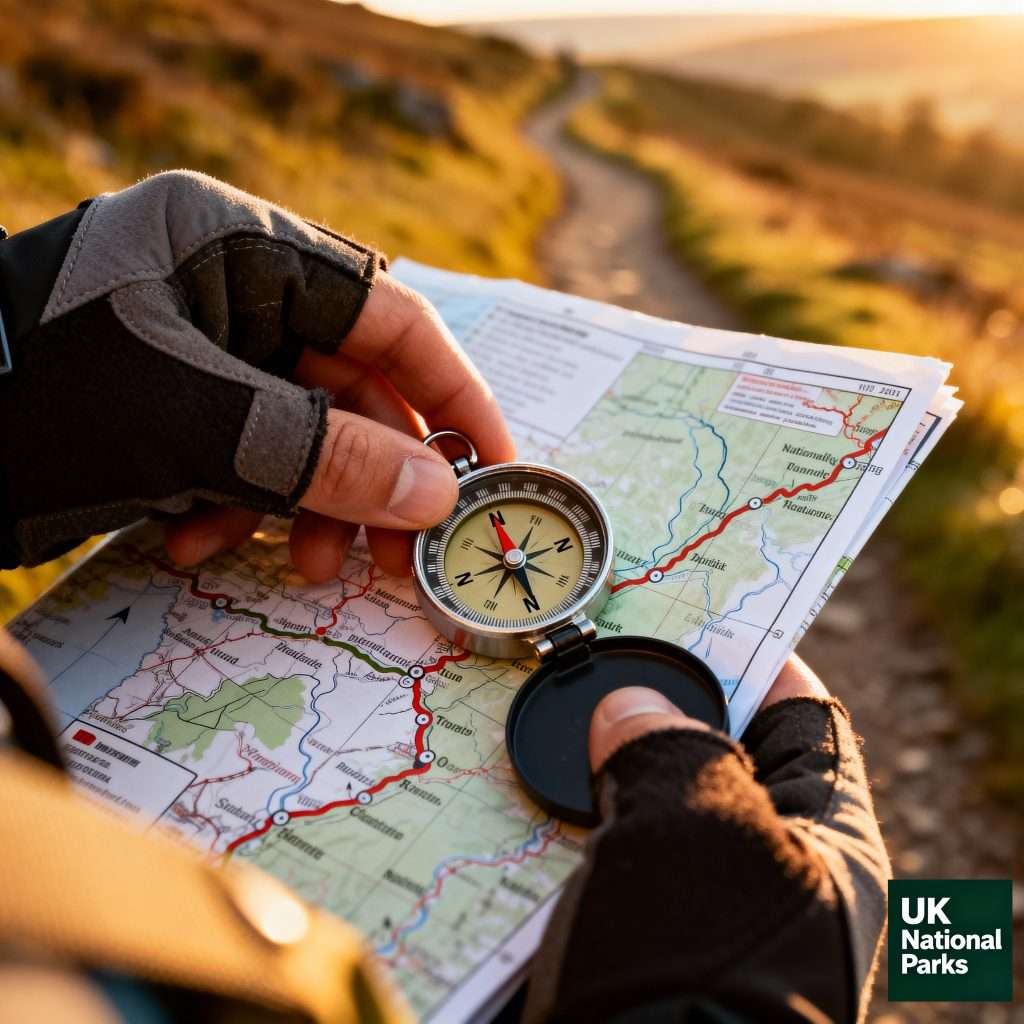
The ability to read a map and use a compass remains the most critical skill for any walker. While digital tools are helpful, understanding contours, symbols, and how to take a bearing ensures you can find your way when batteries fail or signals drop. Route planning involves estimating time based on distance and ascent, ensuring the chosen path matches the group’s ability.
Weather Awareness & Decision Making
Understanding how to interpret a mountain-specific forecast is vital. Hikers must learn to recognise the signs of approaching fronts and understand how wind speed increases with altitude. This skill allows you to make informed decisions about whether to continue to a summit or seek a lower-level alternative before conditions deteriorate. Understanding Mountain Weather Forecasts UK
What to Do If You Get Lost
Even experienced walkers can become disoriented in poor visibility. Knowing how to stay calm, retrace your steps to a known point, or use “relocation” techniques is essential. This skill focuses on preventing a minor navigational error from turning into a serious incident through calm, logical thinking.
Emergency Awareness & First Aid
Basic hillwalking safety UK includes knowing how to handle minor injuries and when to call for assistance. This involves carrying a basic first aid kit and knowing the specific procedure for contacting emergency services in the mountains, such as using the 999 SMS service which can work in low-signal areas.
Clothing, Footwear & Personal Preparation
The “layering system” is a fundamental concept for UK conditions. Learning how to manage your body temperature using base, mid, and outer layers helps prevent exhaustion and cold-related issues. Choosing appropriate footwear for the terrain ensures stability and reduces the risk of slips or trips.
How This Hiking Skills Hub Is Structured
This page serves as the central authority for hiking skills for beginners UK and intermediate walkers. Rather than providing exhaustive detail on every topic here, this hub is designed to signpost you toward dedicated, in-depth guides for each specific skill.
We recommend that readers work through these guides gradually. Safety is a journey of continuous learning; you do not need to be an expert on day one, but you should aim to add one new “tool” to your mental toolkit before every significant walk. Each linked guide will focus on practical, actionable advice tailored specifically to the British environment.
When to Turn Back — A Skill, Not a Failure
One of the most important mountain safety UK lessons is the “summit is optional, the car park is mandatory” mindset. Turning back because the weather has closed in, the light is fading, or a member of the group is struggling is a sign of an experienced and competent hiker, not a failure.
The hills will always be there for another day. Developing the judgement to recognise when the risks are outweighing the rewards is a hallmark of a responsible walker. Normalising the decision to retreat ensures that hiking remains an enjoyable and sustainable hobby for everyone involved.
Who This Guide Is For (and Who It Isn’t)
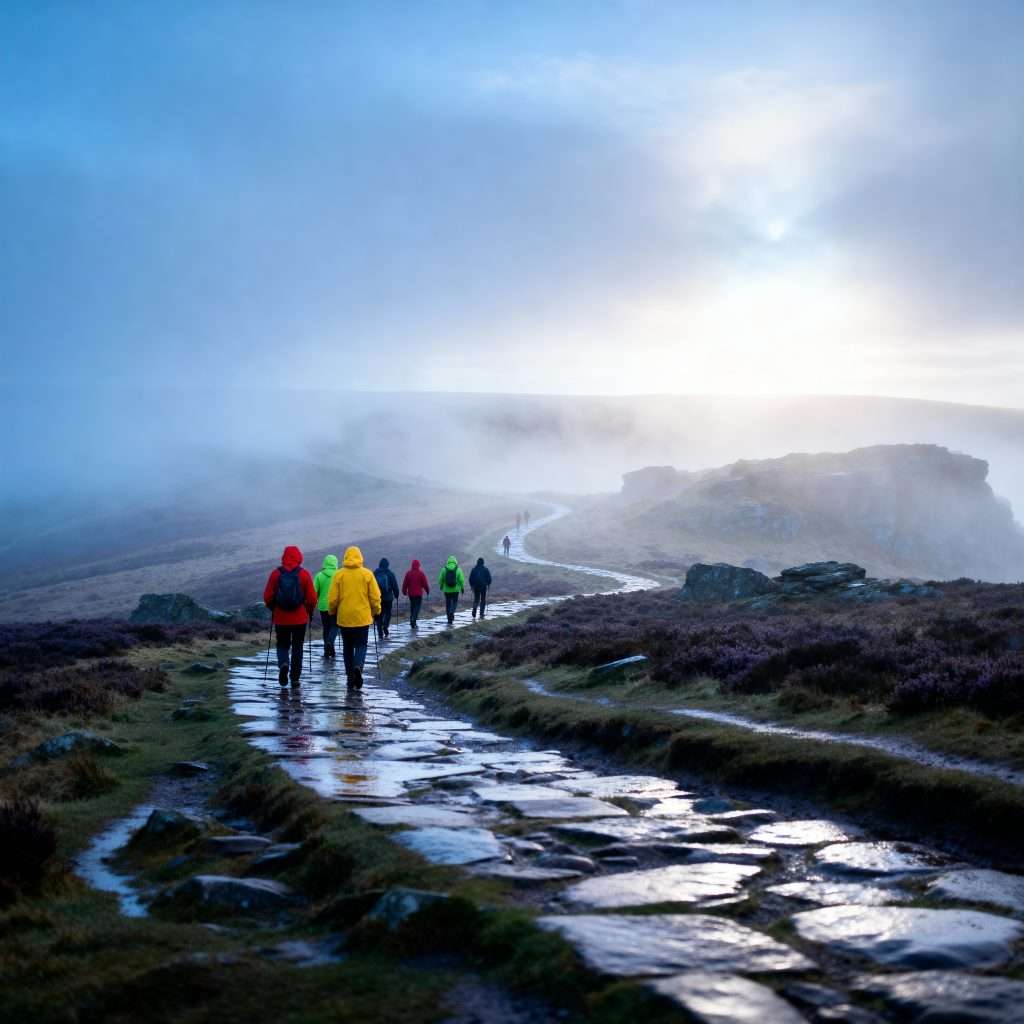
This resource is designed for beginners who are planning their first serious hill walks and intermediate walkers looking to level up their UK hiking preparation. It is for those who want to feel more “at home” in the wilder parts of our National Parks and who value self-reliance and traditional hillcraft.
This guide is not intended for extreme mountaineers, rock climbers, or those seeking “survival” tactics. Our focus is on sensible, preventative measures that keep standard hill walking within the realms of safety and enjoyment. We assume our readers are cautious, sensible, and eager to learn the right way to explore the British countryside.
Start With These Essential Guides
To begin building your knowledge, we recommend exploring the following foundational guides. These cover the most critical aspects of UK Hiking Safety & Essential Skills in detail:
- How to Read an Ordnance Survey Map for Hiking
- How to Use Grid References and Bearings
- Understanding Mountain Weather Forecasts in the UK
- What to Do If You Get Lost While Hiking
- Recognising and Treating Hypothermia While Hiking
Conclusion
Building your UK Hiking Safety & Essential Skills is the best way to ensure that your time in the mountains is spent focusing on the views and the experience rather than on worry or uncertainty. By taking a measured and responsible approach to learning, you will find that your confidence grows alongside your capability. Start with the guides listed above, practice your skills in familiar terrain, and enjoy the incredible landscapes the UK has to offer with peace of mind.
