The Ultimate Guide
What to wear hiking in the Scottish Highlands is a decision that can define the success and safety of your entire trip, as the northern wilderness of the UK is famous for its unpredictable and often harsh conditions. For those planning Scottish Highlands Day Hikes, the clothing you choose acts as your primary line of defence against wind, rain, and rapid temperature drops. Unlike lower-level walks in the south of England, a mountain day in the Highlands requires a technical approach to outfitting that prioritises moisture management and thermal efficiency. Understanding the nuances of Scottish Highlands hiking clothing is essential for anyone from novice walkers to seasoned Munro baggers. When you embark on adventures through the scenic trails in the highlands, layering is key to adapting to the rapidly changing weather. Additionally, investing in quality footwear that offers both support and grip can make a significant difference when navigating rugged terrain. Ultimately, being well-prepared can enhance your experience and allow you to fully appreciate the breathtaking landscapes.
Selecting the right Highlands walking outfit involves more than just picking a jacket; it requires a systematic understanding of UK hiking clothing layers and how they interact with the environment. The terrain is often boggy, the ridges are exposed to high-velocity winds, and the summits can be significantly colder than the glens. Consequently, Scottish Highlands weather clothing must be versatile enough to handle “four seasons in one day.” This guide provides a comprehensive breakdown of the essential gear needed to stay comfortable and safe while exploring one of the world’s most beautiful yet demanding landscapes.
what to wear hiking in the Scottish Highlands
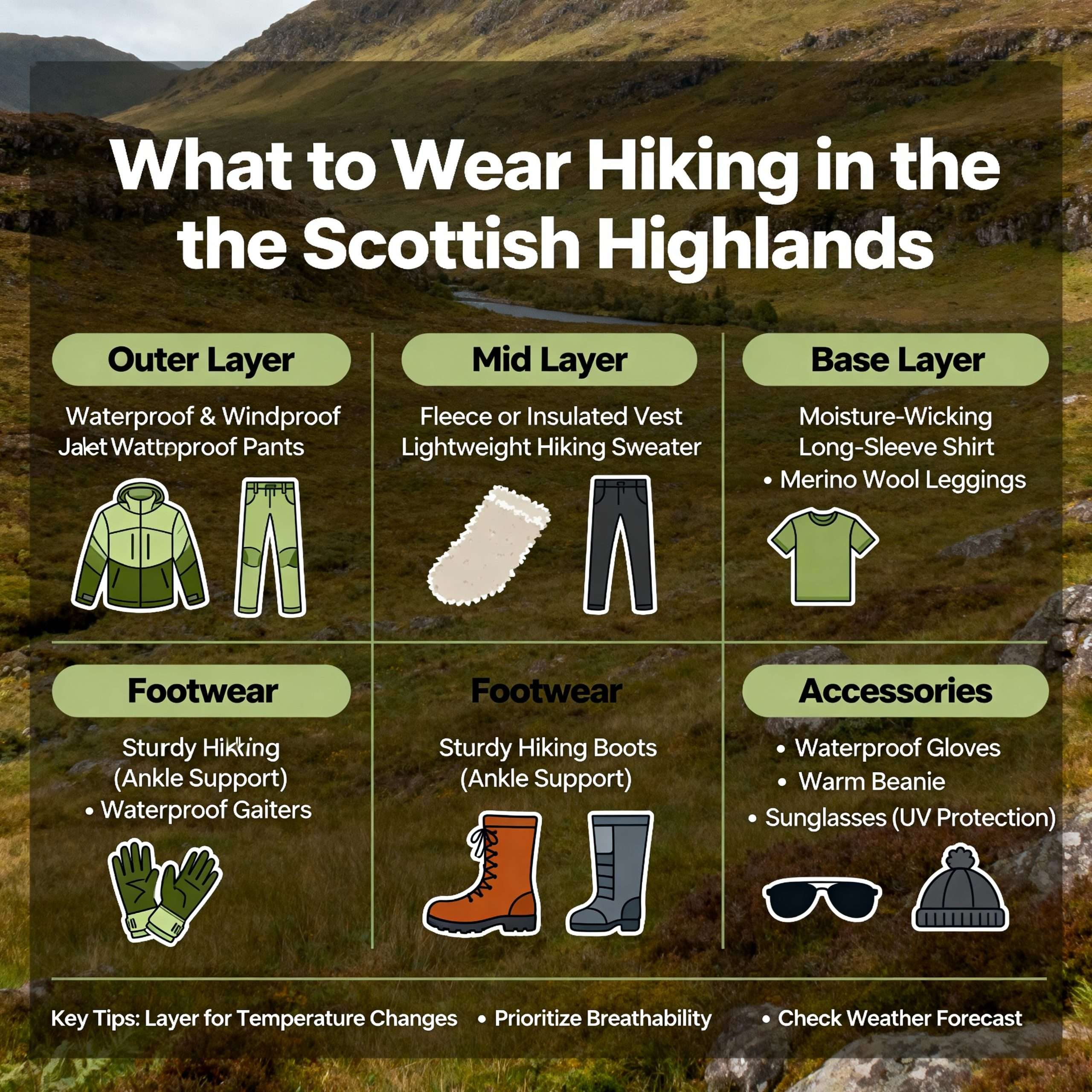
When considering what to wear hiking in the Scottish Highlands, the most important concept to master is the three-layer system. This approach allows you to regulate your body temperature by adding or removing garments as conditions change or as your exertion level fluctuates. In the Highlands, you might start a climb in bright sunshine and finish it in a freezing sleet shower. A well-planned Highlands walking outfit ensures that you are never too hot (which leads to sweating and subsequent chilling) or too cold (which can lead to hypothermia).
The philosophy behind Scottish Highlands hiking clothing is built on functionality over fashion. Every item in your UK hiking clothing layers should serve a specific purpose: wicking moisture away from the skin, providing insulation, or protecting you from the elements. Because the weather can turn so quickly, Scottish Highlands weather clothing must be carried even if the sky is blue when you leave the car park. This level of preparation is what separates a prepared mountain walker from an ill-equipped tourist, and it is a fundamental aspect of mountain safety in the UK.
Furthermore, what to wear hiking in the Scottish Highlands extends beyond just the torso and legs. Accessories like hats, gloves, and gaiters play a critical role in maintaining your core temperature and keeping your extremities functional. In the following sections, we will delve into the technical specifications of each layer, helping you choose the best Scottish Highlands hiking clothing for your specific needs, whether you are tackling a gentle glen walk or a strenuous mountain ascent.
Understanding Scottish Highlands Weather Conditions
To choose the correct Scottish Highlands weather clothing, you must first understand the unique meteorology of the region. The Highlands are situated at a latitude that places them in the path of frequent Atlantic depressions. This results in high humidity, frequent rainfall, and very high wind speeds. Before heading out, it is vital to consult the Met Office mountain forecast, which provides specific data for summit conditions that differ vastly from the valleys.
A key factor in what to wear hiking in the Scottish Highlands is the wind chill factor. A moderate breeze of 20mph can make a 5°C day feel like -2°C. Additionally, the “lapse rate” means that for every 100 metres you ascend, the temperature typically drops by about 1°C. This means that your Highlands walking outfit must be capable of protecting you against temperatures that are significantly lower than those at the trailhead. For more detailed information on environmental hazards, refer to our Highlands weather & mountain safety guide.
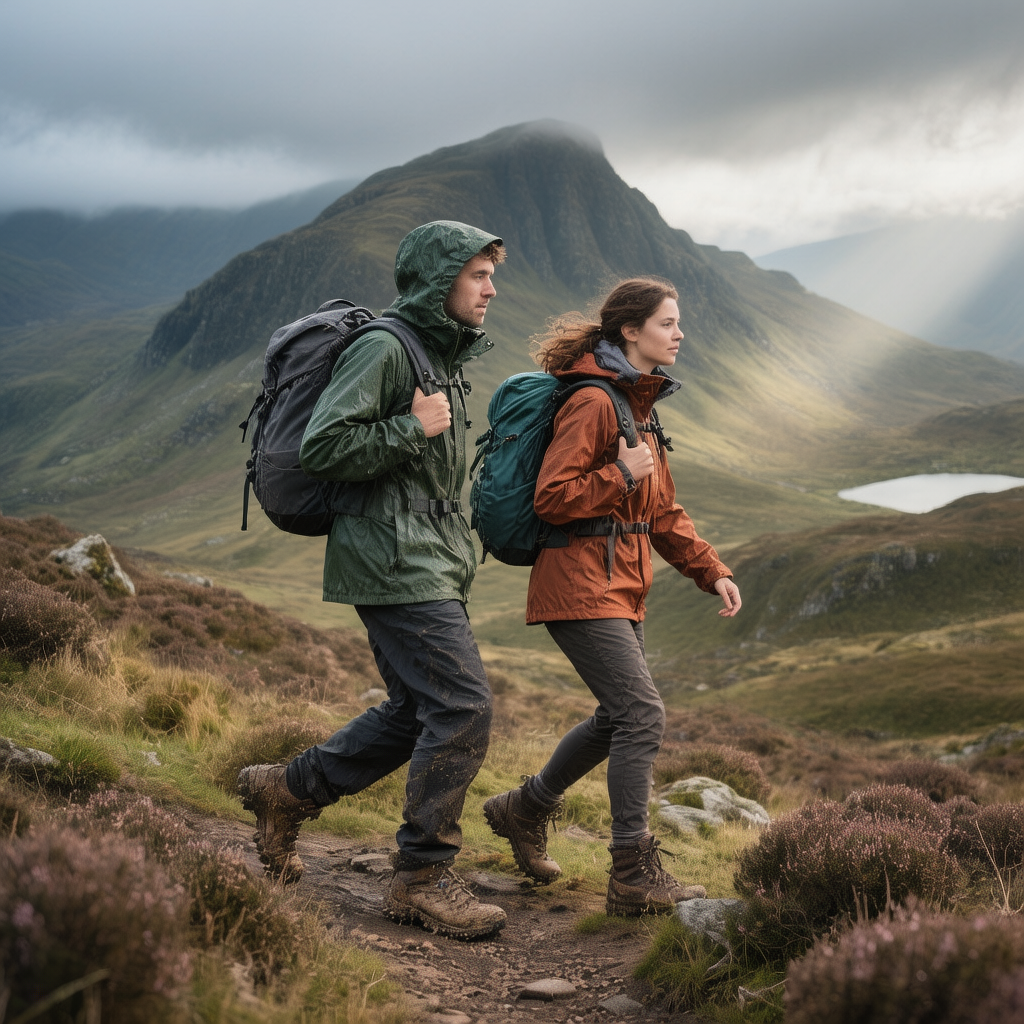
Visibility is another weather-related concern that influences Scottish Highlands hiking clothing. Low cloud and “haar” (sea mist) can descend rapidly, making it difficult to see and be seen. Choosing bright, high-visibility colours for your outer UK hiking clothing layers is a practical safety measure. If you are injured or lost, a bright orange or red jacket is much easier for mountain rescue teams to spot against the grey rock and green heather than a dark blue or green one. This is a small but significant detail in the broader context of what to wear hiking in the Scottish Highlands.
Core Clothing Layers for Highland Hiking
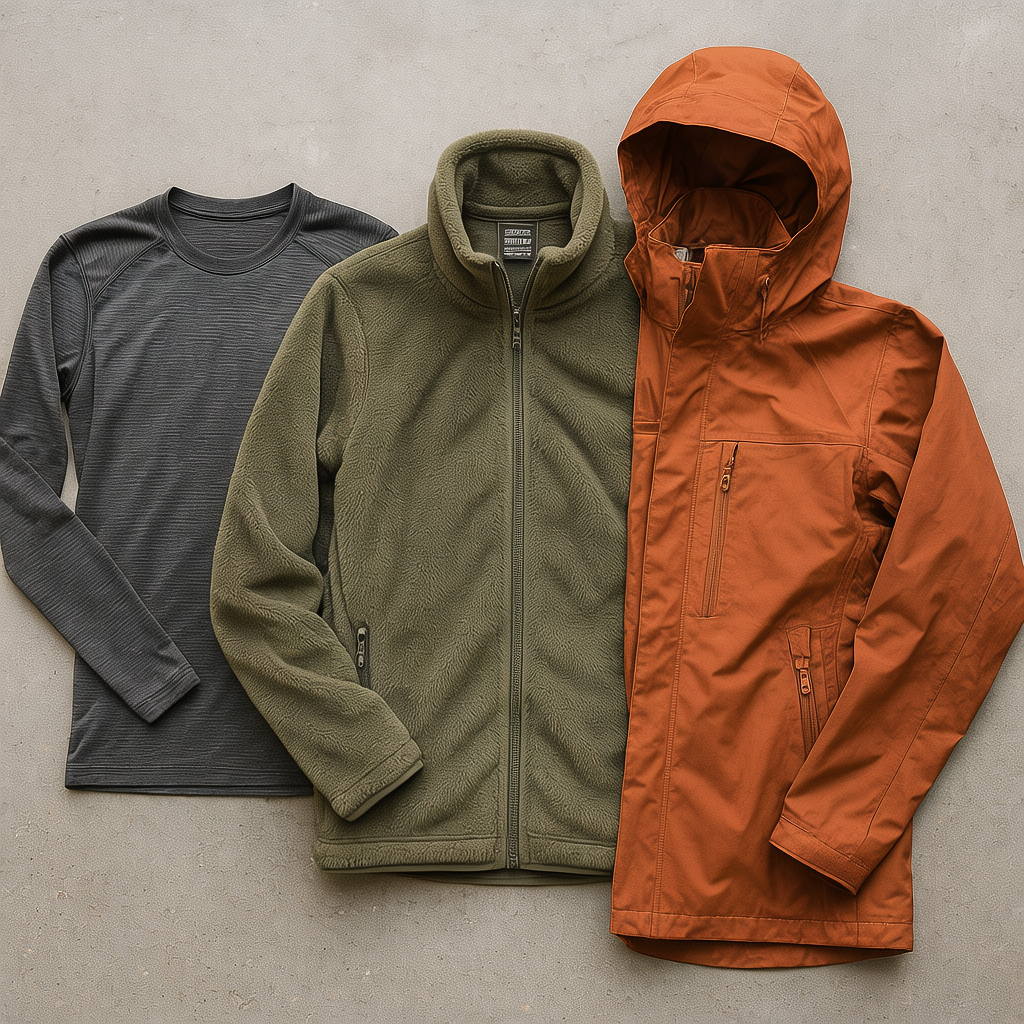
The foundation of any Highlands walking outfit is the base layer. This is the garment in direct contact with your skin, and its primary job is to “wick” sweat away. In the context of Scottish Highlands hiking clothing, you should strictly avoid cotton. Cotton absorbs moisture and stays wet, which will rapidly cool your body down once you stop moving. Instead, opt for synthetic fabrics (like polyester) or natural wool (like Merino). Merino wool is highly favoured for UK hiking clothing layers because it is naturally odour-resistant and remains warm even when damp.
The mid-layer provides the insulation. For what to wear hiking in the Scottish Highlands, a fleece is the most versatile choice. Fleeces are lightweight, breathable, and dry quickly. In colder conditions, you might opt for a “puffy” jacket filled with synthetic insulation. While down (feather) insulation is very warm, it loses all insulating properties when wet, making it less ideal for the damp Scottish Highlands weather clothing requirements unless it has been treated with a hydrophobic coating. A synthetic insulated jacket is often a safer bet for the Scottish climate.
The outer layer, or “shell,” is your shield against wind and rain. This is the most expensive part of your Scottish Highlands hiking clothing but also the most critical. A high-quality waterproof jacket with a breathable membrane (such as Gore-Tex or eVent) is essential. Look for features like a stiffened hood, adjustable cuffs, and “pit zips” for ventilation. Your UK hiking clothing layers are incomplete without waterproof over-trousers, which should be carried in your pack at all times, even if you start the day in softshell hiking trousers. This combination ensures your Highlands walking outfit can withstand a sustained Highland downpour.
Footwear and Socks for the Highlands
Your choice of footwear is just as important as what to wear hiking in the Scottish Highlands on your body. The terrain in the Highlands is notoriously varied, ranging from muddy peat bogs to sharp, abrasive granite scree. For major routes like the Ben Nevis Mountain Track, a sturdy pair of hiking boots with good ankle support and a stiff sole is highly recommended. The sole should have a deep “lug” pattern (like Vibram) to provide traction on wet rock and slippery grass.
Waterproofing is a major consideration for Scottish Highlands hiking clothing for the feet. Most modern boots feature a waterproof liner, but these can still be overwhelmed in deep bog. Using gaiters—waterproof sleeves that cover the gap between your boots and trousers—is a classic Highland trick to keep water and debris out of your footwear. When planning your Highlands walking outfit, don’t forget the importance of socks. A thick, wool-blend trekking sock will provide cushioning and help prevent blisters. Avoid thin “everyday” socks, which offer no protection against the friction of a heavy mountain boot.
Before you set off, it is worth checking the Ordnance Survey maps to understand the terrain you will be facing. If your route involves a lot of water crossings or boggy ground, your UK hiking clothing layers for the feet might even include waterproof socks (like Sealskinz) as an extra layer of protection. Remember that wet feet lead to soft skin, which leads to blisters, potentially turning a great Scottish Highlands Day Hike into a painful ordeal. Proper footwear is the foundation of what to wear hiking in the Scottish Highlands.
Seasonal Clothing Advice (Spring, Summer, Autumn, Winter)
what to wear hiking in the Scottish Highlands changes significantly with the seasons. In summer, you might be tempted to wear shorts and a T-shirt. While this is fine for the ascent, you must still carry full Scottish Highlands weather clothing in your pack. Summer is also the season of the “midge”—a tiny biting insect. A midge net and long sleeves are essential parts of a Highlands walking outfit if you plan to be out in the early morning or evening when the wind is low.
Spring and autumn are perhaps the most challenging times to choose Scottish Highlands hiking clothing. You can encounter everything from warm sunshine to heavy snow in a single afternoon. During these shoulder seasons, your UK hiking clothing layers should be more substantial. A heavier-weight fleece and perhaps a pair of thermal leggings under your hiking trousers become necessary. This is also the time when “softshell” garments shine, as they offer a good balance of wind resistance and breathability for active movement.
Winter in the Highlands is a different beast entirely and moves beyond the realm of standard Scottish Highlands Day Hikes into mountaineering. what to wear hiking in the Scottish Highlands in winter involves heavy-grade waterproofs, insulated “belay” jackets, and stiff, crampon-compatible boots. You will also need multiple pairs of thick gloves, as one pair will inevitably get wet. For those attempting the Ben Lomond Tourist Path Walk in winter, the clothing requirements are much more stringent than in July. Always seek specialist advice from Mountaineering Scotland before attempting winter peaks.
Common Clothing Mistakes to Avoid
One of the most common mistakes when deciding what to wear hiking in the Scottish Highlands is overestimating the protection offered by “fashion” outdoor gear. Many high-street “waterproof” jackets are only water-resistant and will quickly soak through in a Highland storm. For Scottish Highlands hiking clothing, always check the “hydrostatic head” rating; a minimum of 10,000mm is required for mountain use, though 20,000mm is preferable. Don’t let a cheap jacket ruin your Highlands walking outfit.
Another frequent error is the “denim disaster.” Wearing jeans for Scottish Highlands Day Hikes is a serious safety risk. Denim is heavy, holds a massive amount of water, and takes a very long time to dry. In the wind, wet jeans will strip the heat from your legs, significantly increasing the risk of hypothermia. Your UK hiking clothing layers should always consist of quick-drying synthetic or wool fabrics. Even if the sun is out, leave the jeans in the car and opt for proper trekking trousers as part of your Scottish Highlands weather clothing.

Finally, many hikers forget to protect their head and hands. A significant amount of body heat is lost through the head, so a warm beanie or a peaked cap (to keep rain out of your eyes) is a vital part of what to wear hiking in the Scottish Highlands. Similarly, even in summer, the temperature on a summit can be low enough to cause numb fingers, making it difficult to use a map or a phone. Always pack a pair of lightweight gloves in your Highlands walking outfit. By avoiding these common pitfalls and investing in quality Scottish Highlands hiking clothing, you ensure that your time in the mountains is defined by the views, not the discomfort.
