A Safety Guide
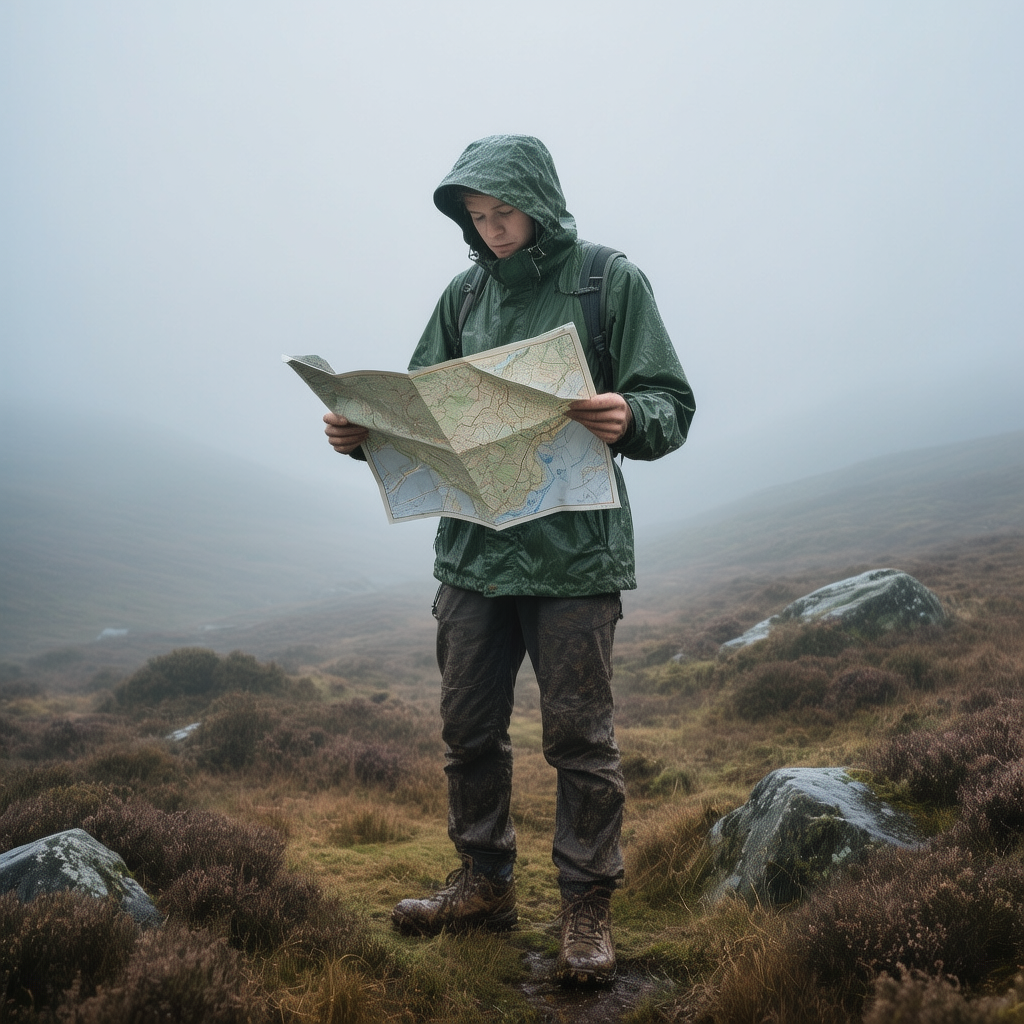
What to Do If You Get Lost Hiking UK is a question that every walker, from beginner to expert, should be prepared to answer. Disorientation is a common part of hillwalking, often caused by a simple distraction, a sudden change in weather, or a path that doesn’t appear where expected. The most important thing to remember is that being “misplaced” only becomes a serious problem if it leads to panic. In the UK hills and moorlands, the terrain can be deceptive, but it is rarely truly wild; there is almost always a logical way to regain your bearings. By staying calm and following a few practical steps, you can prevent a minor navigation error from turning into an emergency. This guide focuses on the sensible actions that help you stay in control and make safe decisions.
What to Do If You Get Lost Hiking UK
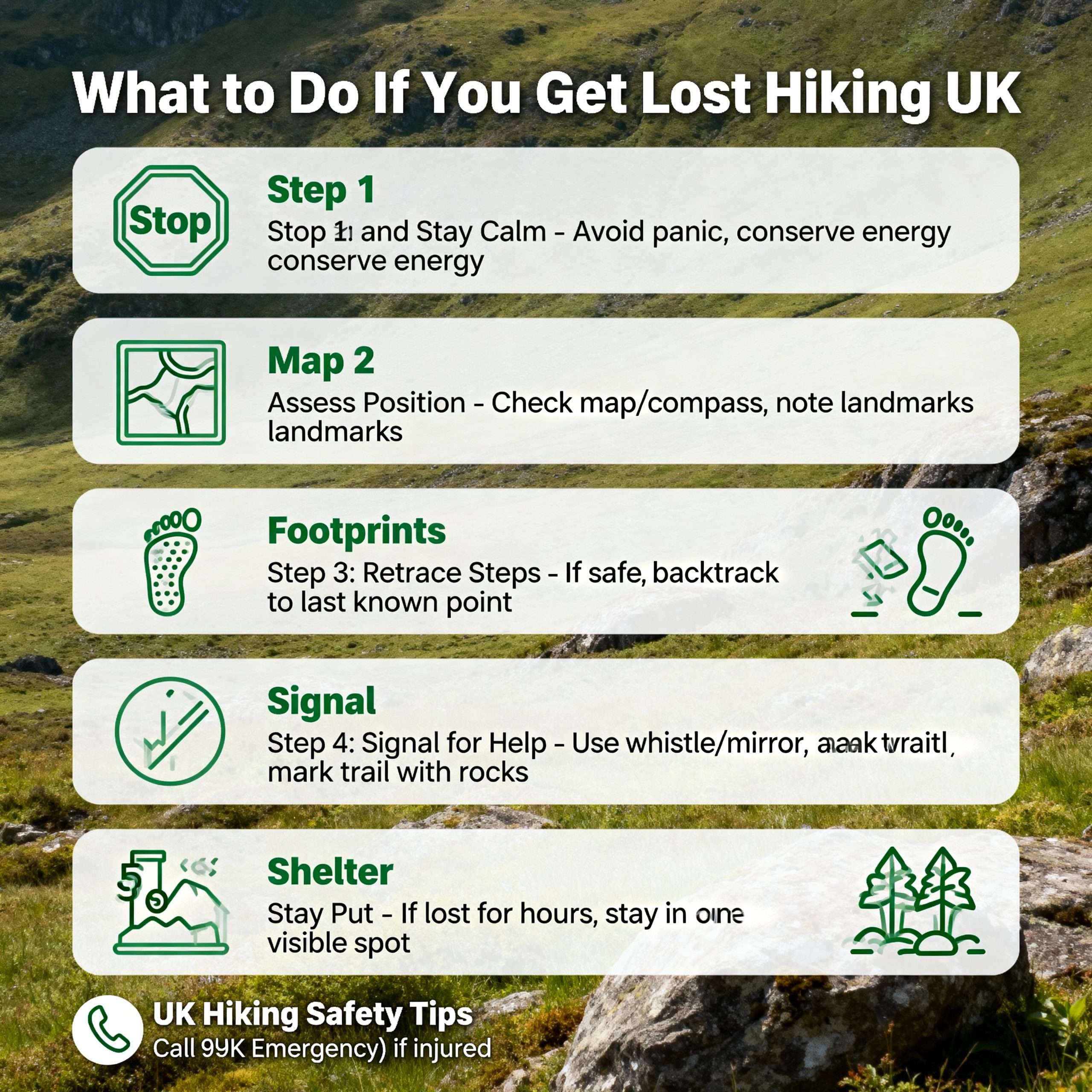
In a UK hiking context, “getting lost” is typically a temporary loss of situational awareness where the features on the ground no longer match your position on the map. The priority in this situation is to stop moving immediately and use calm, logical steps to re-establish your location, as advised by organisations like Mountain Rescue England and Wales. It’s also essential to be aware of the risks associated with getting lost in colder climates, such as the potential for hypothermia. Familiarizing yourself with treatment options for hypothermia can be crucial, especially if you find yourself stranded for an extended period. Always carry the necessary emergency supplies, including extra layers and a means to create shelter, to mitigate these risks.
What You’ll Learn in This Guide
- How to recognise the early warning signs of being lost
- The immediate steps to take to regain your composure and control
- How to use the landscape and your map to reorient yourself
- When the best decision is to change your plan or turn back
- Common mistakes to avoid when navigation goes wrong
Early Signs You May Be Lost
The first sign of being lost hiking UK is often a subtle feeling of doubt, sometimes called a “navigation niggle.” You might notice that the slope is steeper than the map suggests, or that a stream is flowing in the wrong direction. Perhaps you expected to reach a summit or a fence line five minutes ago, but it is nowhere to be seen.
Confusion often increases when paths on the ground do not match the black dashed lines on an Ordnance Survey map. In the UK, many “social paths” exist that are not official rights of way. If you find yourself following a trail that is getting narrower or heading away from your intended direction, it is a clear signal that your mental picture of the landscape has drifted away from reality.
Stop, Think, Observe, Plan (UK Context)
The moment you feel uncertain, you must stop. One of the biggest hiking navigation mistakes UK walkers make is continuing to walk while trying to “find” the map on the ground. This usually results in moving further away from your last known certain position. By stopping, you fix your location and give yourself the mental space to think clearly.
Take a moment to observe your surroundings. Look for prominent features like peaks, valleys, or man-made objects like stone walls and masts. Check your last known position—where were you 100% sure of your location? Try to estimate how far you have walked since that point. This creates a “search area” on your map, making it much easier to narrow down where you might be.
Using Your Map and Surroundings to Reorient
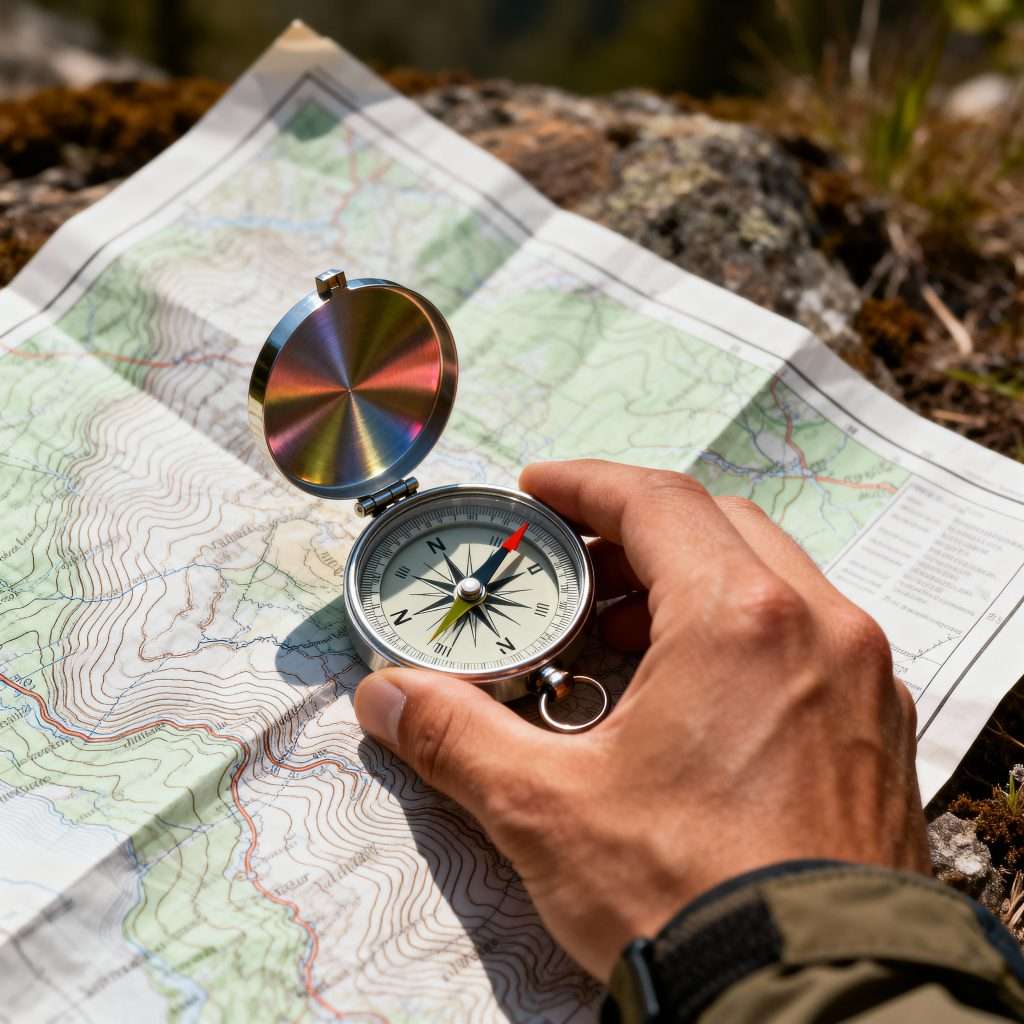
Once you have stopped, use the map to look for “handrails.” In UK hiking safety advice, a handrail is a linear feature like a fence, a stream, or a ridge line that you can follow to a known point. Even if you aren’t sure exactly where you are on that fence, following it will eventually lead you to a corner or a gate that you can identify on the map.
Contour lines are your best friend in the hills. If the map shows you should be on flat ground but you are standing on a steep slope, you know you are in the wrong place. Look at the shape of the land around you—is there a valley to your left? Is the ground rising to your right? Matching these shapes to the brown contour lines on your map is often the quickest way to “relocate” yourself without needing complex tools.
When to Change Your Plan
Regaining your position doesn’t always mean you should continue with your original walk. If you have spent an hour getting back on track, you may have less daylight or energy than you planned. Turning back or choosing a simpler, lower-level route is a sign of excellent mountain judgement, not a failure.
Choosing safer ground is particularly important if the terrain ahead looks complex or if the weather is closing in. In the UK, it is often safer to descend into a known valley than to try and push over a high, featureless plateau when you are already feeling tired or uncertain. Always prioritise a safe exit over reaching a specific summit.
Common Mistakes Hikers Make When Lost
The most common mistake is rushing. When people feel lost hiking UK, they often speed up, hoping that the “right” path is just around the next corner. This “flight response” leads to poor observation and can result in walking into steeper or more dangerous terrain.
Another mistake is ignoring the weather. If visibility is dropping, your ability to reorient using distant landmarks disappears. Overconfidence in a single piece of information—like a path that “looks right”—can also be deceptive. Always look for at least two or three pieces of evidence (e.g., a slope angle, a stream, and a compass heading) that all agree on your location before you commit to a new direction.
When Getting Lost Becomes a Safety Concern
Getting lost is usually a minor inconvenience, but it can become a safety issue if external factors change. Poor visibility is the most common catalyst; when the mist comes down, even experienced walkers can become disoriented. Fatigue also plays a role, as a tired brain is more likely to make simple what to do if lost hiking errors and less likely to catch them early.
If the terrain begins to get significantly steeper or if you find yourself on loose scree or crags that you didn’t expect, the risk increases. Similarly, if the sun is beginning to set, the pressure to move quickly can lead to accidents. In these moments, the most “pro” move you can make is to find a sheltered spot, put on your extra layers, and take ten minutes to eat and drink before making your next move.

Frequently Asked Questions
Is it normal to get lost while hiking in the UK?
Yes, it is very common. Even experienced navigators occasionally lose their place, especially in featureless moorland or thick mist. The difference between a beginner and an expert is not that the expert never gets lost, but that they recognise it early and stay calm while they fix the error.
Should you keep walking if you think you’re lost?
No. You should stop immediately. Walking while confused almost always makes the situation worse by taking you further from your last known point. Stop, stay calm, and only move again once you have a clear plan or have identified a “handrail” feature to follow to safety.
How do UK hikers avoid getting lost in poor visibility?
The best way to avoid getting lost hiking UK in mist is to use “short legs.” Instead of trying to navigate a long distance, break the journey into small chunks of 200–500 metres. Use a compass bearing and count your steps or time your walk to ensure you don’t overshot your target.
What to Learn Next
Grid References and Bearings for Hiking UK
Understanding Mountain Weather Forecasts UK
Hiking in Fog: UK Safety Tips
Conclusion
Knowing what to do if you get lost hiking UK is about building confidence in your own ability to solve problems. Disorientation is simply a puzzle to be solved, not a reason for fear. By practicing the habit of stopping early and using the landscape to check your map, you ensure that small mistakes stay small. The UK hills are a wonderful place to explore, and having the skills to handle a navigation slip-up allows you to walk with a much greater sense of freedom and enjoyment. Stay calm, trust your map, and remember that every experienced hiker has stood exactly where you are, checked their map, and found their way home. Additionally, it’s important to familiarize yourself with some essential uk hiking safety tips, such as always carrying a reliable compass and extra layers for changing weather conditions. Keeping your battery charged on your navigation devices can also make a significant difference when you need to find your way back. Finally, consider hiking with a buddy to ensure you have support in case of emergencies, enhancing both safety and enjoyment on your adventures.
