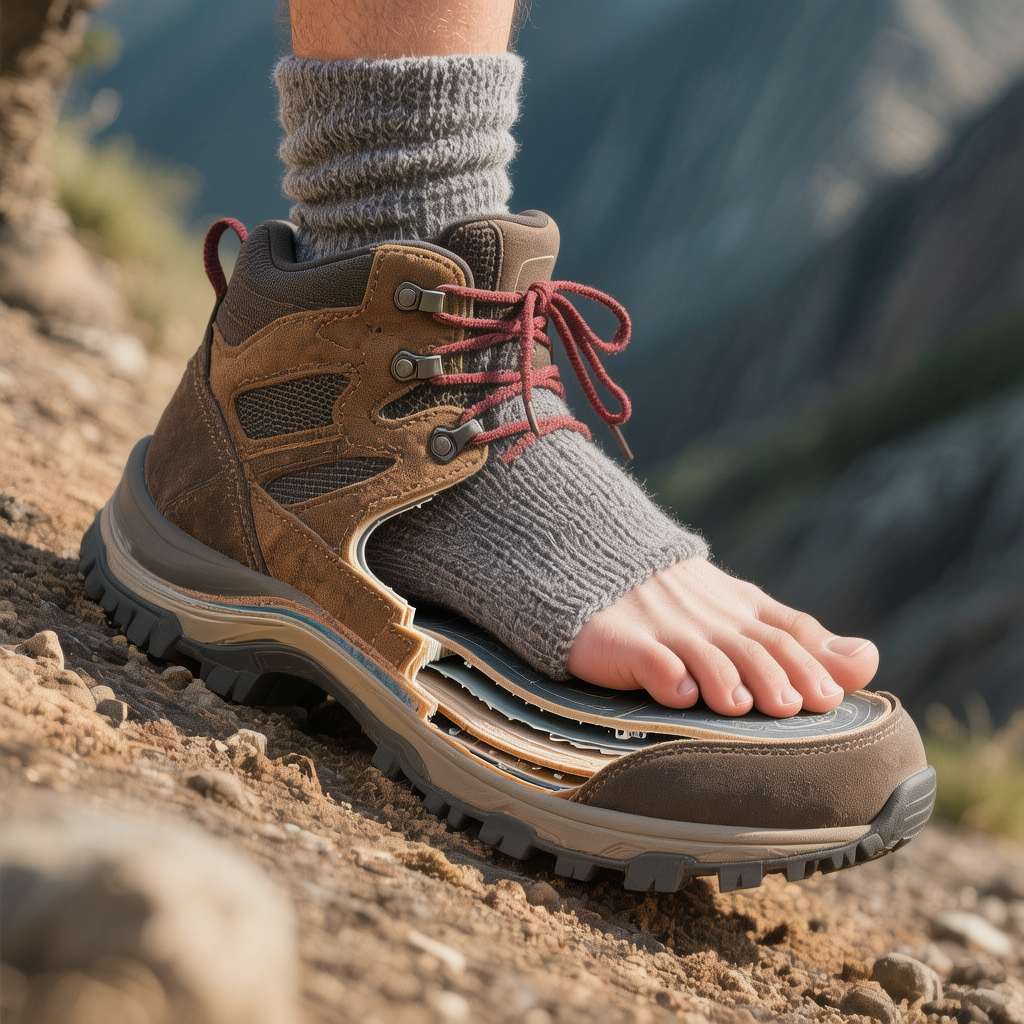
When descending downhill, your hiking boots shouldn’t touch your toes. It’s important to have about a thumb’s width of space between your longest toe and the front of the boot. This prevents discomfort and minimizes the risk of injuries like bruising and toenail loss. A snug fit is essential for stability but ensure toes can move freely. Understanding the right fit and techniques can enhance your overall hiking experience. There’s more to uncover about optimizing your hikes. In addition to the space for your toes, consider the width of the boot—your foot should feel secure without any pinching. Following proper hiking boot fit guidelines can lead to a more enjoyable trek, allowing you to focus on the beauty of the trail rather than discomfort. Remember to test your boots with the socks you’ll wear to ensure the best fit and functionality.
Key Takeaways
- Hiking boots should allow a thumb’s width of space between your longest toe and the boot front for comfort during downhill hikes.
- Proper fit prevents excessive pressure on toes, reducing the risk of injuries like bruising and toenail loss.
- When descending, your foot may slide forward, so ensure boots accommodate slight movement without cramping toes.
- A snug fit around the heel and arch is essential to prevent blisters while allowing some toe space for swelling.
- Simulating downhill movements while trying on boots helps identify any pressure points that could cause discomfort.
The Anatomy of Hiking Boots
Hiking boots are essential gear for any outdoor enthusiast, designed to provide support and protection on varied terrains. The anatomy of these boots involves several key components, primarily boot materials and ankle support. High-quality materials such as leather or synthetic fabrics offer durability and weather resistance, ensuring your feet stay dry and comfortable. The midsole provides cushioning, while the outsole’s tread pattern enhances grip on slippery surfaces. Ankle support is crucial, especially for downhill hiking, as it stabilizes your foot and reduces the risk of sprains. Look for boots with a higher cut to secure your ankles effectively. By understanding these elements, you can choose hiking boots that meet your needs and enhance your outdoor experience.
Benefits of Toe-Touching Technique
While many techniques can enhance your hiking experience, the toe-touching technique stands out for its benefits in balance and flexibility. By allowing your toes to touch the front of your hiking boots during downhill treks, you improve foot alignment. This alignment helps distribute your weight more evenly, reducing strain on your feet and ankles. You’ll find that enhanced toe comfort can lead to a more enjoyable hike, as it minimizes discomfort and fatigue. Additionally, this technique encourages better posture, which can significantly impact your overall stability on uneven terrain. As you practice toe-touching, you’ll develop greater control over your movements, allowing you to navigate tricky paths with confidence and ease.
Potential Risks of Toe-Touching
Although the toe-touching technique offers several benefits, it also carries potential risks that hikers should consider. One major concern is the increased likelihood of toe injuries. When your toes constantly push against the front of your boots, you heighten the risk of bruising, blisters, or even toenail loss. Additionally, this technique can lead to foot discomfort, especially during long descents. If your boots are too tight or not properly fitted, the added pressure can exacerbate issues like plantar fasciitis or general soreness. To mitigate these risks, ensure you have a snug yet comfortable fit, allowing just enough space for your toes to move without excessive contact. Being mindful of these factors can enhance your hiking experience and minimize injury.
Expert Opinions on Hiking Boot Fit
When selecting hiking boots, proper boot length is crucial to prevent discomfort during long treks. You also need to consider the toe box; it should provide enough space for your toes to move without feeling cramped, especially when tackling downhill sections. Additionally, understanding how downhill hiking impacts fit will help you choose boots that enhance stability and reduce the risk of injury.
Proper Boot Length
Getting the right boot length is crucial for comfort and performance on the trails. When it comes to boot sizing, proper length ensures your feet have enough room to move, especially during downhill hikes. According to fit guidelines, you should have about a thumb’s width of space between your longest toe and the front of the boot. This prevents your toes from hitting the toe box on steep descents, reducing the risk of injury and discomfort. Keep in mind that different brands may have varied sizing, so always try on boots at the end of the day when your feet are slightly swollen. A snug fit without excessive pressure is ideal for optimal support and stability while hiking.
Toe Box Considerations
Since the toe box is a critical aspect of hiking boot fit, understanding its importance can significantly enhance your hiking experience. A well-fitting toe box width allows your toes to splay naturally, preventing discomfort and blisters during long hikes. Ensure you have enough space to wiggle your toes without feeling cramped. Additionally, consider toe box height; it should provide ample vertical room for your toes, especially during downhill descents. If the toe box is too shallow, you may experience pressure on your toes, leading to pain. Properly assessing both toe box width and height can prevent foot fatigue and improve overall stability on the trail, making your hike more enjoyable and comfortable.
Downhill Impact Factors
As you navigate downhill trails, the fit of your hiking boots plays a crucial role in managing impact and maintaining stability. Proper fit can reduce toe impact, which often leads to discomfort and injury. When employing downhill techniques, ensure your boots have a snug heel and a roomy toe box. This combination allows your foot to stay secure while preventing your toes from jamming against the front of the boot. Additionally, a well-cushioned sole absorbs shock, further mitigating toe impact during steep descents. Remember, a good fit also enhances your balance, which is vital when maneuvering over uneven terrain. Prioritize these factors to enjoy a safer, more comfortable hiking experience on downhill trails.
Personal Experiences From Hikers
Hikers often share a wealth of experiences that highlight the importance of the right footwear when tackling downhill trails. Many hikers report that their choice of boots directly affects their comfort and stability. For instance, some experienced discomfort when their toes brushed against the front of the boot, prompting them to choose a half-size larger on their next hike. Trail feedback consistently emphasizes the need for adequate cushioning and ankle support to prevent injuries. Hiker experiences indicate that good traction is vital for maintaining control on steep descents. Additionally, several hikers recommend testing boots on varied terrain before long hikes, ensuring they meet individual needs. Ultimately, the right boots can enhance your hiking experience and keep you safe on challenging trails.
Alternative Techniques for Descending
When descending, adjusting your body positioning can significantly enhance stability and control. Consider how your footwear and the use of trekking poles can further improve your grip and balance on varied terrain. These alternative techniques allow you to navigate downhill safely and efficiently.
Body Positioning Techniques
While navigating downhill sections of a trail, employing effective body positioning techniques can significantly enhance your stability and control. Focus on maintaining proper body alignment; keep your hips low and your torso slightly forward. This position helps you stay balanced while descending. Adjust your weight distribution by shifting it towards your heels and keeping your knees slightly bent. This action allows for better shock absorption and reduces the risk of injury. Additionally, engage your core to maintain stability and prevent unnecessary wobbling. Remember to look ahead rather than down at your feet, as this helps you anticipate obstacles and adjust your posture accordingly. Mastering these body positioning techniques will make your downhill hiking experience safer and more enjoyable.
Footwear Adjustments
To enhance your control and comfort during downhill hiking, consider making specific footwear adjustments. First, ensure your hiking boots are well-maintained; clean them regularly to prevent dirt buildup that can affect grip. Examine the cushioning features of your boots—adequate cushioning can absorb impact and reduce fatigue on descents. If your current pair lacks sufficient cushioning, consider upgrading to a model designed for downhill stability. You can also adjust your laces for a snug fit, ensuring your heel stays locked in place while allowing for toe space. Lastly, consider using insoles for extra support and comfort. These adjustments not only improve performance but also contribute to a safer and more enjoyable hiking experience.
Use of Trekking Poles
Adjusting your footwear is just one way to enhance your stability and comfort on downhill hikes. Incorporating trekking poles can significantly improve your descent technique. There are various trekking pole types, including adjustable, collapsible, and fixed-length models. Each has unique advantages, so choose based on your hiking style and terrain.
Using poles distributes weight, reduces knee strain, and provides extra stability, especially on steep or uneven ground. To maximize pole usage benefits, hold them at a 90-degree angle and plant them just ahead of your feet. This technique helps maintain balance and reduces impact. Ultimately, mastering pole usage can make your downhill experience safer and more enjoyable, allowing you to focus on the breathtaking scenery around you.
Finding the Right Fit for Your Hiking Boots
Finding the right fit for your hiking boots is crucial for comfort and performance on the trail. Begin by assessing your boot sizing; it’s essential to measure both foot length and width. When trying on boots, wear the socks you plan to hike in, ensuring there’s enough room for your toes to move without feeling cramped. Pay attention to comfort levels, especially around the heel and arch. A snug fit will help prevent blisters, while a bit of room ensures your feet can swell during hikes. Walk around and simulate downhill movements to check for any pressure points. Remember, the right fit can significantly enhance your hiking experience, allowing you to focus on the journey ahead. Additionally, consider trying on hiking boots later in the day when your feet are slightly swollen, as this can give you a more accurate sense of the fit you’ll experience on the trail. For more guidance, check out various hiking boot sizing tips that can further assist you in making the best choice for your adventures. Don’t hesitate to consult with knowledgeable staff at outdoor retailers, as they can provide valuable insights based on your specific needs.
Frequently Asked Questions
How Do I Know if My Boots Are Too Tight?
If your boots feel snug and your toes touch the front, they might be too tight. Check for discomfort during movement; proper boot sizing should allow for toe comfort without excessive pressure or pain.
What Materials Are Hiking Boots Typically Made From?
Hiking boots typically consist of leather types like full-grain or nubuck, often combined with waterproof materials like Gore-Tex. These components enhance durability, support, and protection against wet conditions, ensuring a comfortable hiking experience.
Can I Wear Regular Shoes Instead of Hiking Boots?
You can wear regular shoes instead of hiking boots, but hiking shoe alternatives offer better support and traction. Regular shoe benefits include comfort and versatility, but they may not withstand rugged terrains as effectively.
How Often Should I Replace My Hiking Boots?
You should replace your hiking boots every 300 to 500 miles, depending on usage and terrain. Regularly assess their condition; signs of wear indicate it’s time for a replacement to maintain optimal performance and safety. Additionally, investing in the best hiking boots in the UK can significantly enhance your outdoor experience, providing better comfort and support on various terrains. Be sure to research and try on different brands to find a pair that suits your specific needs. Remember, proper maintenance can also extend the life of your boots, so clean and store them correctly after each hike. In addition to monitoring mileage, consider the frequency of your hikes; if you are a regular hiker, you may need to replace walking boots annually to ensure they provide the support and protection you need. Seasonal conditions can also affect the wear and tear of your boots, so take extra care if you often hike in wet or rugged environments. Keeping an eye on the outsole, cushioning, and overall fit will help you decide when it’s time for an upgrade.
What Is the Best Way to Break in New Hiking Boots?
To break in new hiking boots, wear them for short periods indoors, gradually increasing time outdoors. Focus on areas of potential discomfort, ensuring they mold to your feet for optimal boot comfort during hikes. Additionally, consider wearing thicker socks during the break-in period to help stretch the material and provide extra cushioning. For more insights, check out various hiking boots breakin tips from experienced hikers, which can offer valuable advice on ensuring a snug yet comfortable fit. Remember to always listen to your feet; if pain persists, it may be a sign that the boots are not the right fit for you.
Conclusion
In conclusion, ensuring your hiking boots touch your toes when descending can enhance your control and stability, but it’s crucial to balance comfort and fit. While this technique offers benefits, be mindful of potential risks like blisters or black toenails. Always prioritize a proper fit, considering expert advice and personal experiences. If the toe-touching technique doesn’t suit you, explore alternative descending methods. Ultimately, a well-fitted boot tailored to your needs will make your hikes more enjoyable and safer.
