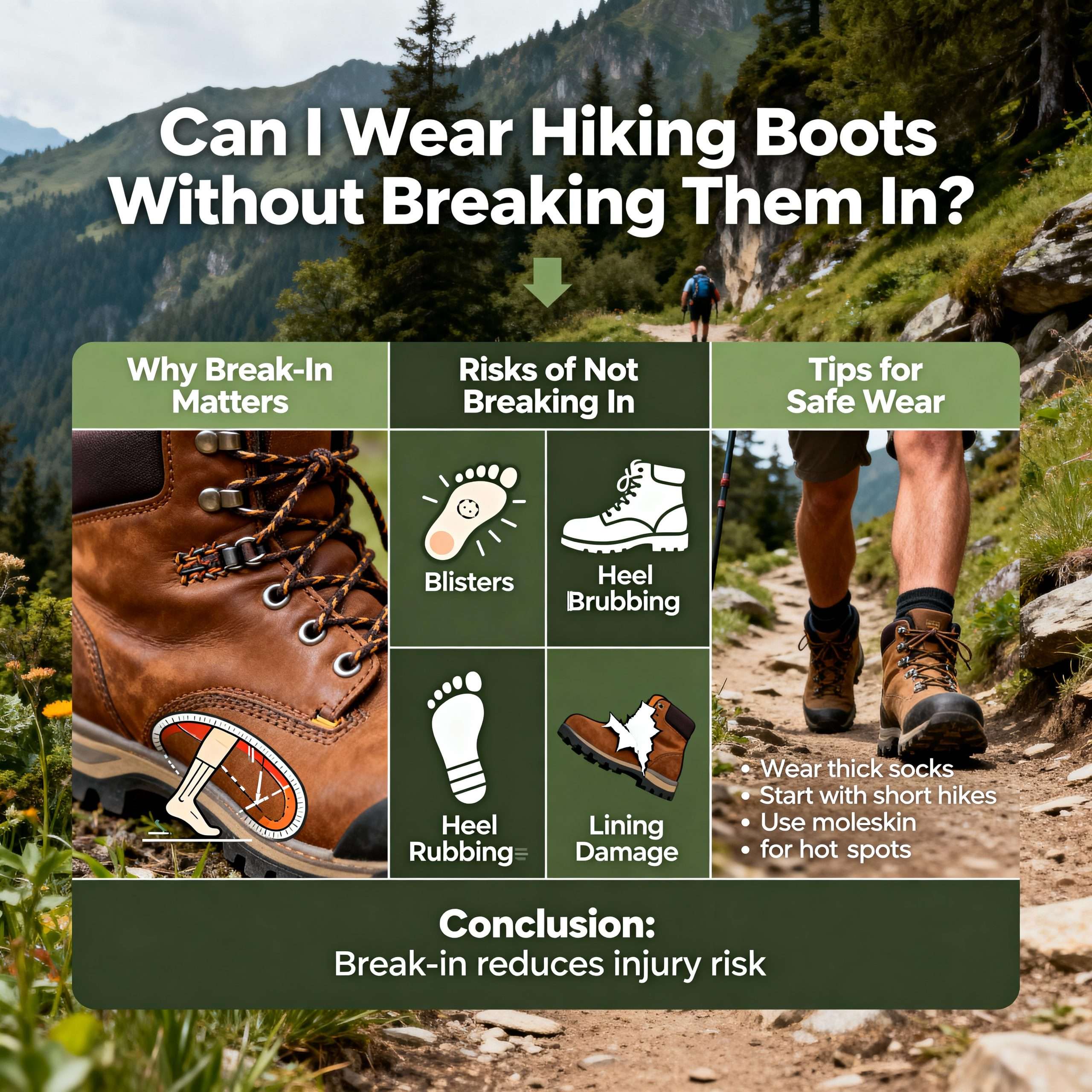
You can wear new hiking boots without breaking them in, but it’s risky. Expect discomfort and blisters, especially on longer hikes. Unbroken boots may compromise your traction and stability, increasing the chance of slips on rugged terrain. However, fresh boots can provide good support and enhance your performance right away. To ensure a more enjoyable hiking experience, it’s wise to follow some tips and be aware of your boots’ needs. Learn more about proper boot care and preparation. Additionally, it’s essential to monitor the wear and tear of your hiking boots, as this can significantly affect their performance. To maintain optimal support and reduce the risk of injury, replace walking boots annually, even if they appear to be in good condition. Regularly assessing your gear will help ensure that your adventures remain safe and enjoyable.
Can I Wear Hiking Boots Without Breaking Them In? Key Takeaways
- Wearing new hiking boots without breaking them in may lead to blisters and foot pain during your hike.
- New boots can provide excellent ankle support but may compromise traction and stability until fully adjusted.
- Immediate discomfort from new boots should be addressed to prevent injury on the trail.
- It’s advisable to wear boots at home and on short walks to ensure comfort before longer hikes.
- Listen to your body during your hike; take breaks if you experience any discomfort or hot spots.
Understanding the Importance of Breaking In Hiking Boots
When you buy a new pair of hiking boots, you might be tempted to hit the trails right away, but breaking them in is crucial for your comfort and safety.
First, this process allows the boot flexibility to adapt to your foot shape, reducing the chances of blisters and discomfort on long hikes. You’ll also enhance the material durability; well-broken-in boots can withstand the rigors of rugged terrain better.
Start by wearing them around your home and then on short walks. Gradually increase the intensity and duration of your outings, allowing your boots to mold to your feet.
This way, you ensure they perform at their best when you really need them, making your hiking experience far more enjoyable.
Potential Risks of Wearing New Boots on the Trail
Wearing new boots on the trail can lead to blisters and foot pain, making your hike less enjoyable.
You might also find that your traction and stability are compromised, increasing the risk of slips and falls.
It’s crucial to consider these potential risks before hitting the trail in untested footwear.
Blisters and Foot Pain
Although new hiking boots can offer great support and traction, they also come with the risk of blisters and foot pain if they haven’t been properly broken in. To minimize discomfort, it’s essential to wear your new boots on shorter walks before embarking on longer hikes. Additionally, for those looking to find the best hiking boots for budget shoppers, there are many brands that offer excellent quality without breaking the bank. Investing in a well-fitted pair ensures you can enjoy your outdoor adventures without the worry of foot issues.
When you hit the trail in unbroken boots, the friction can cause blisters, leading to discomfort and even injury. To avoid this, focus on blister prevention before your hike.
Make sure you wear moisture-wicking socks and consider applying blister pads or preventive tape on vulnerable areas.
Foot care is crucial; keep your feet clean and dry, and check for hotspots during breaks.
If you feel any discomfort, don’t push through it—address the issue immediately to enjoy your hike without the agony of blisters or pain.
Reduced Traction and Stability
Even if your new hiking boots look great, they mightn’t provide the traction and stability you need on the trail. It’s essential to test their grip on various surfaces before hitting the mountains. Additionally, remember that the right hiking boots and toe placement can significantly influence your balance and comfort during long treks. Without proper support, your risk of slips and injuries increases, making it crucial to prioritize functionality over aesthetics.
When you hit uneven terrain, you could face traction issues that make slipping and sliding a real threat. This can lead to falls or injuries, especially on steep or rocky paths.
Additionally, without proper breaking in, your boots may not offer the stability you require for those tricky descents or ascents, leaving you feeling unsteady.
It’s crucial to remember that the outsoles need time to mold to your foot and the specific terrain.
Wearing untested boots could compromise your safety and enjoyment during your hike, so consider breaking them in before tackling challenging trails.
Benefits of Hiking With Unbroken-In Boots
Hiking with unbroken-in boots can actually offer some surprising advantages.
You might find that the supportive structure provides immediate comfort and stability right from the start.
Plus, those fresh boots can enhance your performance, giving you the confidence to tackle challenging trails.
Immediate Comfort Factors
Many outdoor enthusiasts find that wearing unbroken-in hiking boots can provide a surprising level of immediate comfort. This comfort can often be attributed to the advanced materials and cushioning technologies used in modern footwear. However, it’s essential to balance immediate comfort with support and durability, particularly when investing in the best hiking boots for men. Finding the right pair can make all the difference in enjoying a long trek without discomfort or foot fatigue.
When you slip on a pair with an immediate fit, you’ll likely notice how well they hug your feet without pinching or rubbing.
Many modern boots come equipped with impressive comfort features like cushioned insoles and moisture-wicking linings, ensuring your feet stay comfortable while you explore.
This makes them ideal for short hikes or casual outings, where you can enjoy the trails without the worry of blisters or soreness.
Plus, the supportive design can give you confidence in each step.
Enhanced Performance Potential
While immediate comfort is a key factor, unbroken-in hiking boots can also enhance your overall performance on the trails.
When you hit the ground running with new gear, you might experience better performance optimization. The stiffness of unbroken-in boots provides superior ankle support, which can help you tackle rough terrain more effectively.
Additionally, wearing new boots allows you to build familiarity with your gear right away, making you more responsive to trail conditions. This can enhance your confidence and agility, leading to a more enjoyable hike.
Tips for a Comfortable First Hike
Getting ready for your first hike can be both exciting and daunting, but with a few simple tips, you can ensure a comfortable experience.
Start by choosing the right hiking gear, including moisture-wicking clothing and a sturdy backpack. Make sure to pack enough water and snacks to keep your energy up.
Before hitting the trail, spend some time on trail preparation. Research the route to know its difficulty level and any potential hazards. Arrive early to avoid crowds and give yourself ample time to enjoy the scenery.
Lastly, listen to your body; take breaks as needed and adjust your pace. With these tips, you’ll be set for a great first hiking adventure!
Signs That Your Boots Need More Break-In Time
Even with the right gear, a comfortable hike can be compromised by ill-fitting boots.
If you notice excessive stiffness or a lack of boot flexibility, it’s a sign they need more break-in time. When you walk, your heel should feel snug without slipping; if it lifts or you feel discomfort, that heel fit isn’t right yet.
Pay attention to hot spots or blisters forming, as these indicate areas that need further adjustment. A good test is to walk around your home or take short hikes; if discomfort persists, it’s best to continue breaking them in.
Best Practices for Choosing New Hiking Boots
How do you find the perfect pair of hiking boots? Start by exploring different boot materials—leather offers durability, while synthetic options provide breathability. Consider the boot’s fit, as a snug yet comfortable fit is crucial for long hikes. Additionally, researching reviews can help you identify the best hiking boots in the UK that suit your specific needs. Don’t forget to factor in your typical hiking terrain, as different features may enhance your experience and comfort on the trail.
Next, focus on sizing options; your boots should fit snugly without pinching. Don’t hesitate to try them on with the socks you’ll wear while hiking, as thickness can affect fit.
Walk around the store to ensure there’s no discomfort. Pay attention to the boot’s ankle support and weight, as these factors influence your hiking experience.
Consider your hiking terrain; waterproof boots are essential for wet conditions, while lighter boots work well for dry trails.
Lastly, read reviews and seek recommendations to narrow down your choices. Happy hiking!
Frequently Asked Questions
How Long Does It Typically Take to Break in Hiking Boots?
Typically, it takes one to two weeks for hiking boots to break in. This break in duration allows the boot flexibility you need for comfort, reducing the chances of blisters during your adventures.
Can I Use a Specific Technique to Speed up the Break-In Process?
Yes, you can speed up the break-in process using walking techniques and home remedies. Try wearing them around the house, using thick socks, or applying leather conditioner to soften the material for better comfort.
What Are the Best Socks to Wear With New Hiking Boots?
You should wear moisture-wicking socks made from merino wool or synthetic materials. Look for cushioning features to enhance comfort and reduce blisters, ensuring your feet stay dry and protected during your hikes.
Are There Brands Known for Comfortable Boots That Require Little Break-In?
Yes, brands like Merrell and Salomon offer lightweight options that feel comfortable right away. For budget brands, consider Columbia or KEEN; they often provide good support without needing extensive break-in periods. You’ll appreciate the ease!
How Do I Know if My Boots Are the Right Size?
To know if your boots are the right size, get your foot measurement and try them on. Ensure there’s a thumb’s width of space at the toe, and they shouldn’t pinch or feel overly loose.
Conclusion
In conclusion, while you can wear new hiking boots without breaking them in, it’s not without risks. You might face discomfort or blisters on the trail, which can ruin your adventure. If you choose to wear them right away, take it easy and listen to your feet. Remember, investing time in breaking in your boots can lead to a more enjoyable experience. So, prioritize comfort and choose wisely to make the most of your hikes!
